
 Search Articles


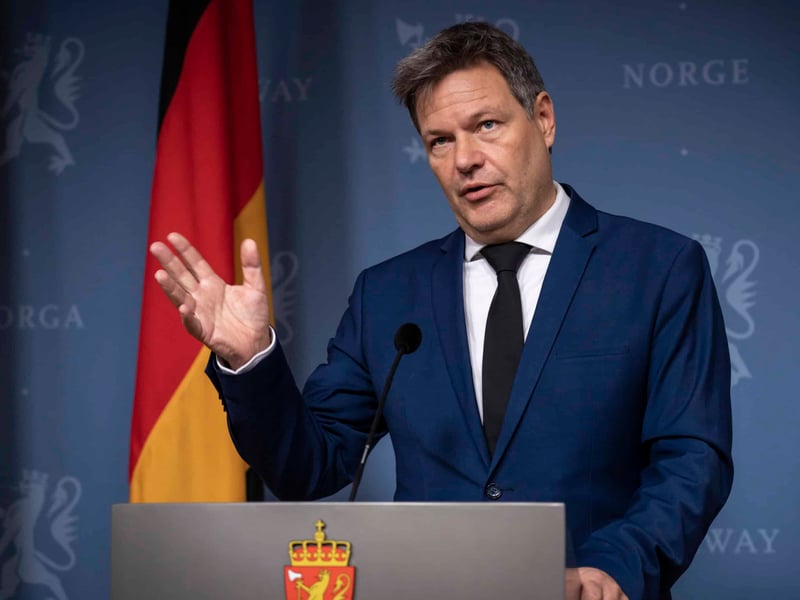
BERLIN (CN) — Early last year, social democrat Germany chancellor Olaf Scholz announced that he expected his country to undergo an economic uptick fueled by an industrial transition to green tech.
“I assume Germany is primed for a phase of significant growth,” he told an assembly of trade association leaders in Munich.
Time has proven his prediction false, at least in the short term. Scholz’s embattled government has walked back its rosy forecasts. The German economic ministry announced this week that it predicted the country’s economy would shrink by 0.2% in 2024, the second straight year of contraction.
While much of Europe has slowly begun dusting itself off in the wake of the pandemic-driven downturn, Germany’s economic growth is lagging behind the EU average and it was the only G7 economy to to shrink in 2023.
Long the crown jewel of Germany’s economy, the country’s industrial sector has been particularly hard. Layoffs have been enacted or announced in the steel, appliance manufacturing, and auto supply industries.
Germany’s world-renowned car industry is on an especially bumpy road, with production still lagging 10% behind pre-corona levels. Volkswagen is reportedly mulling closing two plants in Germany, which would be a first in the company’s history, and could wipe out thousands of jobs.
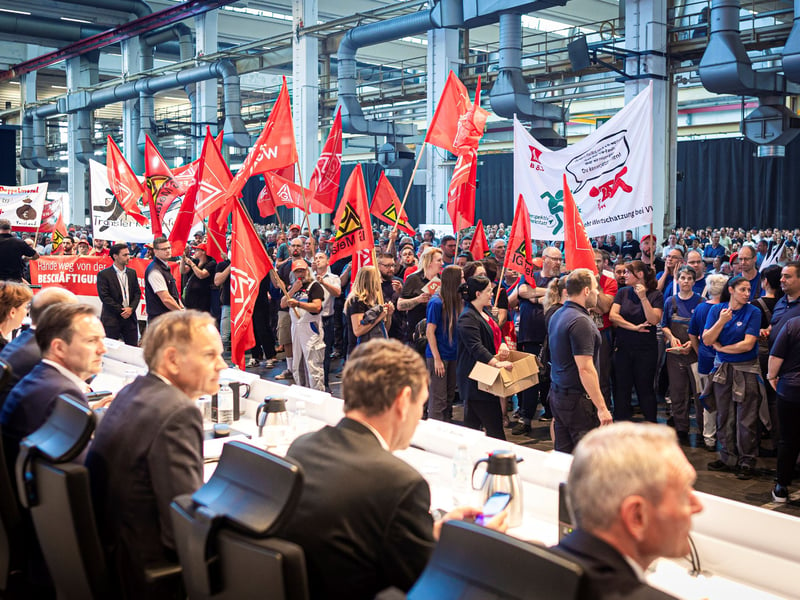
“The automotive industry, especially Volkswagen in Lower Saxony, has a tremendous impact on the entire regional economy,” Jan Mentrup, press officer for a regional branch of the German industrial union IG Metall, told Courthouse News. “It not only creates well-paid jobs directly in automobile production but also generates numerous indirect jobs in the supplier industry, retail, and even the service sector.”
While VW workers are mobilizing against the closures and could well succeed in staving it off, a setback in the neighboring state of Saxony-Anhalt illustrates Germany’s struggles to retool its industrial base.
Last month, Intel announced it was delaying its production of a chip plant in Magdeburg by at least two years. The factory was going to provide 3,000 jobs and the German government had promised billions in incentives, seeing chip manufacturing as both an important part of building a green economy and as an industrial anchor in Germany’s economically beleaguered east.
The plans failure has unleashed a wave of public frustration and political finger pointing. For Mentrup, whose union branch covers both the states of Lower Saxony, where VW is headquartered, and Saxony-Anhalt, home of the proposed Intel plant, both domestic and international business leaving Germany as a sign of deeper shifts.
“In the past, the principle of ‘better, not cheaper’ prevailed, and Germany was renowned for its high engineering standards and innovative strength,” he said. “Many companies, driven by profit motives, are turning away from the country and relocating production abroad to maximize short-term gains. This trend endangers not only jobs but also the entire industrial base of the country.”
While the German economy remained robust during the financial crisis of the mid-2000s, it has proven particularly vulnerable to more recent dips. According to Geraldine Dany-Knedlik, an economist at the German Institute for Economic Research, the source of the country’s current woes are twofold.
“One is a cyclical, temporary downturn in global industry and world trade. Manufacturing around the world hasn’t been very strong generally. Plus, the German economy is undergoing structural change, so this is a combination of the two," she told Courthouse News.
The structural changes facing the German economy presented by Dany-Knedlik include an aging population, the outweighed importance of an energy-intensive industrial sector that was hard hit by spikes in prices when Russia invaded Ukraine, challenges associated with decarbonizing and digitizing the economy, and rising international competition.
Responding to these challenges is uniquely difficult in Germany, as its constitutional debt brake means public investment is limited and requires difficult political debates.
While Dany-Knedlik expects Germany’s industrial base to remain a pillar of its economy, it’s likely to change significantly on the ground as the sector modernizes.
“Even in the manufacturing industries, which are part of Germany’s DNA, if you shift from production to focusing on research and development and essentially being the headquarters of a company while production plants move elsewhere, then the actual workers here will need to change,” she said.
Ironically, even as many German workers are fearing for their immediate futures, the country is facing a shortage in the skilled labor necessary to haul the economy into the 21st century. Scholz’s government has recently been busy wooing skilled immigrants in a wide range of fields.
Though manufacturing has been at the heart of Germany’s economic struggles, few fields have managed to dodge the doldrums. The country’s tech sector has faced a host of similar issues.
Courthouse News spoke to a former engineering manager at Zalando, an online retailer that has exploded from one of Berlin’s biggest startups to a publicly traded company with over $10 billion in annual revenue. In his six years leading a team of software developers, finding skilled labor was a continuous headache for the former employee, who asked not to be named.
“There was a lot of hiring going on. I spent about 30% of my time hiring for both my team and others, and I remember even when things were booming it was hard to find top talent, and it always took a lot of interviews to fill a position,” he said.
As Germany’s economy buckled and the global tech world entered post-pandemic blues, Zalando was forced to cut hundreds of jobs in early 2023. This was an especially difficult time for Zalando’s international workforce.
“There was a lot of anxiety, especially for people that had visas tied to their jobs. I’m privileged in that if I get laid off I can stay in my home, but there really was a lot of fear then.”
Berlin’s tech scene is slowly coming back to life, but the developer said the job market remains difficult, especially for young people entering the field.
“It’s starting to show signs of improvement, but very slowly. A few companies are hiring again, but not like in that earlier growth period,” he said.
Dany-Knedlik predicts Germany’s economy will turn around in the near- to mid-term, but just when is in many ways dependent on how effectively the government can manage the crisis and help along underlying structural shifts.
“Instead of bailing out individual companies, which would just postpone the wider problem, the government could focus on enabling good economic conditions, with respect to decarbonization, subsidies and cutting bureaucracy,” she said.
All of that might prove easier said than done, given Germany’s three-way centrist coalition is currently in crisis itself and struggling to agree on much of anything, let alone long-term economic plans.
 Follow @braneck
Subscribe to our free newsletters
Our weekly newsletter Closing Arguments offers the latest about ongoing trials, major litigation and rulings in courthouses around the U.S. and the world, while the monthly Under the Lights dishes the legal dirt from Hollywood, sports, Big Tech and the arts.