
 Search Articles


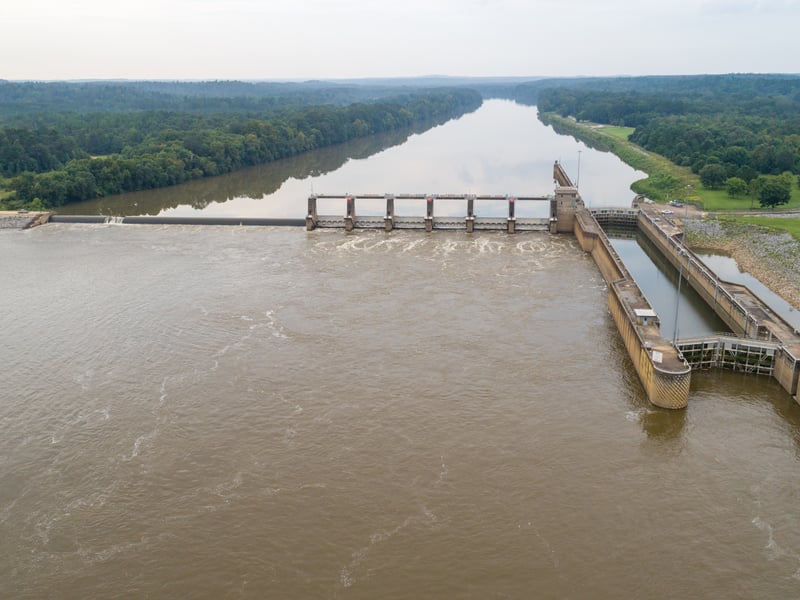
(CN) — As recently as 80 years ago, Alabama had a world-class striped bass fishery. The large, cold-water fish would naturally migrate several hundred miles each year, traveling from the Gulf of Mexico in the summer to tributaries of the Alabama River in the winter.
In places like West Blocton, 200 miles inland on the Cahaba River, resident Jason Throneberry says schools of mullet used to be so plentiful during spawning season that residents celebrated a festival around it. There’s evidence that in pre-Columbian times, Native Americans in the region sustained themselves on fish, clams and mussels from the Alabama River’s many tributaries.
As officials and industrialists dammed the rivers for transportation and hydroelectric power in the 20th century, fish populations began to wane. By the 1970s, Alabama no longer had a native migrating population of striped bass. Like the fish themselves, the West Blocton mullet festival faded into memory.
“The state has lost species diversity,” Throneberry, director of freshwater programs at the Nature Conservancy of Alabama, said in a phone interview. “There are some fish you don’t see in some places anymore.”
Hoping to reverse these trends, conservationists in recent years have set their focus on rewilding Alabama’s rivers and streams. Collectively known as the Alabama Rivers and Streams Network, they’ve lobbied against aging infrastructure — and especially dams — that they say are harming river ecosystems in the Yellowhammer State.
Among the most consequential are efforts to remove a defunct hydroelectric dam on the Pea River near Elba, as well as the planned construction of two fish passages on the Alabama River. While the river’s Claiborne and Miller’s Ferry dams were constructed in the 1960s to improve transportation, Throneberry says they’re now rarely used and are causing a substantial impact on the environment.
“We’ve seen Gulf sturgeon nosing up against the Elba dam and not being able to swim further upstream,” Throneberry said. Populations of native mussels and host fish have also declined since the dams were constructed, he added.
Alabama has more freshwater aquatic species than any state, said Jeff Powell, assistant state supervisor of ecological services for the U.S. Fish and Wildlife Service. And yet without intervention, nearly a dozen are now at risk of extinction, he said.
In an effort to help such species recover, the Alabama Rivers and Streams Network, which includes both TNC and USFWS, has begun to target small, obsolete and dysfunctional dams in watersheds across the state.
“You have a lot of legacy effects from dams around the landscape,” Powell said, “so we’re actively working to remove them.”
Constructed on the Pea River in 1911, the privately owned Elba hydropower dam has long impeded migration of both the Gulf sturgeon and Alabama shad, host fish for at least five endangered or threatened mussel species. The dam has also impacted migrating populations of American eel, though that fish is not considered endangered.
The Elba dam fell into disrepair during a flood in 2015, resulting in a partial collapse and an unnatural channel adjacent to the main riverbed. With more than $3.7 million in combined funding from federal grants, the Alabama Rivers and Streams Network is now aiming to acquire the property and remove the dam, debris and hydropower equipment with the goal of restoring the stream and bank to natural conditions.
Already, the network has removeda total of 10 dams, Powell said. That includes the Marvel Slab Dam on the Cahaba River in 2004.
That removal was a “huge success, biologically and recreationally,” he added. The community of West Blocton now celebrates the annual Cahaba Lily Festival each May. Outfitters along the river now provide raft and canoe rentals as well as chartered fishing trips.
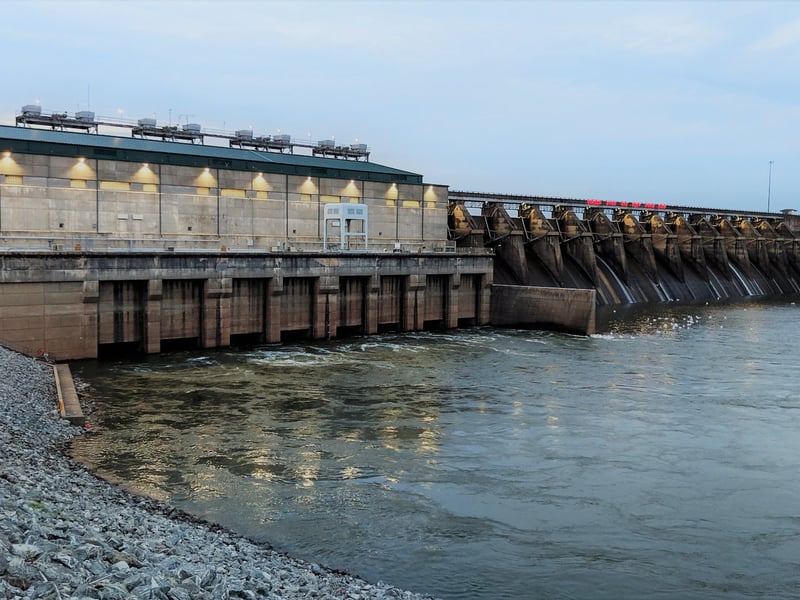
Such dam removal and habitat restoration projects mirror those in other states as well. That includes efforts to revive theCape Fear River in North Carolina, which has resulted in improved habitat for at least five fish species including striped bass. And in a transformative project involving the removal of four dams, the Klamath River in California and Oregon last month was declared free-flowing for the first time in 95 years, reopening a major salmon spawning corridor.
Alabama is also taking other measures to boost fish populations. Since the 1970s, the state has aggressivelystocked striped bass in reservoirs created by dams. As a result, there’s evidence the species is already reproducing in some upstream areas. Even still, conservationists like Throneberry are excited by the prospect of new migratory populations like those that once traveled widely along the Alabama River.
In a response to emailed questions, Amy Horstman, coordinator for the U.S. Fish and Wildlife Service’s National Fish Passage Program, credited local partnerships and congressional aid for enabling further dam removal projects around the country.
Since 1999, the program has removed or bypassed over 3,500 barriers to fish passages, she noted, reopening access to over 64,000 miles of upstream habitat. The Bipartisan Infrastructure Law of 2021 further provided roughly $2 billion for such projects. “As we continue to work on aquatic connectivity and reconnecting watersheds and ecosystems,” she said, “dam removals are an important part of the story.”
New proposed fish passages on the Alabama River will be unique for the state and rare in the Southeastern United States, Throneberry said. Although they are a common presence alongside dams in the salmon fisheries of the West Coast, fish passages for Gulf species will require a different design.
“Out west, they are moving a few species of salmon, which are powerful swimmers and can jump upstream,” Throneberry said. “We’re dealing with lazy Alabama fish, so we have to reconsider the water velocities [and] elevations and provide a resting habitat for as many species as possible.”
Take the striped bass. To spawn in shallows, the fish require a generous river current with a rocky substrate, where their eggs can tumble back downstream. After hatching, the young fish continue towards the Gulf as they grow, with untold millions reaching adulthood before repeating the cycle.
That, at least, is how things are supposed to work — and how they did work for thousands of years before the dams. “This is the natural heritage of Alabama,” Throneberry said. “If we don’t start letting everything move where it is supposed to, we’re going to start seeing irreversible impacts.”
 Follow @gabetynes
Subscribe to our free newsletters
Our weekly newsletter Closing Arguments offers the latest about ongoing trials, major litigation and rulings in courthouses around the U.S. and the world, while the monthly Under the Lights dishes the legal dirt from Hollywood, sports, Big Tech and the arts.