
 Search Articles


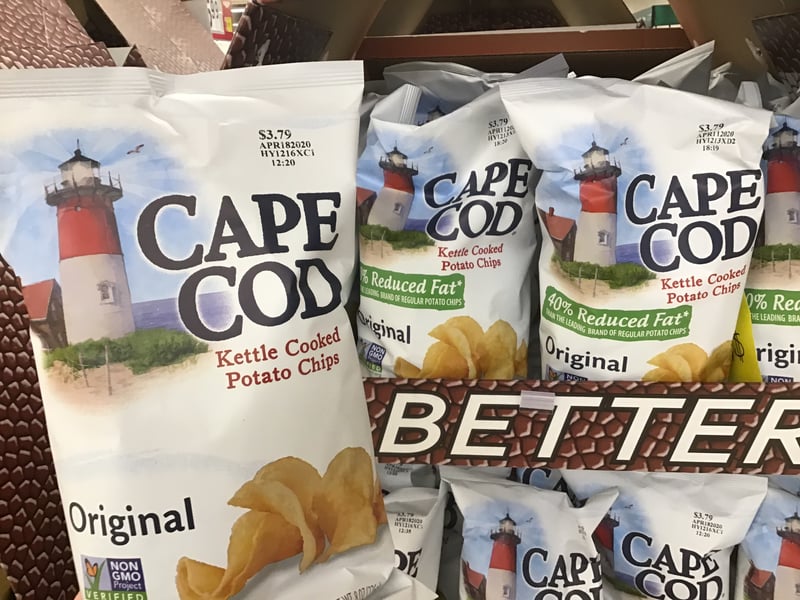
SAN FRANCISCO (CN) — A federal judge has denied a bid by the Campbell Soup Company to dismiss a lawsuit over claims its Cape Cod brand potato chips contain artificial preservatives, contrary to the blurb on the packaging.
Campbell acquired Cape Cod Potato Chips — best known for its brand of kettle-cooked potato chips — in 2018 when it bought Snyder’s Lance, then one of the largest salty snack makers in the United States. The food giant faces a lawsuit by plaintiffs Joe Squeo and Tiffany Taylor, who claim Cape Cod potato chips contain citric acid, a popular food preservative, despite the product label proclaiming no artificial colors, flavors or preservatives
In addition to damages, the plaintiffs seek an injunction to either change the label or the ingredients of the product to correct the mistake.
While citric acid can form naturally in fruit, food companies commonly use a manufactured version as a food and beverage additive.
The plaintiffs say they were previously fans of the product, having purchased them consistently for three years, but would not have or would have paid less had they known of the preservatives.
Their claims include violations of the California Consumers Legal Remedies Act, the California Unfair Competition Law, a breach of express warranty under California law, and violating sections 349 and 350 of the New York General Business Law.
U.S. Magistrate Judge Susan van Keulen kept all of the plaintiffs’ claims alive but rejected the demand for an injunction with prejudice, finding it unnecessary because there is no risk the plaintiffs would be deceived again.
“In the future, if they see a similar representation on the chips’ packaging, they now know to check the ingredients list on the packaging to determine if defendants added citric acid to the chips,” she wrote.
In its dismissal motion, Campbell argued the plaintiffs hadn’t adequately claimed the citric acid in their chips was artificial, functioned as a preservative or that a reasonable consumer would be deceived by its packaging. But despite Campbell’s view that the plaintiffs’ accusations of artificial acid were too generalized and unspecific, van Keulen found the claims reasonable.
“Plaintiffs’ well-supported allegations render it highly likely that the citric acid included in the chips was artificially produced,” she wrote.
On the subject of whether the artificial acid is a preservative, the judge once again sided with the plaintiffs, finding that their conclusions were both sound and based on statements by the U.S. Food and Drug Administration.
Van Keulen also believed that the labeling on the chips’ packaging was likely misleading for a reasonable customer.
“Plaintiffs satisfy that standard here — they allege that the chips’ packaging represents that the chips do not contain artificial preservatives and that the chips nevertheless do, in direct contravention of that representation, contain an artificial preservative,” she wrote.
Attorneys representing both sides did not respond to requests for comment by press time.
Subscribe to our free newsletters
Our weekly newsletter Closing Arguments offers the latest about ongoing trials, major litigation and rulings in courthouses around the U.S. and the world, while the monthly Under the Lights dishes the legal dirt from Hollywood, sports, Big Tech and the arts.