Search Articles



(CN) — The California governor’s race has been a chaotic one, but days ahead of the June 2 primary a sense of normalcy has emerged in the form of three front-runners: longtime politician Xavier Becerra, Fox News commentator Steve Hilton and hedge fund billionaire Tom Steyer, who recently won the endorsement of the Democratic Socialists of America.
Perhaps normalcy is the wrong word, but a campaign marked by plot twists has become more settled. Voters have their mail-in ballots, which include some 53 candidates — too many to fit on a single page — vying to finish first or second, thus securing a spot in the November general election to replace termed-out Governor Gavin Newsom.
A recent poll by Emerson College put Becerra, who served as U.S. Secretary of Health and Human Services under President Joe Biden, the state’s attorney general and as congressman for 14 years, in first place. Just behind him, tied for second, are Steyer and Hilton, a British-born Republican who moved to California 14 years ago and became a U.S. citizen only five years ago.
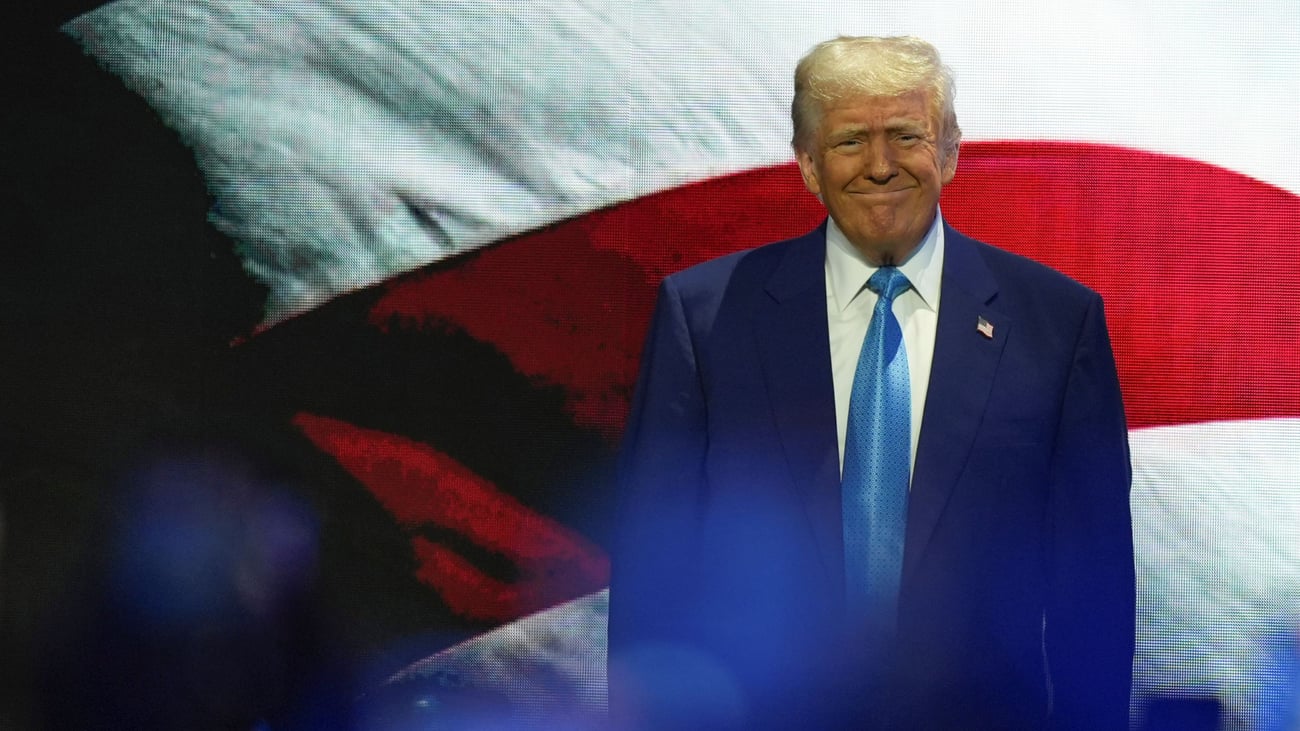
Although any voter can vote for any candidate, as the leading Republican with President Donald Trump’s endorsement, most assume Hilton will secure a spot in the general. That would leave one spot left, with Becerra apparently in pole position.
“Does that mean he has it in the bag?” asked Paul Mitchell, vice president of Political Data, Inc. “I don’t think so. But it does mean that he has the wind at his back. And if you’re going to be flavor of the month, like, this is the month to be flavor of the month — right now.”
It’s a good time for a candidate to be peaking, with the vote-by-mail ballots out and some already coming back in. But being the front-runner has come at a cost for Becerra. He has become the target of attacks from the other candidates, on debate stages and airwaves, and his every misstep or embarrassing on-camera moment is being scrutinized. And in a race characterized by numerous twists and turns, with three weeks left, you’d be reluctant to bet against another one.
In the beginning, the candidates who didn’t run defined the race: former Vice President Kamala Harris and both of California’s popular U.S. senators, all instant front-runners. Big-name Republicans like former House speaker Kevin McCarthy passed, and billionaire developer Rick Caruso, long rumored to be mulling a run after losing the Los Angeles mayor’s race in 2022, declined to spend another $100 million promoting his own brand of stoic centrism.
The field that formed became an ensemble piece — plenty of bit parts, but no star. Wonky former congresswoman Katie Porter, known for her viral videos grilling public officials with the help of a small whiteboard — and another less flattering one, in which she was caught berating a staff member. Riverside County Sheriff Chad Bianco, a Republican who, for at least a year, was a dues-paying member of the right-wing militia group Oath Keepers. Eric Swalwell, a leading voice in both Trump impeachments. San Jose Mayor Matt Mahan, running as a centrist, supporting a gas tax repeal and greater housing density. Former LA Mayor Antonio Villaraigosa, a throwback, and Superintendent of Public Instruction Tony Thurmond, who has gained little traction.
The crowded field brought with it a very strange but real possibility that the much larger Democratic vote (roughly 45% of the state) would be evenly distributed amongst six or seven candidates, leaving the much smaller Republican vote (about 25%) for only two candidates, Hilton and Bianco, allowing them to finish first and second and then square off in an improbable all-Republican general election.
Two events intervened to make that far less likely. In April, Trump endorsed Steve Hilton, calling him “a truly fine man,” and saying very little since then. It was a curious choice. Bianco brims with MAGA-world bona fides: he refused to enforce Covid mandates and did not get vaccinated himself. His department even thwarted an assassination plot against Trump in 2023. But Trump instead backed Hilton, the more camera-ready, urbane candidate. Ironically, the endorsement decimated the chances of both Republicans making the runoff. Mitchell now estimates there’s only about a 5% chance of two Republicans facing off in the general election.
“I think Trump’s endorsement may have all but ensured that Hilton goes on to the runoff, and not Bianco,” says Dan Schnur, a professor of political communications at USC and UC Berkeley. “So in an odd way, Trump’s endorsement of Hilton has almost guaranteed that a Democrat will hold office next January.”
Days after Trump endorsed Hilton, Swalwell, who had by then emerged as the Democratic front-runner, was accused of sexual misconduct by multiple women, including one who’d been his congressional staffer. More women came forward, and within days of the first accusation, Swalwell withdrew from the race, resigned from Congress, and is now the subject of criminal investigations in California and New York.
Perhaps surprisingly, Swalwell’s now-orphaned supporters flocked to Becerra.
“A party like the Democrats, that is this coalition of multiple groups, what you are looking for is a candidate who’s acceptable to just about everybody,” says Eric Schickler, a political science professor at UC Berkeley. “And Becerra kind of fits the bill. He’s a safe-ish choice. Maybe at this point that’s attractive to a fair number of Democrats.”
It was certainly attractive to the party’s elite, who were shaken by Swalwell’s sudden collapse.
“It was notable how quickly a lot of Sacramento political leaders and regular party donors flocked to Becerra,” Schnur said. “Voters are still making up their mind, but that rush of support from the political establishment gave Becerra the standing and the money to move up in the field very quickly.”
There has been much handwringing about the death of the California dream. The population is shrinking and getting older, the cost of living is skyrocketing, and the state’s finances are shaky at best. Despite all this, voters do not blame the current governor. A poll in February found that 55% of likely voters and 79% of all Democrats in the state approve of Newsom, who is believed to be plotting a presidential run. It’s these voters, Mitchell said, who supported Swalwell and who then jumped to Becerra.
“He’s rising among people who are Newsom stans, and he’s doing the best right now among voters who say that they’re very favorable of Newsom,” Mitchell said of Becerra. “He’s kind of like the boring version of Newsom.”
While other gubernatorial hopefuls have hung their campaigns on ideas, Becerra, who as attorney general filed numerous lawsuits against the first Trump administration, has portrayed himself more as the resistance candidate, the one who is best equipped to take on Trump. And that, Mitchell said, is the Democrats’ number one priority.
But Becerra’s also been the subject of some unfriendly news coverage. A Politico story quoted, anonymously, a number of ex-Biden administration officials mocking and belittling the former HHS secretary, saying, among other things, that he was so ineffective in handling the Covid pandemic that Biden benched him and made Dr. Anthony Fauci the face of his administration’s response to the pandemic.
More recently, he embarrassed himself in a local TV interview, first by demanding to know if the news segment would be a “profile piece” or a “gotcha piece,” then by bickering with the reporter over claims that under his watch, Health and Human Services lost track of 85,000 migrant children.
It remains to be seen whether the bad press will damage Becerra’s standing among voters who are still focused on national politics. If it does, the beneficiary could be the deep-pocketed Steyer, who has spent at least $175 million of his own money on his campaign. That’s on top of the $345 million he shelled out on a failed presidential run in 2020, adding up to more than half a billion dollars on promoting himself for high office, without ever having been elected to any position.
“When you get just right down to it, billionaires do not have a good reputation in California, even though we might have a lot of them,” said Melissa Michelson, a political scientist at Menlo College. “That’s why the billionaire tax is on the ballot.”
Funnily enough, Steyer is just about the only other candidate (aside from Thurmond, who is polling around or below 1%) who supports the Billionaire Tax Act, which would levy a one-time 5% tax on the net worth of roughly 200 Californians worth more than $1 billion. Steyer has a history of supporting progressive causes, including statewide single-payer healthcare, and he is backed by the state’s powerful teachers union. He was also, rather begrudgingly, endorsed by the California Democratic Socialists of America, which noted, “Even if he glibly considers himself a ‘class traitor,’ his wealth was earned through the exploitation of the working class.”
The irony of the endorsement was perhaps best summed up by Mitchell’s wife, Jodi Hicks, who runs Planned Parenthood in California, and who tweeted earlier this week: “I had a fever dream that in California socialists were supporting a billionaire and MAGA was supporting an immigrant. So weird.”
Normalcy was decidedly not the right word.
 Follow @hillelaron
Subscribe to our free newsletters
Our weekly newsletter Closing Arguments offers the latest about ongoing trials, major litigation and rulings in courthouses around the U.S. and the world, while the monthly Under the Lights dishes the legal dirt from Hollywood, sports, Big Tech and the arts.