
 Search Articles


SAN FRANCISCO (CN) — Capping off an 11-year legal saga, a federal judge on Monday gave California a green light to move forward with a long-contested highway project through a majestic grove of ancient redwood trees in Northern California.
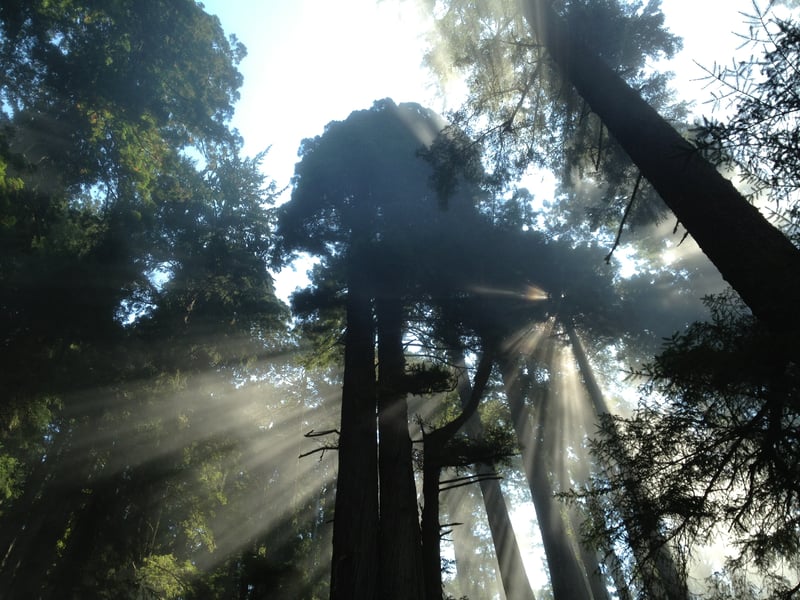
The California Department of Transportation, or Caltrans, has been trying since 2006 to widen a 1.1-mile strip of Highway 101 through Richardson Grove State Park in Humboldt County, about a 3 ½-hour drive north from San Francisco. Established in 1922, the park is home to redwood trees up to 3,000 years old, soaring up to 300 feet high and with diameters as wide as 18 feet.
The goal of the $21 million project is to let larger trucks traverse the narrow strip of highway, which threads perilously close to old-growth trees, without a police escort. This would allow those trucks to avoid a 93-mile detour via Route 299 from Redding to Eureka, a curvy mountainous road periodically subject to closures for inclement winter weather and wildfires.
U.S. District Judge William Alsup has halted the project three times over the last decade, most recently in 2019 when he found the California Department of Transportation, Caltrans, failed to fully consider the impact of paving and construction on tree root zones, potential tree damage from truck accidents and the effect of traffic noise on park enjoyment.
But the Ninth Circuit overturned his decision this past December, finding Alsup’s rationale for requiring further studies was based on “erroneous conclusions about the project’s effects on redwood tree health and possible increases in truck traffic and noise.”
In a 15-page ruling issued Monday, Alsup assessed the final set of unresolved claims in the long-running legal dispute and concluded Caltrans has fulfilled all of its legal obligations. The judge found the agency adequately considered project alternatives and mitigation measures, obtained proper approval from the state parks department and corrected prior shortcomings with subsequent project revisions.
The judge also found he could not consider any claims related to the National Environmental Policy Act (NEPA), including an assertion that the state failed to consider the influence of climate change on trees affected by the project, because the Ninth Circuit foreclosed that avenue in its decision last year.
“The appeal order broadly stated that court of appeals felt ‘satisfied that Caltrans took a hard look at the consequences of the project, and adequately considered the relevant factors’ and that ‘Caltrans’ issuance of the 2017 [Finding of No Significant Impact] was reasonable,’” Alsup wrote, citing the Ninth Circuit’s December 2020 opinion. “The undersigned judge therefore lacks authority to reassess the NEPA claims, as the unequivocal language of the remand opinion forecloses such consideration.”
Lead plaintiff Bess Bair, who has sued to stop the project three times over the last 11 years, argued that significant changes were made to the construction plan since a final environmental review was released in 2010.
Those changes include eliminating a ban on nightwork, which was intended to help protect the endangered marbled murrelet before a survey detected no members of that bird species in the project area. Another change in 2013 loosened a ban on mechanized digging in the rootzones of old-growth trees. Caltrans found it would be infeasible to require handheld tools for cutting back roadside slopes, installing barrier walls and driving steel piles into the ground.
Bair and her co-plaintiffs insisted those changes triggered a requirement that the state seek additional feedback from the public and obtain a new concurring opinion from the state parks department.
Judge Alsup found those alterations “did not rise to the level of a ‘substantial reduction’ in harm mitigation" that would trigger such obligations.
He also concluded that a sworn declaration filed by a parks superintendent cleared up any doubts about whether the parks department agrees with Caltrans’ assessment that mitigation measures adequately minimize any harms the project might cause to the park or its majestic redwood trees.
Bair and her co-plaintiffs had attacked the declaration by North Coast Redwood Parks District Superintendent Victor Bjelajac as a “post-hoc” justification for the state’s failure to fully comply with a legally required process. In that statement, Bjelajac said he believed a 2009 letter from the state parks department was an official concurrence with Caltrans’ finding of no significant harm. He added that he and is staff still agree with that assessment.
Alsup wrote that he does not consider Bjelajac’s statement a “new rationalization” to make up for a legally flawed process because “Caltrans relied on the presumed concurrence by State Parks all along.”
In the final words of his ruling, Alsup reaffirmed his belief that Caltrans should be required to conduct further reviews on traffic noise, truck accidents and the impact of construction on root zones, but he acknowledged that a higher court overruled his judgment on those issues.
“The district court continues to believe that the NEPA reasons it earlier gave warranted relief but our court of appeals felt otherwise,” Alsup wrote.
The judge concluded that because those claims were rejected by the Ninth Circuit and because he found remaining claims lack merit, he must issue final judgment in favor of Caltrans.
In an emailed statement Monday, Caltrans said its extensive environmental reviews and recent favorable court decisions support its position that the project will not significantly impact or harm the health of ancient trees in Richardson Grove.
“No old-growth redwood trees will be removed during the project, and construction crews will exercise extra caution to further minimize impacts by using a wide array of protective measures, including the use of an air spade and other hand tools for excavation when feasible, and supervision of ground-disturbing work by a certified arborist,” Caltrans spokesman Myles Cochrane said.
Plaintiffs’ attorney Stuart Gross did not immediately return an email requesting comment Monday.
Individuals who joined Bair as plaintiffs in the lawsuit include Trisha Lee Lotus, Jeffery Hedin, and David Spreen. Nonprofit plaintiffs include the Center for Biological Diversity, Environmental Protection Information Center, Californians for Alternatives to Toxics, and Friends of Del Norte.
According to Caltrans’ website, a construction start date for the project has not yet been scheduled. The latest version of the project requires the removal of 38 trees, none of which are old-growth. Construction is expected to affect the root zones of 78 old-growth redwoods.
Follow Nicholas Iovino on Twitter
 Follow @NicholasIovino
Subscribe to our free newsletters
Our weekly newsletter Closing Arguments offers the latest about ongoing trials, major litigation and rulings in courthouses around the U.S. and the world, while the monthly Under the Lights dishes the legal dirt from Hollywood, sports, Big Tech and the arts.