Search Articles


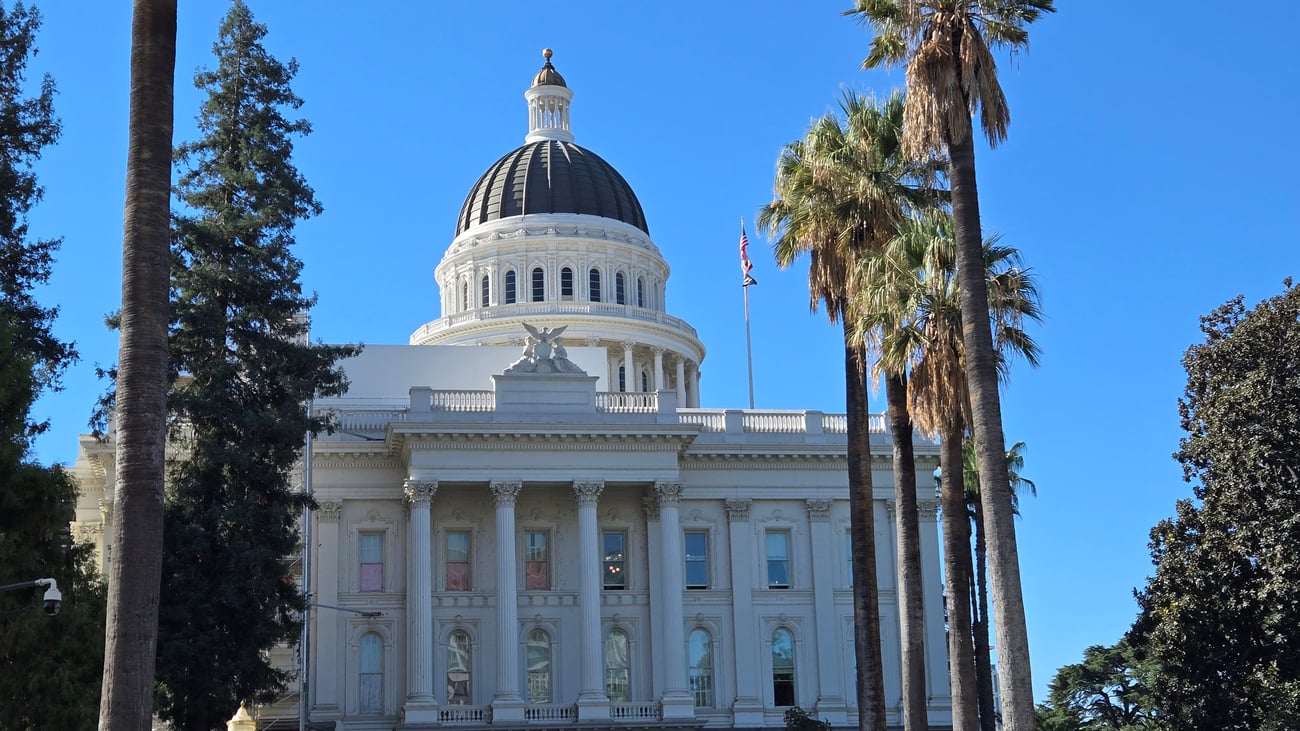
SACRAMENTO, Calif. (CN) — California Governor Gavin Newsom often offers a rosy view of the state budget, highlighting the state’s successes with one hand while slinging verbal attacks at President Donald Trump with the other.
That’s often followed later with the Legislative Analyst’s Office view that regularly stands apart from the governor’s glowing take on state affairs — a pattern that repeated Monday with the analyst’s report on the fiscal year 2026-27 May budget revision.
The analyst’s office in its report offered praise for the proposed budget tempered with caution. It noted the governor’s tax revenue estimates for this year are 30% higher than three years ago, a projection it somewhat mirrors. However, the office says revenue growth fueled by strong personal income taxes should lead to solidifying the state’s finances.
“Instead, the May Revision draws it down — relying on roughly $20 billion in reserve withdrawals and suspended deposits, as well as $4 billion in borrowing (on top tens of billions of dollars of existing borrowing), to achieve budget balance,” the office wrote. “These actions should be reserved for addressing revenue shortfalls in downturns, not to balance the budget during a revenue boom.”
Newsom last week revealed his revised budget, calling for $246.6 billion in spending from the general fund for the upcoming fiscal year. When all funds are included, the budget climbs to $349.9 billion.
The governor emphasized that his proposal fixes shortfalls in both the upcoming budget and the fiscal year 2027-28 budget. The analyst’s office said initial deficit estimates of $20 billion to $30 billion a year for upcoming years are now halved, crediting higher revenue projections, lower spending and various plans that raise collections and drop spending.
Problems remain, the office added. It pointed not only to the $20 billion in reserves Newsom is relying on, but also the structural deficit California now faces.
A structural deficit occurs when tax revenues aren’t enough to maintain ongoing expenses.
Additionally, California has little margin of error. Any deficit during a time of booming revenue is a red light, the office said.
“Further, given the state’s diminished reserves and an already accumulated wall of debt, California is ill prepared for even a slip-up in revenues,” it added. “Stock market runs like the one seen in the last three years almost always end in a dramatic reversal. Many classic warning signs suggest this market run may be nearing its end.”
California heavily relies on its top earners for personal income tax revenue, with the top 1% of earners paying around 50% of personal income taxes. The office said even a mild downturn in the stock market, like in 2022, could swiftly push the state into large deficits.
Drawing a parallel to the dot-com bubble of a quarter-century ago, the office said a repeat of that scenario could create a $100 billion deficit.
“Using this year’s budget to build resilience would allow the state to weather this kind of shock without immediately needing to turn to tax hikes or cuts to ongoing services,” the office said.
The analyst’s office made a set of recommendations to correct what it sees are problems.
While Newsom’s latest budget proposal halved the anticipated future budget deficits, the office pointed to his reliance on reserves to balance a budget during a time of revenue growth. It argued lawmakers allocate $20 billion into a reserve fund.
Viewing all factors, the office advised what it called a disciplined and cautious approach to the budget.
“Should a significant revenue correction occur, the state may require many of the same fiscal tools — reserves, borrowing, and budget flexibility — that are currently being used to manage the existing structural imbalance,” the office wrote.
Republican lawmakers in both legislative chambers pointed to the state’s structural deficit, arguing Newsom should follow the analyst office’s advice.
“You should not be running operating deficits during a historic revenue boom,” said Assemblymember and Minority Leader Heath Flora, a Lodi Republican, in a statement. “Assembly Republicans have been warning for years that Sacramento is addicted to spending money it does not have. Democrats spent every surplus dollar they could get their hands on, drained reserves, and left California dangerously exposed when the economy slows down. The LAO is warning exactly what Republicans have been saying for years.”
State Senator Tony Strickland, a Huntington Beach Republican, likened the increased revenue boom to winning the lottery. However, people shouldn’t increase their spending because their revenue has spiked.
“That’s what we have right now,” Strickland told Courthouse News, chiding Newsom for using reserves to balance the budget.
“We should put some money away,” he added.
But in a statement, state Department of Finance spokesperson H.D. Palmer put the ball in the Legislature’s court.
The governor has given the Legislature a plan to balance the budget across two years by banking the bulk of the current surplus and holding the line on new spending — building substantial reserves each year while sustaining core programs," Palmer said in an email. “The LAO proposes to put substantially more in reserves than even the May Revision — but fails to articulate and explain for the Legislature the significant policy implications of either the higher taxes or deep cuts that would necessarily be required to accomplish it.
“The Legislature has a clear choice.”
Subscribe to our free newsletters
Our weekly newsletter Closing Arguments offers the latest about ongoing trials, major litigation and rulings in courthouses around the U.S. and the world, while the monthly Under the Lights dishes the legal dirt from Hollywood, sports, Big Tech and the arts.