
 Search Articles


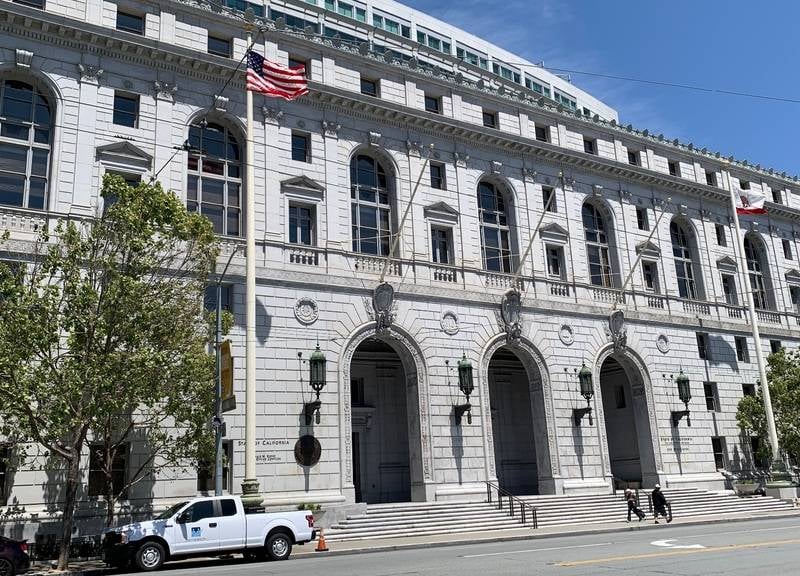
(CN) — A man convicted of murder over 15 years ago and facing the death penalty had his conviction and sentence reversed Thursday by the California Supreme Court, which found a lower court improperly removed a juror during deliberations.
A Los Angeles County jury convicted Timothy Joseph McGhee, 51, on three counts of murder and four counts of attempted murder. A high-ranking member of the Toonerville gang, McGhee was accused by prosecutors of involvement in five gang-related shootings in Los Angeles between October 1997 and November 2001.
Caught in 2003, McGhee went to trial a handful of years later. The jury in his case was deliberating his guilt when two jurors sent a note to the judge about a colleague. They claimed he relied on speculation in his arguments and believed prosecution witnesses were lying.
That led the judge to interview jurors individually and hear that some of them thought the juror had an anti-police bias. Others disagreed with that view. Ultimately, the judge dismissed that juror over defense objections. An alternate juror replaced him, and days later, the jury convicted McGhee.
“We ask whether the trial court’s conclusion that the discharged juror was unable to perform his or her duty appears in the record as a ‘demonstrable reality,’” Associate Justice Goodwin Liu wrote in the unanimous ruling. “To uphold the discharge of a juror, however, a reviewing court ‘must be confident that the trial court’s conclusion is manifestly supported by evidence on which the court actually relied,’ considering that evidence and the court’s reasons for discharging the juror in light of the entire record.”
The lower court based the decision to discharge the juror on his failure to deliberate and obvious anti-police or prosecution bias. Neither is supported in the record, the Jerry Brown appointee wrote.
According to Liu, the lower court stopped jury deliberations and began questioning jurors individually after receiving the note. While a judge has the authority to dismiss a juror, it’s “a delicate matter” and shouldn’t be intrusive. Instead of interviewing jurors, the judge could have instructed them on their duty to deliberate.
The juror dismissed by the judge expressed skepticism at some prosecution witnesses, Liu wrote. Some of those witnesses were current or former gang members, with a few having criminal convictions.
“Some of the witnesses also admitted to being under the influence of drugs or alcohol at the time of the shootings or when McGhee told them about his involvement in the crimes,” Liu wrote.
The justice in his ruling pointed to evidence at trial about witness credibility. Two witnesses testified about police coaching people. One said that officers kept using the name “McGhee.” Additionally, in one of the shootings, different people claimed to be the triggerman.
Also, McGhee’s defense attorney argued that some witnesses — themselves facing criminal accusations — received preferential treatment for providing police information on his client.
Pivoting to a failure to deliberate as a reason to dismiss the juror, Liu wrote that almost all jurors said the person discharged from jury service had been deliberating for the 10 hours before the judge received the note.
In fact, that juror gave his reasons for doubting the prosecution’s evidence. He thought one witness wouldn’t have gone outside during a shooting because she was a single mother. He figured another witness would have fallen to the ground to protect himself during a shooting instead of watching through the window.
“Proving that McGhee was the shooter in the various incidents depended on the trier of fact giving significant weight to the testimony of a limited number of witnesses to those crimes, and there was evidence calling into question those witnesses’ credibility,” Liu wrote.
Concerning supposed bias against police or the prosecution, the justice wrote that the dismissed juror developed a negative view of the state’s case against McGhee. However, the trial court relied on other jurors’ opinions when making its decision, which wasn’t well-founded.
Evidence pointed to many witnesses being in gangs. Also, many of them didn’t remember the events, while others lied to police about what they knew, the justice wrote.
The lower court failed to examine whether the dismissed juror had beliefs drawn from the evidence at trial. The high court found that his views mostly aligned with the defense’s evidence.
“We hold that the trial court erred in removing [the juror] from the jury during guilt phase deliberations and that the error requires reversal of the judgment,” Liu wrote.
McGhee’s attorney and the state attorney general’s office couldn’t be reached for comment as of publication time.
Subscribe to our free newsletters
Our weekly newsletter Closing Arguments offers the latest about ongoing trials, major litigation and rulings in courthouses around the U.S. and the world, while the monthly Under the Lights dishes the legal dirt from Hollywood, sports, Big Tech and the arts.