
 Search Articles


(CN) — The California High-Speed Rail Authority sued the Trump administration on Thursday to reverse the cancellation of $4 billion in federal funding for the state’s long-suffering efforts to build a bullet train connection between San Francisco and Los Angeles.
In a complaint filed in federal court in Sacramento, the state agency claimed that the sudden termination of the funding just one day prior, including $3.1 billion that had been [granted](http://as arbitrary and capricious, an abuse of discretion, and contrary to law, and threatens to wreak significant economic damage on the Central Valley, the State, and the Nation.) by the Biden administration two years ago, was arbitrary and capricious, an abuse of discretion and contrary to law.
“Trump’s termination of federal grants for California high-speed rail reeks of politics,” California Governor Gavin Newsom said in a statement. “It’s yet another political stunt to punish California.”
The Federal Rail Authority’s Wednesday decision to cancel the previously committed funds for the long-delayed and over-budget high-speed rail project wasn’t much of a surprise. During his first administration, President Donald Trump terminated about $1 billion in federal grants for the project, which were later restored under President Joe Biden.
Soon after Trump was back in power this year, Transportation Secretary Sean Duffy started disparaging the project, echoing Trump’s view that it has been mismanaged and directing the Federal Rail Authority to conduct a compliance review of the project.
In June, Duffy said that the authority’s investigation had found that the project was in default of its federal grant terms due to missed deadlines, budget shortfalls and inflated ridership projections.
In its lawsuit, the California High-Speed Rail Authority argues that as recently as October 2024, the Federal Rail Authority had found no material breach of the agency’s obligations under its agreements with the federal government.
“The FRA Risk Analysis was not the product of collaboration. It contains no indication of who conducted the risk review or their qualifications. Nor did FRA explain why the authority’s risk assessment analysis, which FRA reviewed just two years ago, was suddenly inadequate,” the state agency writes in the suit.
The state agency says the cut funds had nothing to do with the reality of the project but, “rather, the decision was predetermined and precipitated by President Trump’s overt hostility to California and its governor, its challenge to his border wall initiative and other policies, and what he has called the ‘green disaster’ highspeed rail project.”
The agency also notes in the suit that Trump’s own border wall is an example of another large infrastructure project that has exceeded its original budget and timeline.
“16 years, $15 billion in taxpayer funds, and not a single high speed rail track laid,” the Transportation Department said in a post on X. “Naturally, Gavin Newsom’s plan is to waste even MORE taxpayer dollars defending this boondoggle. Newsom had plenty of time—YEARS—to make this work and he failed. We pulled the plug on this disaster of a project after compiling a detailed 300 page report that documented years of missed deadlines and cost overruns.”
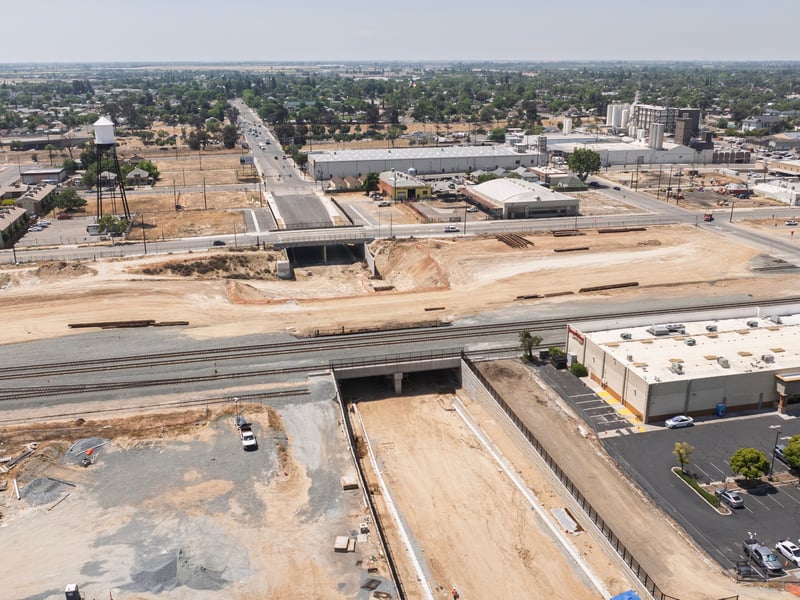
California’s long-promised bullet train has faced massive cost overruns and is still focused only on the first segment, currently under construction in the state’s agricultural heartland.
When California voters first passed Proposition 1A in 2008, the initial price tag was estimated at approximately $33 billion, with a completion date of 2018. The cost estimate has since climbed to $128 billion, and the completion year has been pushed from 2033 to an uncertain date.
The federal government previously approved starting the project in California’s Central Valley to avoid right-of-way issues and spark economic development in economically disadvantaged areas with poor air quality. But even that segment connecting Merced to Bakersfield could cost between $3 billion and $10 billion to finish.
“To secure substantial federal funding, CHSRA represented that it could connect major metropolitan cities in California, but can now only deliver a system that is reduced substantially and delayed significantly, which may connect two random endpoints,” according to the Federal Railroad Administration’s report last month.
The California High-Speed Rail Authority has said it strongly disagrees with the federal authority’s conclusions, calling them misguided and not reflective of the project’s progress.
The state agency accuses the Federal Rail Authority and Transportation Department of violating the Administrative Procedures Act, the statute that governs how federal agencies develop and issue regulations, and it seeks a court order reinstating the funding.
 Follow @edpettersson
Subscribe to our free newsletters
Our weekly newsletter Closing Arguments offers the latest about ongoing trials, major litigation and rulings in courthouses around the U.S. and the world, while the monthly Under the Lights dishes the legal dirt from Hollywood, sports, Big Tech and the arts.