
 Search Articles


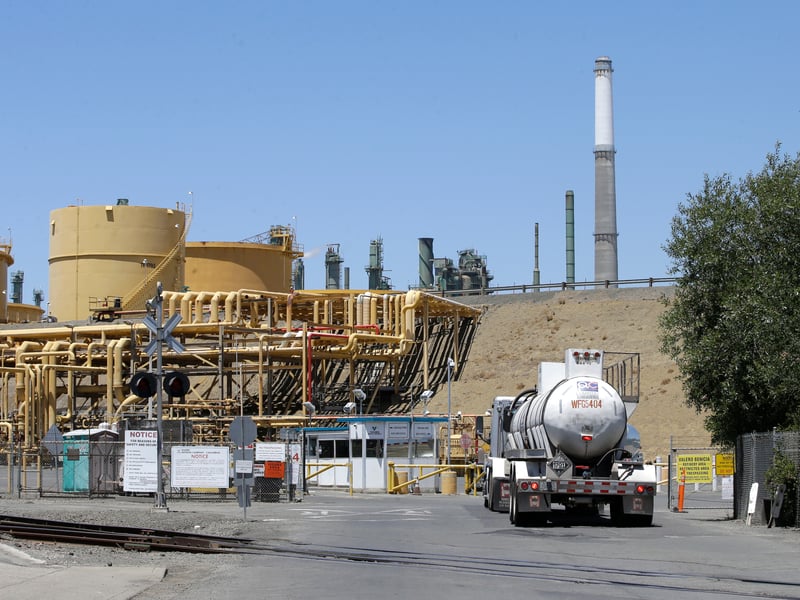
SACRAMENTO, Calif. (CN) — Valero Refining Co. faces an $82 million fine from California agencies for air pollution violations, the biggest penalty ever levied in the history of the Bay Area Air Quality Management District.
The fine is the result of a settlement agreement between Valero, the California Air Resources Board and the Bay Area district. It stems from a 2019 inspection that revealed unreported emissions from the Benicia refinery contained harmful compounds.
The Thursday announcement falls on the heels of an Oct. 24 conference call where Valero CEO Lane Riggs said “all options are on the table” for its two California refineries, one of which must pay the multimillion-dollar fine.
“Valero is committed to environmental compliance and has worked closely with the district to make progress in reducing emissions containing trace levels of organic compounds from the hydrogen vent well before this settlement was reached,” Valero said in a statement Thursday. “Valero endeavored to comply with federal rules associated with the hydrogen system; however, the district has much more stringent regulations.”
Philip Fine, executive officer of the Bay Area district, called Valero’s emissions “egregious” in a statement and said the penalty highlights his district’s commitment to safeguarding health and holding polluters accountable.
Over $64 million of the fine will go to the Bay Area community impacted by the refinery and pay for projects that reduce exposure to air pollution, mitigate its impacts and improve public health. Public input from residents, community organizations and advocates will help pick the projects.
The rest of the money will pay for clean air projects in other Bay Area communities and help offset the costs of the case against Valero.
“This penalty sends a strong message — adherence to air quality standards is both necessary and expected, and failure to do so can lead to significant fines,” Steve Young, Benicia mayor and air district board member, said in a statement. “Benicia residents need to know that air quality violations are taken seriously. The use of these funds will help us address local air quality issues going forward.”
According to the state air resources board, the 2019 inspection led to the revelation that the refinery had known since 2003 that hydrogen system emissions had toxic contaminants. It didn’t report them or take steps to stop them. The refinery emitted some 8,400 tons of organic compounds over that period, averaging 2.7 tons each day a violation occurred — over 360 times the limit.
Further investigation revealed several other issues with the hydrogen system, the board said, including a failure to install emissions abatement equipment, inspect equipment for leaks or report certain information.
Valero in its statement pointed to 2022 air district health risk assessment, which stated that the chance of exposure to the emissions occurred during rare meteorological conditions. Those conditions existed for two hours over the previous five years.
In addition, Valero said the hydrogen system’s design occurred before it took ownership of the refinery. It wasn’t anticipated that it would emit organic compounds.
“Upon discovering the trace levels of organic compounds, we reported this discovery to the district and took immediate action to eliminate most emissions,” the company added.
Thursday’s announcement is the latest development in California’s struggle to regulate the oil industry while lowering prices at the pump.
Governor Gavin Newsom on Aug. 31 called for a special session for the Legislature to address gas prices. Meeting this month, the Legislature passed a bill supported by Newsom that gives the California Energy Commission power to enact regulations over refiners’ maintenance schedules and minimum gasoline inventory. However, certain criteria must be met before those mandates are issued.
Democrats argued that price spikes are linked to unintended maintenance, which affects supply, as well as inventory dipping below 15 days. Republicans said that more regulations in a state already facing high gas prices would only exacerbate the problem.
Days after Newsom signed the bill, petroleum company Phillips 66 announced it would stop operations at its Los Angeles-area refinery in late 2025. Its CEO later said the decision wasn’t a response to the new law, but instead based on the belief refining in California would become more difficult.
Valero’s CEO then followed that last week with his statement about all options being on the table.
Another wrinkle in the gas price issue is that the state’s air resources board is scheduled on Nov. 8 to vote on amending its low carbon fuel standard. The board has a mandate to reduce carbon intensity in state fuels. However, Republican detractors have said it will lead to higher gas prices.
Contacted Thursday by Courthouse News, state Senator Shannon Grove in a statement referred to the Valero CEO’s statement. She said Newsom’s “war on gasoline” will force California to become more reliant on foreign imports, which will lead to higher prices.
“These policies have made California one of the most unaffordable states in the nation,” the Bakersfield Republican said. “It doesn’t have to be this way!”
Subscribe to our free newsletters
Our weekly newsletter Closing Arguments offers the latest about ongoing trials, major litigation and rulings in courthouses around the U.S. and the world, while the monthly Under the Lights dishes the legal dirt from Hollywood, sports, Big Tech and the arts.