
 Search Articles


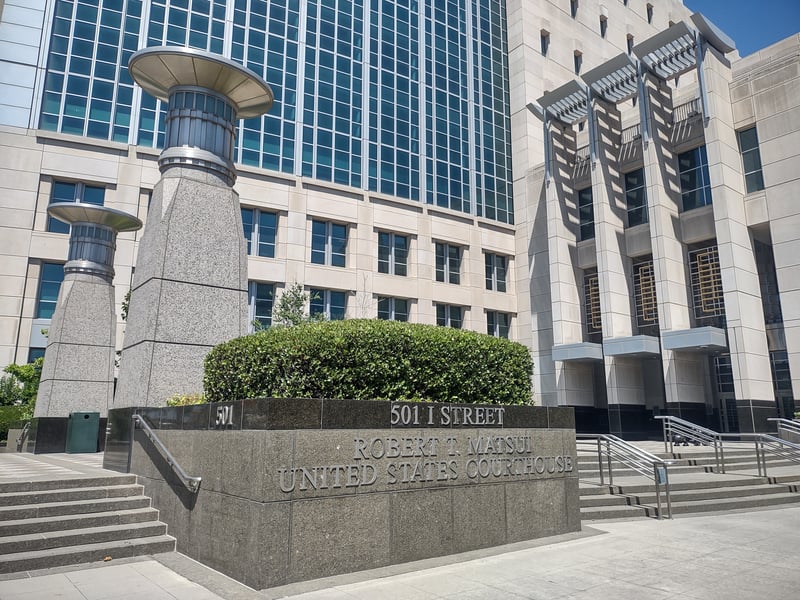
SACRAMENTO, Calif. (CN) — Politics and religion took center stage Thursday in a federal hearing about whether a California law regulating mandatory employee meetings passes constitutional muster.
The California Chamber of Commerce is seeking a preliminary injunction for Senate Bill 399, a 2024 law that it says limits employers from talking about religious or political issues.
The chamber and other plaintiffs argue that they face liability by talking to employees about certain matters — a broad definition that includes the decision to join a labor group or topics that could involve coworker religious observations.
While the state chamber brought the challenge to the law, U.S. District Judge Daniel Calabretta noted that the case’s core rested on its constitutionality.
The judge pushed an attorney for California on how a law centered on politics and religion avoided overstepping the First Amendment.
Deputy Attorney General Kristin Liska argued the law focused on conduct, not speech. Employers can say what they want, she said, and the law is triggered only if an employee faces punishment for not attending a meeting.
“That’s understandably going to be a chilling effect,” Calabretta said.
The law — called the California Worker Freedom from Employer Intimidation Act — prohibits employers from terminating or threatening to fire workers, or other forms of discrimination, if they decline to attend an employer meeting that includes a religious or political subject. Political matters include labor organizations.
The judge said he foresaw a situation where an employer would opt against holding a mandatory meeting for fear of inviting a lawsuit. He appeared to disagree with Liska’s argument that an employer could merely tell workers they’re not required to attend a certain meeting, as they could make an off-hand comment at a mandatory meeting that falls under the law.
“It’s a lot more slippery than, ‘Don’t make the meeting mandatory,’” the Joe Biden appointee said.
Liska said that the law, instead of regulating speech, targets content. She argued that no issue exists with political talk or a group meeting about a religious food drive, as long as there’s no captive audience.
Calabretta questioned if a religious hospital that broadcasts a prayer over an intercom system would violate the law. Laski argued it wouldn’t, if people were free to leave.
Representing the plaintiffs, attorney Lonnie D. Giamela called the law a slippery slope.
“Let’s be clear, they’re regulating speech,” he said.
Giamela used some of the hypothetical situations posed earlier by the judge. He said employers will reconsider calling meetings for fear they’ll touch on politics and religion. Giamela also surmised that some employees would argue they had been forced to attend.
“We have cases all the time where people still feel that they’re compelled,” Giamela said.
Additionally, the plaintiffs in their motion argued that the law violates the National Labor Relations Act.
The state law restricts an employer’s speech about unionization, which conflicts with the labor relations act. It also touches on a subject Congress meant to be clear of state intervention, unionization, which is another legal avenue on which the state law fails, the California chamber argued.
Calabretta questioned why a “labor organization” was included in the definition of a political matter in the law. He said it appeared California had taken a general labor relations law and “plopped” a piece about unions in it, which he called an end-run around existing law.
Giamela argued that the case’s central question hinged on if the law regulated speech. Liska said that the state grew concerned about employees who want to opt out of certain meetings. Her opponent’s argument can’t solely focus on if the law chills speech, she said, as that argument could be used against many statutes.
Calabretta made no decision Thursday on whether to halt the law’s implementation but commented “this is one of my favorite cases I have right now."
Subscribe to our free newsletters
Our weekly newsletter Closing Arguments offers the latest about ongoing trials, major litigation and rulings in courthouses around the U.S. and the world, while the monthly Under the Lights dishes the legal dirt from Hollywood, sports, Big Tech and the arts.