
 Search Articles


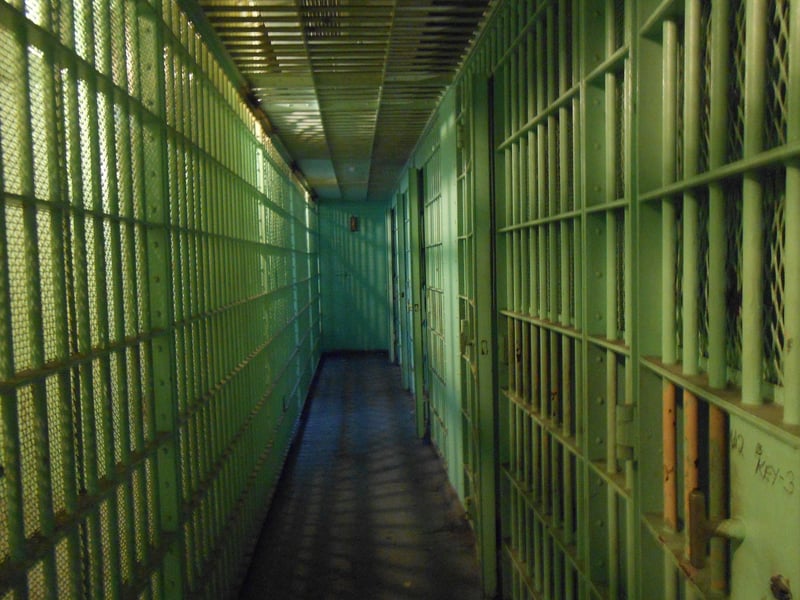
FRESNO, Calif. (CN) — A federal judge Monday denied prison guards’ latest request to dismiss a lawsuit filed in the wake of the killing and dismemberment of a California inmate.
Dora Solares, the mother of deceased inmate Luis Romero, sued several people after Jaime Osuna was accused of killing her son while sharing a prison cell. Four of the defendants are correctional officers — Bryan Gallemore, Jesse Garcia, Leonel Pena and Luis Silva — whom Solares claims failed to summon medical help the night her son died.
Romero died in March 2019, two days after he was transferred to Corcoran State Prison. Solares says Osuna, his cellmate, desecrated her son’s body.
The suit, filed in 2020, has hit some stumbling blocks. Sitting by designation, U.S. District Judge Lee Rosenthal in February granted a motion to dismiss, ruling that Osuna’s violent nature, and the presence of a forbidden bedsheet in the cell, favored a claim of failure to protect but not of failing to summon medical care. However, the judge gave Solares the chance to amend her suit.
The fifth amended complaint, filed weeks after the judge’s decision, passed muster on Monday.
In her new complaint, Solares states that the bedsheet, restricting the officers’ view into the cell, violated prison rules. She also argues the guards could hear violent noises from the cell overnight, hear other inmates talking about that violence and that Osuna has a history of extreme violence.
“Solares alleges that given these facts, Silva, Pena, Gallemore, and Garcia knew, or should have known, that Romero needed medical care, and failed to reasonably summon the care he needed,” Rosenthal wrote.
Again seeking the suit’s dismissal, the officers argued that her new complaint contradicted the previous one. In her new complaint, Solares states that Silva could hear loud sounds — indicating a need for medical care — coming from the cell. However, in her prior complaint Solares stated that the officers weren’t within earshot of the cell.
Solares must abide by her prior arguments and can’t change those facts in an amended complaint, the officers argued.
Rosenthal sided with Solares in her ruling.
“However, the court disagrees that Solares is barred by these ‘judicial admissions’ from taking an inconsistent position in her latest amended pleading,” Rosenthal wrote. “Some Ninth Circuit panels have held that a party cannot amend pleadings to contradict allegations made in earlier pleadings, while others have taken the opposite view.”
Rosenthal pointed to PAE Government Servs. v. MPRI, Inc. , a 2017 Ninth Circuit case that held there is no federal rule of civil procedure that bars someone from filing amended complaints that make inconsistent or contradictory accusations.
The judge then pivoted to the defendants’ other argument: that Solares still hasn’t properly argued a claim of failure to summon medical aid.
Successfully making such a claim requires three elements — that the public employee knew or had reason to know about the need, that there was a need for immediate medical care, and the individual didn’t reasonably get that care. If those criteria aren’t met, a public employee is immune from liability.
Rosenthal found that the new, amended complaint met that burden.
Officers put Romero into Osuna’s cell knowing that he posed a threat to others, as his history includes “torture-killing” a woman, stabbing an inmate and assaulting a guard, the judge wrote.
Also, Solares argued that officers heard loud sounds coming from the cell and other inmates talking about the sounds as they guessed about what was happening.
“These sounds of violence, combined with the bedsheet draped over the front of the cell that obscured the guards’ view of the cell, in violation of prison policies, should have been an immediate red flag to the officers that Romero was being attacked and would need immediate medical care,” Rosenthal ruled.
Attorneys for both sides could not immediately be reached for comment.
Subscribe to our free newsletters
Our weekly newsletter Closing Arguments offers the latest about ongoing trials, major litigation and rulings in courthouses around the U.S. and the world, while the monthly Under the Lights dishes the legal dirt from Hollywood, sports, Big Tech and the arts.