
 Search Articles


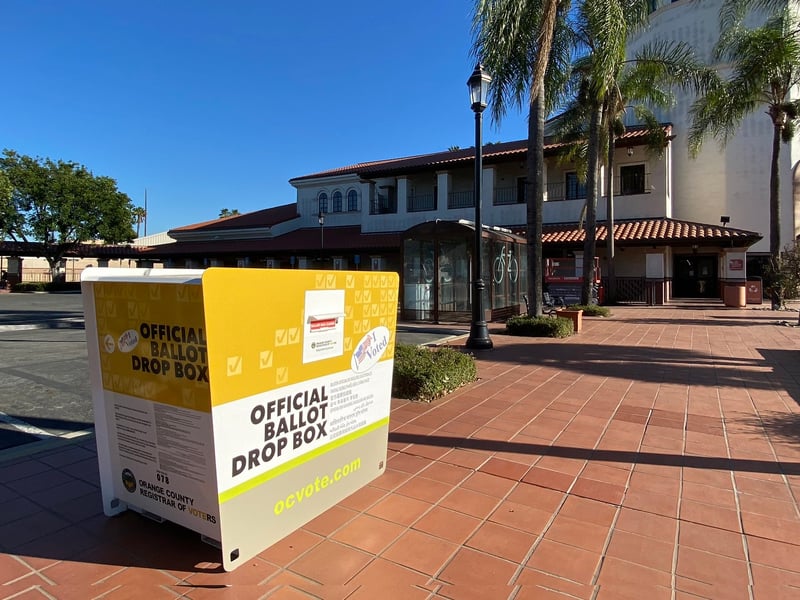
SANTA ANA, Calif. (CN) — California on Thursday asked a state court judge for a second time to invalidate a Huntington Beach charter amendment requiring voters to show valid government ID before they can cast their ballot.
Orange County Superior Court Judge Nico Dourbetas, who last year dismissed the case because the city hadn’t yet implemented any ordinances for its voter ID requirement, took under submission the petitions of the state and of a Huntington Beach resident who sued separately without issuing a decision at the hearing in Santa Ana, California.
In February, the California Courts of Appeal reversed Dourbetas, saying that his decision that the controversy wasn’t ripe was “problematic” and sent the case back to him to rule on California’s facial challenge, as opposed to an as-applied challenge, that the Huntington Beach voter ID requirement is preempted by state law.
Deputy Attorney General Michael Cohen told the judge that it’s state interest and concern to safeguard citizens’ right to vote and that Huntington Beach lacked constitutional authority to impose its own requirements.
“Cities don’t run their own elections,” Cohen said, noting that federal, state and local elections are consolidated events where county election officials are deeply involved.
Lee Fink, the lawyer for Huntington Beach resident Mark Bixby, argued that Huntington Beach had never articulated a compelling interest for establishing the voter ID requirement because the purported concern about voter fraud and the notion that it would provide “confidence” in the outcome of elections weren’t substantiated.
“We don’t know what the lack of confidence is that the city is addressing,” Fink said. “They need to have a compelling interest to burden the right to vote.”
According to Fink, as many as 11% of Americans don’t have a government-issued ID such as a driver’s license, including many elderly people and racial minorities because it’s a burden on them in terms of money and time involved to get one.
The judge expressed some reservation with this line of argument, observing that there would seem to be a need to make sure that only eligible voters cast a ballot. “Even if there’s only one incident of fraud in an election, isn’t that an attack on democracy,” Dourbetas said.
The judge in 2023 declined to block the city’s referendum on adding the voter ID requirement.
California Attorney General Rob Bonta and California Secretary of State Shirley Weber sued Huntington Beach last year, claiming that the amendment was preempted by state law and invalid.
Huntington Beach, also known as Surf City USA, is a conservative bastion in the mostly left-leaning state, and as such it frequently squares off in court against the California attorney general — either over its own municipal laws and regulations or the state’s.
Anthony Taylor, an attorney for the city, argued at Thursday’s hearing that a recent executive order by President Donald Trump on “preserving and protecting the integrity of American elections” supported Huntington Beach’s voter ID requirement and preempted California’s election laws.
“We are confident that this one will be upheld,” Taylor told the judge referring to various legal challenges that the president’s executive order tends to face in federal court. “It’s not for a state court to invalidate it.”
The city’s voter ID requirement, which applies only to voters who show up to vote in person, is aimed at cutting down on voter fraud, which conservatives have long argued is an ever-present danger.
But most evidence points to voter fraud being a rare occurrence. Progressives have argued voter ID laws have the effect of suppressing voter turnout, particularly in low-income and minority communities. The evidence for that argument is mixed.
 Follow @edpettersson
Subscribe to our free newsletters
Our weekly newsletter Closing Arguments offers the latest about ongoing trials, major litigation and rulings in courthouses around the U.S. and the world, while the monthly Under the Lights dishes the legal dirt from Hollywood, sports, Big Tech and the arts.