
 Search Articles


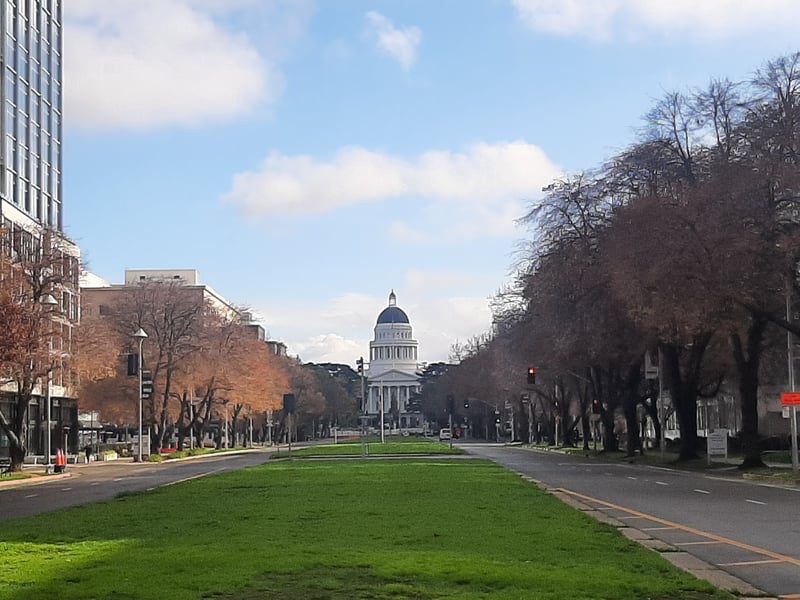
SACRAMENTO, Calif. (CN) — Legislation introduced by California lawmakers this session offers a window into the priorities of the multi-headed, law-making creature.
Composed of 80 Assembly members and 40 state senators, the Legislature this year has offered bills ranging from the enforcement of federal immigration law to condoms in schools. Lawmakers had until Friday to submit their legislation. Bills are now being assigned to various committees, where they’ll begin the arduous journey through the legislative process.
Some of the bills — over 2,000 from both chambers — will make it to the governor’s desk, getting his signature or the veto pen. Many others will fail to pass key hurdles and die on the vine.
Bill hearings begin next week.
The issue of immigration looms over the Golden State, as President Donald Trump has made it a priority and California has responded in kind.
Assemblymember Al Muratsuchi, a Torrance Democrat, introduced Assembly Bill 49. It would prohibit schools from letting a U.S. Immigration and Customs Enforcement employee inside a school without showing proper ID, a written statement of purpose and a judicial warrant.
“All children have a constitutional right to attend public schools, regardless of immigration status,” Muratsuchi said in a statement. “Unfortunately, the threat of federal immigration officials coming onto school grounds to detain undocumented students or family members casts a shadow of fear over all California students.”
Senate Republicans responded with Senate Bill 554, called the Safety Before Criminal Sanctuary Act. Introduced by state Senator and Minority Leader Brian Jones, a San Diego Republican, the bill doesn’t seek to change California’s sanctuary state status. Instead, Jones wants to stop local governments from adding any more restrictions.
Jones in a statement said his bill was a response to San Diego declaring itself a “super sanctuary county” by stopping authorities from working with ICE for any offense unless they have a federal warrant.
“Importantly, this bill ensures violent criminals are not shielded from federal immigration authorities, using every tool in the toolbox to keep our communities safe,” Jones said.
The federal government’s designs on immigration are contrary to California’s Democratic supermajority, which lost seats in the November election. Lawmakers responded in part by calling affordability a key issue.
Tackling energy prices is one way to address the state’s high cost of living. Assembly Republicans attempted on Monday to do just that by repealing a change to the state’s low carbon fuel standard.
Republicans have said drivers will feel that change to the fuel standard, made in November by the state’s Air Resources Board, in higher fuel costs.
Assembly Republicans on Monday failed in a procedural move to bring Assembly Bill 12 to the floor that day for a vote. The bill, which can still proceed through the regular legislative process, would have repealed the board’s November decision.
Lawmakers have filed several bills in their attempts to address the state’s high costs.
Assemblymember Joe Patterson, a Rocklin Republican, introduced Assembly Bill 1273. It would prohibit the state’s Public Utilities Commission from putting a rate hike on its consent calendar. That means the commission would address the hike individually, not in a vote that groups several items together. Also, at least 30 minutes of public comment would be provided.
Assembly Bill 1443, introduced by Corona Republican Assemblymember Leticia Castillo, would exempt tips from income taxes from Jan. 1, 2026, to Jan 1, 2031.
Trump emphasized eliminating taxes on tips during his campaign, a call that opponent Kamala Harris also took up.
Assemblymember Jeff Gonzalez, an Indio Republican, wrote Assembly Bill 1058, which, if passed, would suspend the state’s motor vehicle fuel tax — currently about 59 cents per gallon — for a year.
Lawmakers in the new session also are targeting emerging technologies, including artificial intelligence.
Assemblymember Rebecca Bauer-Kahan introduced Assembly Bill 578, focusing on food delivery apps.
The Orinda Democrat’s bill would require such apps to have a conspicuous feature enabling customers to contact a human. It would also make the apps give a full refund to someone whose order wasn’t delivered or who received the wrong order. A partial charge would occur if part of the order arrived correctly.
“AB 578 is about fairness and accountability — ensuring that when you pay for a meal, you either get what you ordered or get your money back,” Bauer-Kahan said in a statement.
Bauer-Kahan also wrote Assembly Bill 1018, which would regulate automated decision systems used to make consequential decisions. Such decisions include those affecting a person’s employment, enrollment and discipline.
Additionally, Bauer-Kahan introduced Assembly Bill 1064, called the Leading Ethical AI Development for Kids Act. It would create a standards board to evaluate and regulate AI used by kids.
“Tech companies have prioritized rapid development over safety, leaving children exposed to untested and potentially dangerous AI applications,” Bauer-Kahan said. “AB 1064 ensures we put safeguards in place to protect young users.”
Some lawmakers have reintroduced bills that failed to become law in previous sessions.
State Senator Lola Smallwood-Cuevas, a Los Angeles Democrat, introduced Senate Bill 442. It would prohibit grocery stores and retail drug establishments from having self-checkout unless certain requirements are met. Those would include having an employee-staffed manual checkout station available, as well as limiting self-checkout to 15 items.
A similar bill last year by Smallwood-Cuevas failed to get out of committee.
Assemblymember Alex Lee, a San Jose Democrat, introduced Assembly Bill 590, called the Social Housing Bond Act of 2026.
The bill would lead to a vote of the people that, if approved, would authorize $950 million in bonds to fund social housing programs.
Social housing differs from public housing, as it has residents of varying income levels. Also, those earning more subsidize lower-income residents.
“It’s time for us to invest in a solution that can make housing attainable for all,” Lee said in a statement.
A similar bill didn’t get out of committee last year.
State Senator Caroline Menjivar, a San Fernando Valley Democrat, has introduced a different version of a bill that would put condoms in high schools.
Prior versions of the bill would have required that condoms be available to high school students, as well as available during specific educational and public health programs in public schools for seventh through 12th grades. It was vetoed last year, with Governor Gavin Newsom citing financial concerns.
The latest version, Senate Bill 608, would prohibit schools from stopping school-based health centers from providing condoms on-site.
Subscribe to our free newsletters
Our weekly newsletter Closing Arguments offers the latest about ongoing trials, major litigation and rulings in courthouses around the U.S. and the world, while the monthly Under the Lights dishes the legal dirt from Hollywood, sports, Big Tech and the arts.