
 Search Articles


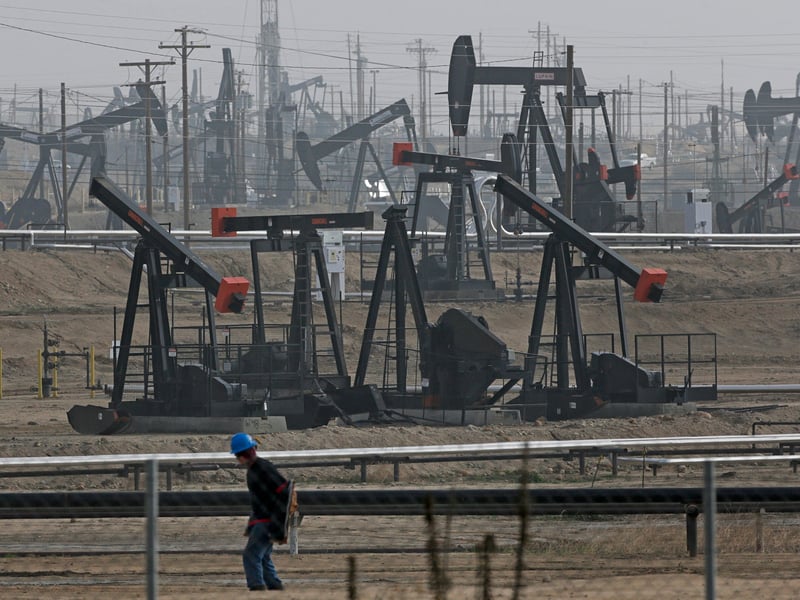
SAN FRANCISCO (CN) — Two groups in separate legal battles argued Wednesday before a Ninth Circuit panel that the U.S. Environmental Protection Agency didn’t do enough to reduce air pollution in California’s San Joaquin Valley.
Committee for A Better Arvin argued that the EPA wrongly approved pollution controls, called contingency measures, for the valley. The second group, Little Manila Rising, said the federal agency erred when it granted a year extension to the air quality attainment date for the area.
The three-judge panel made no decision Wednesday in either case.
Both plaintiffs have called the valley “an area with some of the worst air quality in the United States,” citing Association of Irritated Residents v. EPA , a 2021 Ninth Circuit case.
In the committee’s case, it argued that the EPA violated the Clean Air Act by adopting subjective exemptions it based on undefined feasibility considerations, approving contingency measures that led to minimal pollution reductions.
U.S. Circuit Judge Daniel Bress, a Donald Trump appointee, questioned how the EPA could be forced to adopt an infeasible standard.
Representing the committee and other plaintiffs, attorney Colin O’Brien said the EPA had conflated an infeasible consideration with one that’s impossible.
“What they’re really talking about is the absence of low-hanging fruit,” O’Brien argued.
According to O’Brien, the EPA didn’t commit itself to minimum reductions required by law, making the law meaningless. It instead has decided that any reduction is sufficient, he said.
“They haven’t applied any standard,” he added, arguing it uses factors but no objective criteria.
Attorney Sarah Izfar, representing the EPA, told the panel it should deny the committee’s petition.
“This case begins and ends at the statute,” she added.
U.S. Circuit Judge Salvador Mendoza Jr., a Joe Biden appointee, immediately had a question about feasibility. He questioned where that appeared in the law.
Izfar said that Congress delegated authority to the EPA to fill in any gaps, claiming that portions of the law are broad and lack specific language in certain parts.
In contrast to the committee’s case about contingency measures, the Little Manila Rising petition focuses on a deadline.
Little Manila has argued that California failed to meet an air quality standard set in 1997 by deadlines in both 2015 and 2020. The EPA then approved the state’s plan and set a new deadline for Dec. 31, 2024.
That extension was prohibited, argued Brent Newell, an attorney for Little Manila and other plaintiffs.
Time extensions can occur in certain circumstances, Newell argued. However, the valley is in a certain category — a serious area — prohibited from one-year extensions.
“There is no ambiguity,” Newell said. “EPA could have amended the regulation. It didn’t.”
Attorney Rachel Martinez, for the EPA, used the metaphor of a road when talking about the legal pathway the EPA took. When one road ends, the agency can use another.
U.S. Circuit Judge Sidney R. Thomas, a Bill Clinton appointee, said the language of the law appeared straightforward.
“The statute is absolutely silent on the circumstances we have here,” Martinez said, questioning why the EPA would have a rule that bound its hands from extending a deadline. “I think that’s really important here.”
“The regulation could have been clearer,” Bress said moments later.
Bress also questioned the weight of the case, noting the timeline that’s long passed.
Martinez said that California received the extension after it had made much progress on the air quality, adding that the EPA is expected to issue a final decision early next year.
“I do think that’s an important point — how much does this matter at this point?” she added.
Subscribe to our free newsletters
Our weekly newsletter Closing Arguments offers the latest about ongoing trials, major litigation and rulings in courthouses around the U.S. and the world, while the monthly Under the Lights dishes the legal dirt from Hollywood, sports, Big Tech and the arts.