
 Search Articles


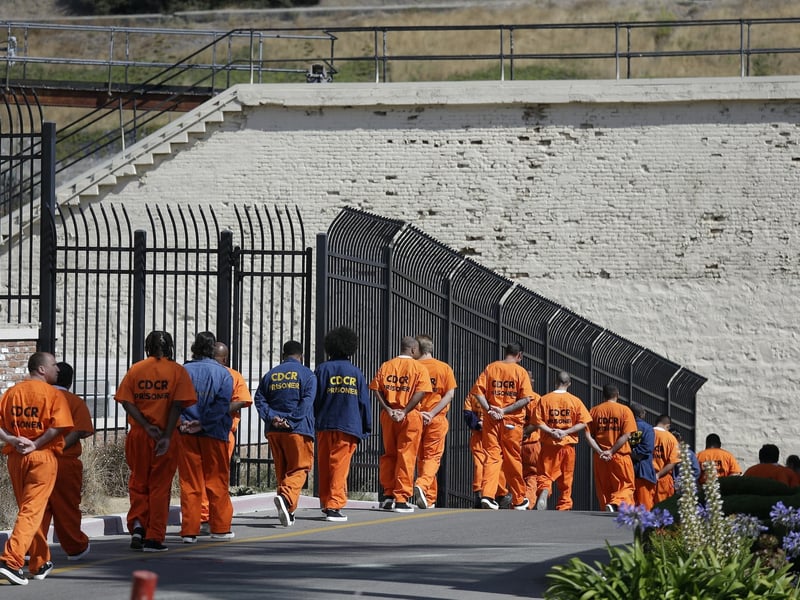
SAN FRANCISCO (CN) — How long does it take to fix California’s prison mental health system? Apparently, almost 30 years and counting.
The Ninth Circuit held two hearings Friday in Coleman v. Newsom , a decadeslong class action focused on mental health care for California inmates who claim the state isn’t doing enough to address serious mental disorders in the corrections system.
In its appeal of two court orders from the Eastern District of California, the state argued the lower court overstepped its authority by levying a $6.7 million fine for every month the state is out of compliance with previous court orders. The bill has topped $130 million.
“The underlying question is ‘What Eighth Amendment rights do incarcerated persons — that are covered by this action — have to get medical treatment?’” said U.S. Circuit Judge Milan D. Smith Jr., a George W. Bush appointee, during oral arguments Friday at the James R. Browning U.S. Courthouse in San Francisco.
The court proceedings stem from a 1990 class action over mental health care in state prisons. A group of California prisoners with mental illnesses claim the California Department of Corrections and Rehabilitation didn’t provide adequate mental health services to its prisoners.
After a full trial in 1995, a federal judge in Sacramento issued an injunction requiring major changes in the prison mental health system. The court found prison officials violated the Eight Amendment’s cruel and unusual punishment clause by failing to provide adequate mental health care.
Today, the case covers all prisoners with serious mental disorders housed in California state prisons — around 34,000 people known as the “Coleman class.”
Before a three-judge panel Friday, attorneys for the state argued that a lower court erred when it held the state in contempt for not complying with a previous order to increase the number of mental health staff, which dropped dramatically in recent years. The state claims it was required to do the impossible.
“No matter what, if you’re there, you’re still working in a jail,” said Deputy Attorney General Randall D. Zack, representing the state.
In a different hearing for the same case, the parties argued over whether the language in a lower court order means expanding specialized care to the entire class of patients.
Deputy Attorney General Oliver Wu, who represents the state, argued the lower court abused its discretion when it ordered the state to provide treatment for personality disorders that is currently used in other prison systems.
Even though the state has agreed to provide these mental health services, it is appealing to clarify that it is not required to.
“Nevertheless, defendants went beyond the requirements of the remedial plan and created an experimental treatment program to potentially address some inmates’ dysfunctional behaviors,” the state said in its brief.
In other words, the state’s going to do it, but not because the courts ordered it.
All sides agree that a subset of 470 patients with personality disorders aren’t receiving adequate care under the existing system. But, Wu said, the order’s language isn’t narrow enough to make sure only those prisoners are receiving care.
“This order requires the defendants to provide services for personalities class-wide, not just for the 470 people identified by the assessment,” he said.
The inmates’ attorneys disputed this fact as soon as they had a chance to speak.
“The state is simply incorrect that the judgment in this case or the program guide excludes treatment for personality disorders,” said Attorney Lisa Ells of Rosen Bien, who represents the Coleman class.
After 30 years of legal battles, the judges seemed to be more skeptical of the state’s arguments.
“Why is the state fighting so hard against giving prisoners mental health treatment?” asked U.S. Circuit Judge Johnnie B. Rawlinson, a Bill Clinton appointee.
Smith echoed her concerns over the state’s true motivations.
“Isn’t it just money? Isn’t that what we’re really talking about here?” he asked.
At one point, Rawlinson became stern when Wu protested that he was running out of time.
“Please answer,” she said.
Wu ultimately acknowledged the judges concerns that money was a factor, although not the primary one.
The court did not indicate when it would issue a ruling.
Attorneys for the state declined to comment.
“While CDCR cannot comment on ongoing litigation, we stand by our appeal,” said a spokesperson for the California Department of Corrections and Rehabilitation.
The panel of judges was rounded out by U.S Circuit Judge A. Wallace Tashima, a Clinton appointee who appeared via Zoom Workplace.
Subscribe to our free newsletters
Our weekly newsletter Closing Arguments offers the latest about ongoing trials, major litigation and rulings in courthouses around the U.S. and the world, while the monthly Under the Lights dishes the legal dirt from Hollywood, sports, Big Tech and the arts.