
 Search Articles


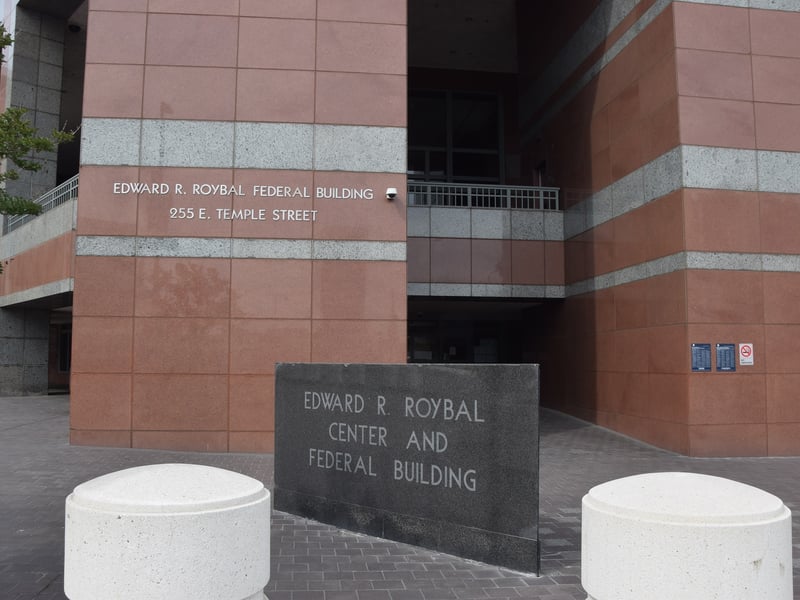
LOS ANGELES (CN) — Two Southern California corporate executives were sent to federal prison on Monday for continuing to sell dehumidifiers they knew could burst into flames rather than recall them.
Simon Chu, 70, was sentenced to 38 month in prison and Charley Loh, 67, got 40 months in the first criminal enforcement action brought under the Consumer Product Safety Act.
U.S. District Judge Dale Fischer rejected the government’s bid to send both men to prison for as long as 10 years each, but she wasn’t persuaded either by their lawyers’ request to sentence them to probation only.
The part-owners of Gree USA Inc. unquestionably put their own financial well-being above consumer safety, the George W. Bush appointee said, by failing to report the defective dehumidifiers to the Consumer Product Safety Commission when they knew beyond doubt through consumer complaints and tests that the products could combust and cause significant damage, injuries and death.
“They did it because their own reputation and financial security were more important to them than the risk to consumers,” Fischer said.
The two men were found guilty at a November 2023 jury trial of one count of conspiracy to defraud the U.S. Consumer Product Safety Commission and one count of failure to furnish information as required by the Consumer Product Safety Act.
The since-recalled dehumidifiers were manufactured by Gree Electric Appliances Inc. of Zhuhai, China, and sold in America under the GE and Kenmore brands among others. The Chinese manufacturer in 2021 entered into a deferred prosecution agreement with federal prosecutors and paid a $91 million fine.
The company admitted at the time that between 2007-2013, they sold more than two million dehumidifiers in the U.S. that were manufactured by Gree Zhuhai. In September 2012, high-level executives learned that the devices had defects that could cause them to overheat and catch fire, and that consumers had reported fires caused by the dehumidifiers.
Just in the first four months of 2013, when they knew that the dehumidifiers could spontaneously combust because of a defect with the compressor and the use of flammable plastics, Chu and Loh sold 285,596 defective humidifiers to American retailer., according to the government.
At the trial of the two executives, several consumers testified about fires at their homes caused by the dehumidifiers. In addition, the government argues, four deaths or serious injuries have been linked to the dehumidifiers.
“I feel great sadness for those were affected by the defected devices,” Chu told the judge.
The two men weren’t held accountable for damage or injuries from the defective dehumidifiers that occurred before they knew beyond question that they could burst into flames or after they were first recalled in 2013.
Richard Steingard, Loh’s attorney, argued at the hearing that it was the Chinese parent company who had pressured his client to delay the recall and that the Chinese executives were let off easy through the deferred prosecution deal. Meanwhile, he noted, only the U.S. employees were prosecuted for failing to report a defective product to the Consumer Product Safety Commission.
“It’s the epitome of a two-tiered system of the justice,” Steingard said.
The attorney accused the government of keeping the judge intentionally in the dark about the culpability of the Gree China in the scheme so as to get her to sign off on the deferred prosecution agreement.
Natalie Sanders, a trial attorney with the U.S. Department of Justice’s Consumer Protection Branch, called this line of argument a distraction from the defendants’ conduct.
It’s practically impossible for the Justice Department to prosecute individuals that reside in China, Sanders said, and the Consumer Product Safety Act is clear that any punishment for corporate entities has no bearing on the punishment for an individual executive.
The lawyer also stressed that it isn’t feasible for the government to police businesses’ compliance with the Consumer Product Safety Act, given that the Consumer Product Safety Commission is a small agency and a maximum sentence is a strong deterrence for other executives tempted to break the law.
“You can send a powerful message,” Sanders told the judge. “To defendants, but also to the industry, to provide much-needed deterrence.”
Fischer, however, reasoned that corporate executives would probably learn from their lawyers about the case and be advised that they could face more than a fine if they fail to inform the regulator about defective consumer products.
 Follow @edpettersson
Subscribe to our free newsletters
Our weekly newsletter Closing Arguments offers the latest about ongoing trials, major litigation and rulings in courthouses around the U.S. and the world, while the monthly Under the Lights dishes the legal dirt from Hollywood, sports, Big Tech and the arts.