
 Search Articles


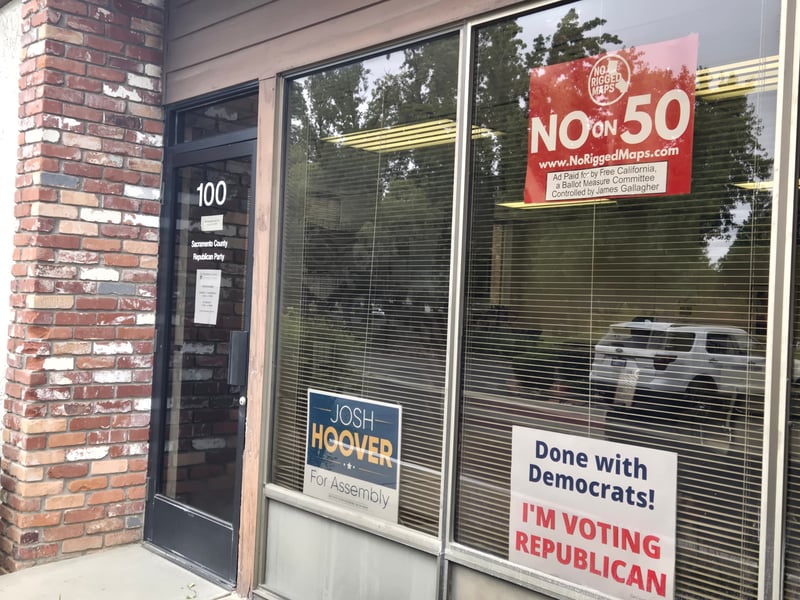
LOS ANGELES (CN) — California on Tuesday defended its voter-approved congressional district map as a purely partisan gerrymander against the Republican claim that it was an unlawful, racially motivated attempt to benefit Hispanic voters.
At the second day of an evidentiary hearing before a trio of federal judges in Los Angeles, the state’s expert witness Bernard Grofman, a redistricting specialist at UC Irvine, testified that the Proposition 50 map — approved by voters last month with the goal of giving Democrats five more seats in the U.S. House of Representatives — was a classic case of partisan gerrymandering.
“I have no doubt in my mind that this was partisan gerrymandering,” Grofman told the court. “The evidence of racial preponderance is weak to nonexistent.”
The California Republican Party joined by the Trump administration are seeking a preliminary injunction to stop the state’s new map from being used in next year’s midterm elections.
They will need to convince the court that new electoral map was motivated more by racial consideration rather than partisan or political ones, even though California Governor Gavin Newsom and other state politicians have said they sought to add more Democratic seats in Congress in response to Texas adding more Republican seats.
While racial gerrymandering — where race is the predominant incentive in creating voting districts — is largely unconstitutional unless there are compelling reasons under the U.S. Voting Rights Act to ensure minority groups can elect representatives of their choice, the U.S. Supreme Court has washed its hands of partisan gerrymandering disputes.
This has left states free to create voting maps that benefit the party that controls a state’s legislature.
California’s map used traditional gerrymandering tools to increase the likelihood that more Democrats will be elected to Congress by “cracking” and “packing” districts now held by Republican representatives, Grofman said.
Out of the nine congressional districts in California now held by Republicans, he said, five were cracked such that Republican voters were removed from them and Democratic voters added.
“They were chopped to bits,” Grofman told the court. “That’s what cracking means.”
The four remaining Republican districts were packed by adding more Republican voters in them, he said. In addition, vulnerable Democratic districts had additional blue voters added to them either from safe Democratic districts or from districts that previously had a Republican majority.
“The tools of partisan gerrymandering have been used in a way that you would expect them to be,” Grofman testified.
On Monday, Sean Trende, a senior election analyst with the conservative political news site RealClearPolitics, told the court that the new border of California’s 13th Congressional District, a swing district that voted for Trump last year, revealed that the state’s mapmaker was more concerned with adding Hispanic voters to the district than Democratic ones.
Comparing demographic maps that showed Democratic voters and Hispanic voters, Trende said some of the unusual shapes of the new district map can only be explained by the mapmaker wanting to include heavily Hispanic blocks around the city of Stockton in the district while ignoring heavily Democratic blocks.
Grofman, however, argued that the only way to add more Democratic voters to District 13 was to go north and add a chunk of Stockton, a mixed race city, which invariably meant that more Hispanic voters would be added. At the same time, he said, the mapmaker had to be cautious not to remove too many Democratic voters from neighboring District 9.
Given that a large chunk of Hispanic voters in California tend to vote Democratic, it wasn’t surprising that, to increase the number of Democratic voters in a district with racially mixed communities, more Hispanics voters got added, according to Grofman.
Whether race or politics predominated in the drawing of the state’s new voting districts will be up to U.S. Circuit Judge Kenneth Lee, a Donald Trump appointee, U.S. District Judge Josephine Staton, a Barack Obama appointee, and U.S. District Judge Wesley Hsu, a Joe Biden appointee.
The Republican bid to invalidate California’s redistricting might have been made more difficult by the Supreme Court’s decision earlier this month to rebuff a similar challenge to Texas’ redistricting.
Over the dissents of the three liberal justices, the conservative majority reprimanded a lower court for throwing out Texas’ newly minted map “on the eve of an election.”
“The district court improperly inserted itself into an active primary campaign, causing much confusion and upsetting the delicate federal-state balance in elections,” the court wrote in an unsigned order.
 Follow @edpettersson
Subscribe to our free newsletters
Our weekly newsletter Closing Arguments offers the latest about ongoing trials, major litigation and rulings in courthouses around the U.S. and the world, while the monthly Under the Lights dishes the legal dirt from Hollywood, sports, Big Tech and the arts.