
 Search Articles


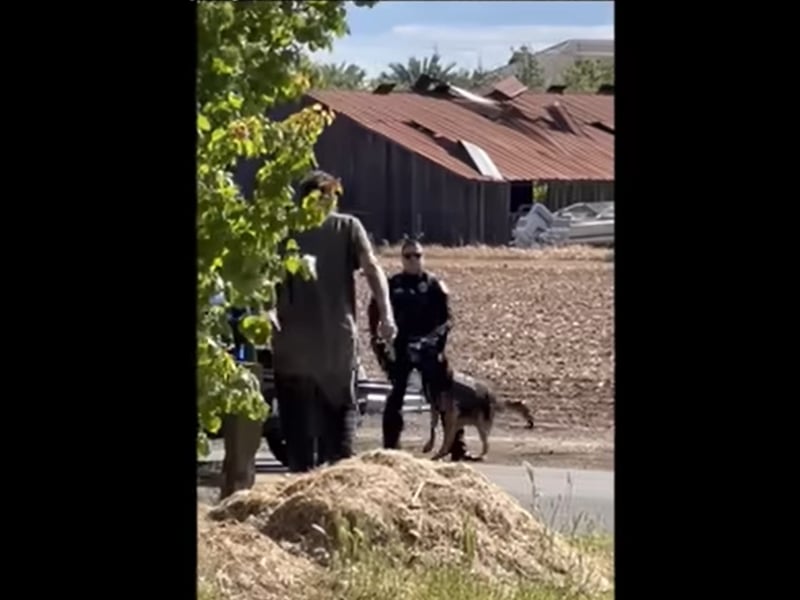
SACRAMENTO, Calif. (CN) — Two California law enforcement officers will no longer face excessive force claims in a suit over the shooting death of a homeless man, though other portions of the case remain intact.
David Michael Bailey sued Stanislaus County, the city of Turlock and three officers over the death of his nephew Kevin Frey, arguing among other things that the officers used excessive force in the May 2024 shooting. Bailey claimed his nephew suffered from a mental illness and posed no immediate threat, and that officers had plenty of time to discuss how to disarm him of a knife and used excessive force when shooting him.
Senior U.S. District Judge John Mendez dismissed excessive force claims against sheriff’s deputies Rose and Garcia.
The judge also dismissed unreasonable seizure claims against the three deputies, as well as Bane Act violations against Rose and Garcia.
Mendez kept negligence claims against Rose and Garcia intact. He also denied the motion to dismiss for lack of standing.
Other claims involving due process violations, municipal liability and battery weren’t addressed in the ruling.
Bailey argued that Rose and Garcia played an integral role in Larson’s use of deadly force, an argument the judge rejected.
“Plaintiff does not allege defendants Rose and Garcia themselves used excessive force against Frey,” Mendez said in his ruling, adding later: “Here, plaintiff does not plausibly allege that defendants Rose and Garcia were integral participants in defendant Larson’s allegedly unconstitutional shooting.”
Frey had a knife, and Garcia told him he’d release a police dog unless he dropped it. Frey then started walking toward Rose, and Larson shot him, Mendez said.
Those accusations don’t establish that Rose or Garcia knew Larson would use deadly force and agreed to it, the judge added.
“Indeed, it appears that both defendants attempted to resolve the encounter with Frey through less lethal means: by calling a crisis negotiation team (defendant Rose) and by threatening use of a K9 officer (defendant Garcia),” Mendez said.
Pivoting to the unreasonable seizure claim, the judge noted that brief seizures that aren’t arrests don’t violate Fourth Amendment rights if officers have reasonable suspicion of a crime.
Rose responded to the area after a 911 caller reported a man either intoxicated or under the influence of drugs. The deputy found Frey sitting under a tree. He also had a knife, Mendez noted.
“Plaintiff also concedes that Frey later moved in a manner ‘consistent with the 911 caller’s reports that he was intoxicated,’” the judge added.
That gave Rose reasonable suspicion that Frey had trespassed on the caller’s land, leading to his brief seizure to investigate. Additionally, Frey disobeying an order to remain gave further justification for maintaining his detention, Mendez said.
The judge also found that the Bane Act claims against Rose and Garcia hinge on the excessive force and unreasonable seizure claims. He said they must face dismissal as Bailey offered no argument about a constitutional violation made by Rose or Garcia.
However, Mendez did maintain Bailey’s negligence claim against those deputies.
Bailey had argued the two deputies failed to deescalate their interaction with Frey. They commanded him to drop his knife or get bitten by a police dog as they waited for a crisis negotiation team.
The deputies countered by saying they owed Frey no duty of care, as they didn’t use deadly force on him. The judge ruled that California case law holds that officers owe a duty to an arrestee.
“Here, plaintiff argues that defendants owed Frey a reasonable duty of care while detaining him and breached this duty by failing to ‘employ better negotiation tactics rather than continuing to shout commands at Mr. Frey, who was unresponsive, while pointing guns at him,’ and ‘informing Mr. Frey that if he did not comply with orders, the K9 would be released,’ tactics which ‘further escalated a tense situation,” the judge said, referring to Bailey’s arguments.
Attorneys for the parties could not be reached for comment by press time.
Subscribe to our free newsletters
Our weekly newsletter Closing Arguments offers the latest about ongoing trials, major litigation and rulings in courthouses around the U.S. and the world, while the monthly Under the Lights dishes the legal dirt from Hollywood, sports, Big Tech and the arts.