
 Search Articles


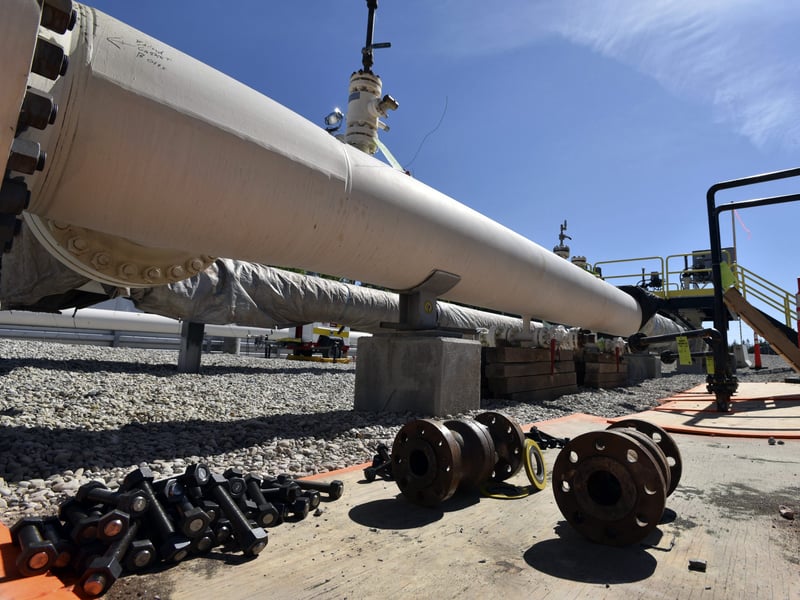
SANTA BARBARA, Calif. (CN) — The California Coastal Commission ordered the owners of an oil pipeline that runs from an offshore facility off the coast of Santa Barbara through the Los Padres National Forest on Thursday to stop unpermitted development near threatened habitats and pay almost $15 to $18 million in damages.
“It’s profoundly disappointing that we have to be here today,” said Commissioner Meagan Harmon, at the California Coastal Commission’s monthly meeting in Santa Barbara.
The commission had tried for a year to work with both Sable Offshore Corp — the owners and operators of the pipeline — and Santa Barbara County to get the company to stop excavating sensitive wildlife and plant areas along the Gaviota Coast that lie above their oil pipeline, but the excavations continued, Harmon added.
She’s all for pipeline repairs, but the company has to follow the law and perform them in the right way, Harmon said.
The company argues that it performed legally mandated repairs and maintenance to the pipeline, and in an even more environmentally safe and conscious way than state law calls for.
But the commission found that the company removed vegetation, installed metal plates and other material in wetlands and removed and replaced pipeline and other installations in areas that endanger southwestern pond turtles, dusky-footed muskrat, coastal live oak, Gaviota tar plant and southern steelhead.
The commission said the company flouted California’s environmental protection laws — all to fix corrosive pipelines and restart the same line that caused a massive oil spill in 2015.
The commission originally proposed to dock the company $14.9 million in damages, but the penalty was raised “to send the message to folks that they need to come work with us,” said Commissioner Justin Cummings.
The company will be penalized $18 million if they refuse to work with the commission on what’s called a Coastal Development Plan. It’ll be charged almost $15 million if they do work with the commission.
The penalty and the commission’s order that the company stop excavating the area isn’t litigating whether there should be oil production in the area, but whether the excavations were permitted, with the proper environmental analysis done, Cummings said.
But DJ Moore, an attorney for Sable Offshore, said the commission has no authority to tell the company what it can and cannot do since its permit, granted in the 1980s, allows them to make upgrades on the pipelines. He added that its offshore rigs are regulated by the Department of the Interior, which requires them to make updates and upgrades to their facilities.
“The county has not declined to act here, the commission just disagrees with their actions,” Moore said about Santa Barbara County.
Instead of flaunting the law, Moore said the company was simply trying to fix over the pipes to make them safer, which the county approved of, he added.
“It reminds me of the expression ‘you can’t put lipstick on a pig.’ The pipeline is a problem,” said Hannah Beth Jackson, a former state senator who represented parts of Santa Barbara and Ventura counties from 2012 to 2020, during the meeting’s public comment section.
In 2015, a spill caused by the corroded pipeline, now owned by Sable, sent 142,800 gallons of crude oil streaming into the Pacific Ocean near Santa Barbara. Thick, black blobs of oil washed up along the coast for weeks afterward and hundreds of animals were coated in tar.
The facility was owned then by Plains All American Pipeline. The pipeline was eventually closed and criminal charges were brought against the owner.
Plains All American Pipeline sold the pipeline to ExxonMobil Corporation, which then sold it to Sable. The purchase agreement between ExxonMobil and Sable was finalized last year.
The community hasn’t forgotten that spill, said Maureen Ellenberger, chapter chair of the local Sierra Club.
“The California coast shouldn’t be for sale. Our waters are not a dumping ground,” she said. “We should never enable Sable.”
Jose Crespo, who wore a Sable hat, referred to the commission’s move to regulate the company as an example of government overreach that threatened good paying jobs for locals.
“It’s harder and harder to make ends meet these days,” he said. “We can respect environmental rules and support working families at the same time”
Working people shouldn’t be pitted against the environment, Harmon said.
The Coastal Act and the state’s environmental laws doesn’t just protect the environment, “they make work safer for the people doing their jobs,” she said. “We can have good, well-paying jobs and we can protect and preserve our coast.”
The Coastal Act and the commission itself were made into law by a voters-initiated proposition, she added.
“The coastal act is a law put in place by a vote of the people,” Harmon said, and Sable’s refusal to comply with it is “a subversion of the will of the people of California.”
Subscribe to our free newsletters
Our weekly newsletter Closing Arguments offers the latest about ongoing trials, major litigation and rulings in courthouses around the U.S. and the world, while the monthly Under the Lights dishes the legal dirt from Hollywood, sports, Big Tech and the arts.