
 Search Articles


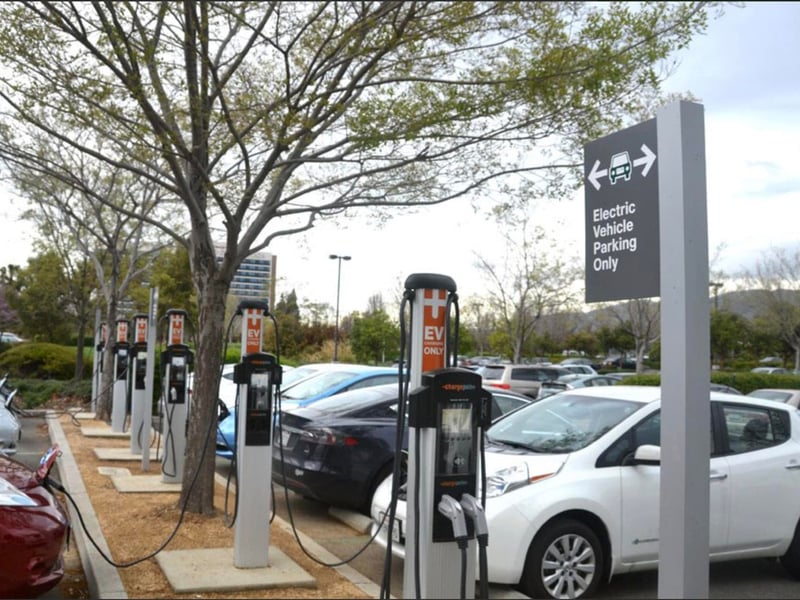
(CN) — California transportation programs, such as for highway maintenance and rehabilitation, face a steep decline in funding over the next 10 years as the state’s efforts to cut greenhouse gas emissions will cut into revenue from fossil fuel taxes.
In a report published Wednesday, the state’s Legislative Analyst’s Office projected that California’s policy to phase out the sale of gasoline-powered passengers cars by 2035 and of medium and heavy trucks by 2040 will reduce annual revenue from gasoline excise taxes by $5 billion, or 64%, by 2035.
Revenue from diesel excise and sales taxes will drop by $710 million, or 20%, a year from current levels over this period, according to the report.
“Absent a funding backfill from alternative sources, the projected revenue declines will result in certain state transportation programs having less capacity to support state and local transportation projects and activities,” the analyst said. “The California Department of Transportation’s highway maintenance and rehabilitation programs are funded primarily by state fuel taxes and therefore will face significant funding declines.”
California has set ambitious goals to reduce greenhouse gas emissions, which are linked to climate change and as such contribute to the persistent droughts and devastating wildfires that have plagued the state more and more frequently in the past decades. With transportation accounting for 40% of greenhouse gas emissions in California, eliminating fossil-fuel burning vehicles from the roads is a key part of the state’s plans to reduce its massive carbon footprint.
The state climate policies envision that by 2037 more than half of the cars on California’s roads will be zero-emission vehicles, compared to just 3% in 2022. But what is good for the climate may not be necessarily good for the roads.
About one-third of the funding for California’s transportation programs comes from state sources, and primarily from fuel taxes. Local sales taxes and the like contribute about half of the money spent each year on the state’s roads and streets, with federal funding adding about 20% of the total.
Gasoline excise taxes contribute $7.8 billion to the $14.2 billion California sets aside for transportation programs, with diesel excise and sales taxes contributing an additional $2.7 billion in the 2023-24 budget. The remainder of the state’s share comes from registration and other vehicle fees.
The biggest outlay from the state itself is Caltrans’ highway maintenance and rehabilitation programs, to which California contributes about $5.8 billion in the current budget. So a significant decline in gasoline taxes will be most strongly felt by these Caltrans’ programs.
The Legislative Analyst’s report projects that the state funding available to keep the highways patched up will drop to $4.2 billion as revenue from gasoline excise taxes start to shrink.
“These programs will experience an overall reduction in the number of projects the department can complete on the state highway system, likely resulting in a decline in highway conditions for drivers,” the analyst said.
The office provides nonpartisan analyses of the state budget and serves as the “eyes and ears” for California’s Legislature to ensure, in its own words, “that the executive branch is implementing legislative policy in a cost-efficient and effective manner.”
California lawmakers should monitor the projected decline in fossil-fuel taxes in the coming years and start thinking about plans to mitigate the impact on funding for highway maintenance and other projects, the analyst advised.
The Golden State has already implemented an annual road improvement fee on zero-emission vehicles, so that drivers who don’t pay excise taxes at the pump also contribute to the upkeep of the roads, but that will only add $1.1 billion to the state’s funds by 2035 and won’t make up for the decline in revenue from fossil-fuel taxes.
 Follow @edpettersson
Subscribe to our free newsletters
Our weekly newsletter Closing Arguments offers the latest about ongoing trials, major litigation and rulings in courthouses around the U.S. and the world, while the monthly Under the Lights dishes the legal dirt from Hollywood, sports, Big Tech and the arts.