Search Articles


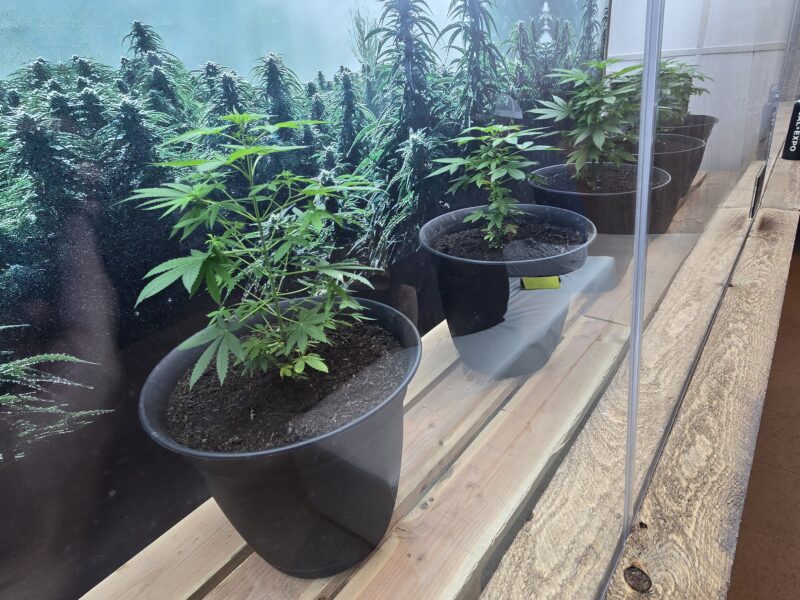
SACRAMENTO, Calif. (CN) — It used to be a hike to get to the California State Fair’s cannabis consumption lounge.
Visitors would buy products in one area, then start a long, cardboard cutout-lined path to where they could imbibe. Fences separated them from the noncannabis portion of the fair.
In fact, the entire cannabis exhibit, retail area and consumption lounge sat a world apart from the rest of Cal Expo, the home of the state fair each year in Sacramento. That was by design — a careful path to ensure people didn’t have to see, hear or smell the area unless they wanted to.
That hike lasted only one year. This summer, visitors will be able to consume cannabis near the purchase point.
It’s a change that reflects the growing acceptance and prestige of the product, not only here but across the Golden State.
Each year, the California State Fair shows off the best of this state’s agricultural bounty, from wine to cheese to olive oil.
One coveted California crop — cannabis — is taking an increasingly prominent role.
As the state fair kicks off this Friday, July 17, it’ll mark the the fifth year of this cannabis exhibit and the third year that on-site consumption has been allowed.
Vendor numbers are growing, as is a competition for cannabis products. It mirrors the growing success and acceptance of this California industry, now worth around $4 billion.
Spread across 350 acres at the Cal Expo fairground in Sacramento, the California State Fair is a celebration of all things California. There’s live bands, livestock, funnel cakes and martial arts demonstrations.
The most important aspect of the fair is agriculture, said Cal Expo CEO Tom Martinez — and cannabis is a major part of that. Nine of the top 10 agricultural counties in the country are in the Golden State, he noted, and cannabis is the state’s biggest cash crop.
“The citizens of California have spoken,” Martinez said of the 2016 vote to legalize the plant for recreational use. “It is here. It is legal.” As for this cannabis exhibit, which launched in 2022, “it continues to be wildly successful and without incident.”
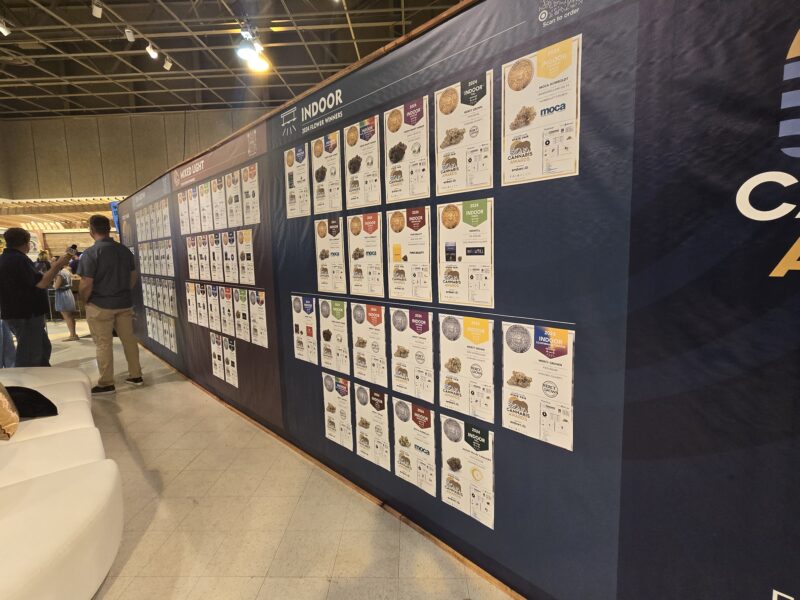
Just as for wine and olive oil, the fair now hosts a cannabis competition. It’s growing in popularity, going from 200 competitors in the first year to 800 now.
Divided between indoor, mixed light and outdoor categories, cannabis flowers are lab-tasted and graded based on concentrations of THC, CBD and CBG (cannabigerol). They’re also judged for six primary terpenes, compounds which give cannabis buds their flavor and scent and are believed to interact with cannabinoids like THC to produce varied effects.
In 2024 — the same year California State Fair unveiled a cannabis consumption lounge — the competition expanded to include not just cannabis flowers but other products like pre-rolls, concentrates, beverages, tinctures and edibles. It all adds up to the largest cannabis competition in the country, said James Leitz, executive producer of the cannabis competition and exhibit.
“It’s changed the game,” he said.
These days, the Golden State’s cannabis industry is blooming, carrying much the same prestige as other agricultural goods shown off here. But it’s taken work to get to this point where cannabis products could be displayed, celebrated and sold like any other.
California has long paved the way on cannabis normalization. In 1996, state voters passed Proposition 215, exempting patients and caregivers from criminal liability under California law for cannabis possession and cultivation.
Those rules were formalized into a medical marijuana program in 2003. Finally, in 2016, Californians passed Proposition 64, legalizing possession of up to an ounce for those 21 years old or older.
Legal dispensaries opened their doors on Jan. 1, 2018. A few years later, so did the California State Fair cannabis exhibit.
“That was a watershed moment for us,” Leitz said. “It’s become big. It’s become quite a thing in the cannabis industry.” But despite the unprecedented levels of acceptance, he says more work is needed to truly break down stigma.
Lauren Carpenter is a self-described policy nerd, getting her start in Sacramento. It’s an experience she says was formative.
She took that knowledge into the cannabis industry, co-founding the companies Embarc and Embarc Events. In both policy and business, she says legalization and normalization are key to her work.
“I always think of myself as a bridge builder,” she said.
A family emergency helped guide Carpenter into the industry.
When her husband was young, his father suffered an aneurysm. Long on medication, he discovered the medicinal effects of cannabis and was able to wean himself off pharmaceuticals.
The experience caused her husband to grow up seeing cannabis as medicine — and its criminalization as an injustice. As Carpenter put it, “really seeing access as a fundamental issue of fairness and right and wrong.”
After legalization, Carpenter worked at several cannabis businesses before branching out on her own.
In 2019, she helped launch Embarc. The company now runs 17 dispensaries across the Golden State. It was also a major partner in bringing cannabis consumption to the state fair, where it now runs a temporary retail spot once a year.
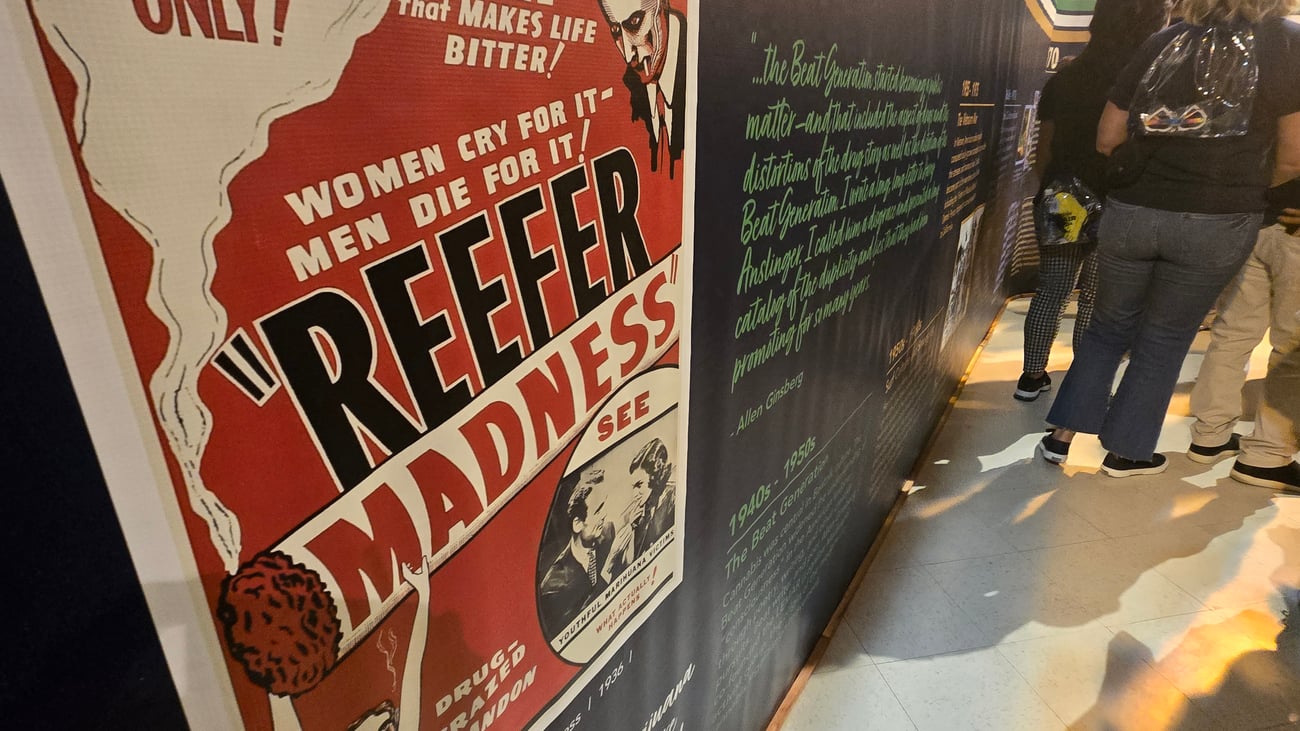
California has celebrated its agricultural industry at the state fair for more than a century.
Like many who work in cannabis, Carpenter points to cannabis as an agricultural product.
The cannabis industry now uses its exhibit here to educate and engage attendees. When it first appeared in 2022, “it was sort of a baby step,” Carpenter said. “It’s been an evolution. It’s been a journey.”
Leitz spearheaded the exhibit, developing its educational aspect as well as the cannabis competition. First launching in a 5,000-square-foot building, it’s now expanded to a 50,000-square-foot former waterpark at Cal Expo.
Here, visitors can talk to farmers, buy products and consume them. Carpenter partnered with Leitz to bring on-site sales and expand the competition.
“As you would want in your wine or cheese,” Leitz said.
Although cannabis has come a long way since full legalization began some 10-plus years ago, there’s still a haze of stigma around the subject.
It’s a stigma that Carpenter and Leitz are working to eliminate through education. The state fair plays a role in that.
“Destigmatization is a process,” Carpenter said. “I think we have a long way to go towards normalization.”
One piece of that involves its origin story — its long history as a medicinal and therapeutic plant.
Another is language. People in the industry shy away from words like “weed” and “pot,” instead preferring the technical name, “cannabis.” Still, Leitz said it’s a balancing act to be respectful without becoming language police.
“We want to get away from that,” he said of terms like pot — “but we don’t want to forget about it.”
There’s also plenty of red tape involved in bringing cannabis to the fair. Organizers coordinate with Cal Expo police, as well as state and Sacramento County officials, on planning, documentation and other compliance matters.
The result is a cannabis exhibit that, just like any other agricultural exhibit, runs smoothly and with no issues.
Cannabis isn’t what its naysayers claim it is, Carpenter said. That’s just what its supporters want: no problems.
Even so, for those who work in the industry, it can still feel surreal to see cannabis become so professionalized.
“You continue to get that ‘a-ha’ moment,” Leitz said. To see that cannabis has found a niche at the state fair, “I think it still really surprises people.”
Subscribe to our free newsletters
Our weekly newsletter Closing Arguments offers the latest about ongoing trials, major litigation and rulings in courthouses around the U.S. and the world, while the monthly Under the Lights dishes the legal dirt from Hollywood, sports, Big Tech and the arts.