
 Search Articles


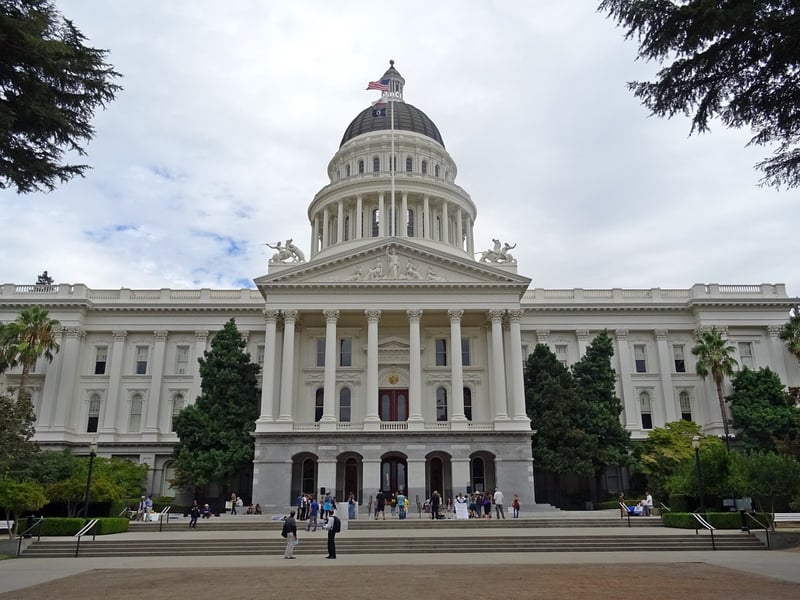
SACRAMENTO, Calif. (CN) — A California bill that would put guardrails on the development of large artificial intelligence models squeaked through the state’s Assembly Wednesday.
Votes for Senate Bill 1047 — written by state Senator Scott Wiener, a San Francisco Democrat — quickly jumped up to 30 when the roll call began. However, the fate of the bill lingered for a long minute before the final few lawmakers pushed it across the 41-vote line.
The bill passed 41 to 9. It now returns to the Senate for a final vote before it can reach the governor’s desk.
Assemblymember Steve Bennett, the Ventura Democrat carrying the bill in the chamber, told his colleagues before its passage that he thought it would be a close vote.
“Artificial intelligence has an enormous potential to benefit our state, our nation and our world,” Bennett said.
“We owe it to everyone to take the simple step as we move forward,” he added.
The bill would impose requirements for developers of AI models that achieve a set level of computing power. Those developers would have to meet the requirements before a model could be trained or released. Additionally, the bill would establish an entity for oversight and guiding the AI models affected by it.
Bennett argued that the bill wouldn’t apply to startups, as it would affect only models that cost over $100 million in computing power to train.
“It simply says they have to have made reasonable efforts,” Bennett said of the developers.
The bill has drawn the spotlight. Elon Musk — owner of Tesla, SpaceX and the social media platform X, formerly Twitter — posted on X this week in support of the bill.
“For over 20 years, I have been an advocate for AI regulation, just as we regulate any product/technology that is a potential risk to the public,” Musk wrote.
A handful of lawmakers spoke in support of the bill Wednesday.
Assemblymember Devon Mathis, a Porterville Republican, said the bill ensured that Big Tech would have some kind of rule to follow and wouldn’t negatively affect the growth of tech.
Others focused on arguments some opponents have made about the need to wait for the federal government to act.
Assemblymember Jim Wood, a Healdsburg Democrat, pushed back on that. California has led the way on other issues without waiting for federal involvement, he said.
“I think we should get out there and make a statement and pass this bill,” Wood said.
Assemblymember Al Muratsuchi, a Torrance Democrat, said the federal government won’t act unless California does, arguing that’s why the Assembly should pass the bill.
Wiener praised his bill’s passage in a statement.
“With this vote, the Assembly has taken the truly historic step of working proactively to ensure an exciting new technology protects the public interest as it advances,” Wiener said.
Wiener in his statement pointed to the support of his bill by two AI researchers — Geoffrey Hinton and Yoshua Bengio — called the “godfathers of AI.”
“Forty years ago when I was training the first version of the AI algorithms behind tools like ChatGPT, no one — including myself — would have predicted how far AI would progress," said Hinton, a former AI lead at Google, in a statement. “Powerful AI systems bring incredible promise, but the risks are also very real and should be taken extremely seriously.”
The AI bill was one of hundreds the state Senate and Assembly are considering this week. The Legislature must adjourn for the year no later than Saturday.
The Assembly also passed Assembly Bill 1840, which opens access to a state homebuyer loan program to people regardless of their immigration status.
The controversial bill passed the state Senate on Tuesday, returning to the Assembly on Wednesday for a final vote. It passed 45 to 15 and now goes to the governor’s desk.
“This bill is a mess, Mr. Speaker,” said Assemblymember Bill Essayli, a Corona Republican. “Does it mean anything to be a citizen?”
The bill’s author — Joaquin Arambula, a Fresno Democrat — said lawmakers needed to remember that America is a nation of immigrants and that his bill was about fairness.
On the other side of the Capitol, the state Senate on Wednesday passed Assembly Bill 2552, written by Assemblymember Laura Friedman, a Glendale Democrat. The bill would impose stricter restrictions on using and selling toxic rat poison, known to poison owls, foxes and other wildlife. It also would expand a current rodenticide moratorium to include all blood-thinning rat poisons.
The bill must return to the Assembly for a final vote.
“California continues to lead on preventing some of the most dangerous chemicals from entering the ecosystem and poisoning our wildlife, our pets, and people,” Friedman said in a statement to Courthouse News. “The science is clear: These first- and second-generation anti-coagulants result in unnecessary poisonings and deaths.”
The state Senate also approved Assembly Bill 1866 — written by Assemblymember Gregg Hart, a Santa Barbara Democrat. The bill would increase fees for operators of idle oil and gas wells who pay fees instead of filing an idle well management plan. It also would increase the rate operators must return wells to service or plug them in those plans.
Hart’s bill also must return to the Assembly for a final vote.
Subscribe to our free newsletters
Our weekly newsletter Closing Arguments offers the latest about ongoing trials, major litigation and rulings in courthouses around the U.S. and the world, while the monthly Under the Lights dishes the legal dirt from Hollywood, sports, Big Tech and the arts.