
 Search Articles


SAN JOSE, Calif. (CN) — NetChoice, a powerful tech lobbying group, clashed with the California Attorney General’s Office in court Thursday, attempting to prevent the state from enforcing a controversial privacy law aiming to modernize online protections for minors.
NetChoice moved for a preliminary injunction against the California Age Appropriate Design Code Act, arguing that its content-based restrictions on speech violate the First Amendment and amount to censorship by the state.
“Time and again, the state has claimed the law is about privacy, but the Ninth Circuit has disagreed,” argued NetChoice’s attorney Ambika Kumar of Davis Wright Tremaine. The attorney went on to call the law “hopelessly vague” and a disproportionate burden on internet businesses.
NetChoice seeks a declaration that key parts of the statute are unlawful and an injunction preventing the law from being enforced for its member companies, which include Amazon, Google, Lyft, Meta, PayPal, Snap, Waymo and X, formerly Twitter.
Meanwhile, the attorney general countered that several parts of the law regulated behavior that wasn’t expressive.
“This isn’t about speech the state doesn’t like. It’s about the privacy of children whose data is being collected and used by large corporations,” Kristin A. Liska of the California Department of Justice, who represented California Attorney General Rob Bonta’s office, said.
NetChoice criticized the law for heavy-handedly addressing what other privacy laws, like Children’s Online Privacy Protection Rule and the California Privacy Rights Act, already do.
The act, which was modeled after a similar United Kingdom law, prevents companies from collecting or selling minors’ data, estimating their age, profiling them for advertising or engaging in “dark patterns” to negatively influence their behavior.
“That one regulates dark patterns already,” Kumar said, referencing the term given to invisible design elements — like the “infinite scroll” of social media feeds — that compel users to take certain actions or spend more time and money on the service.
U.S. District Judge Beth Labson Freeman remarked that she thought the lobbying group’s arguments were “pretty strong,” but seemed hesitant to issue an injunction for the law’s dark pattern elements.
“I don’t think I’m ready to enjoin dark patterns. I don’t think I have enough in the record,” the Barack Obama appointee said.
Freeman also made it clear to NetChoice that their case hinged on the level of scrutiny she applied to each individual provision of the law — either strict or intermediate, standards used to evaluate the constitutionality of laws that restrict free speech. Strict scrutiny is the most demanding standard, usually applied when the government regulates speech based on its content. Meanwhile, intermediate scrutiny is usually applied when the government regulates speech in a content-neutral way.
“I think we can all generally agree that makes or breaks your case,” she told attorneys for NetChoice.
Meanwhile, the judge expressed skepticism at the attorney general’s claims that their restrictions were focused more on their child audiences than the material’s content.
“I think you made all these arguments last time, and I didn’t buy them, but neither did the Ninth Circuit,” she told Liska.
Freeman initially granted an injunction against the law in September 2023, stating it “likely violates the First Amendment," but the Ninth Circuit was not so generous on appeal.
In a mixed-bag ruling, the Ninth Circuit upheld parts of her original order but vacated the remainder of Freeman’s injunction, ruling that it was unclear from the record whether all elements of the law were unconstitutional. The case was returned to Freeman to determine if the remaining parts of the act should also be prohibited by an injunction.
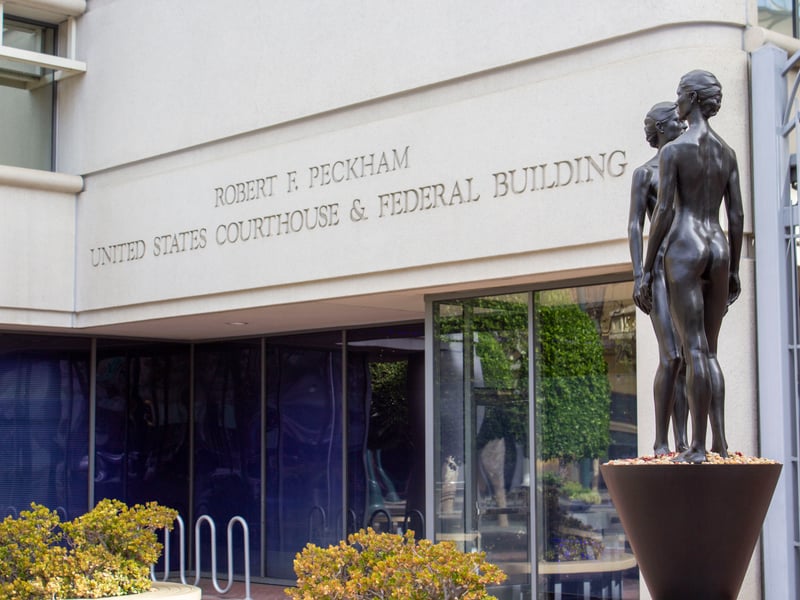
NetChoice moved for a second preliminary injunction in November 2024, where the hearing was held in the Robert F. Peckham Federal Courthouse in San Jose, California.
The judge also seemed critical of the law’s legislative history, noting its ties to the prominent U.K. law.
“But they don’t have the First Amendment," she said, referring to the U.K. “And nothing has pointed out to me whether the legislature cared one whit whether this would pass First Amendment scrutiny.”
The attorney general confirmed that enforcement will be stayed pending litigation until early March.
“The California Department of Justice is committed to protecting our kids’ privacy and safety from companies that seek to exploit their online experiences for profit,” the attorney general’s press office told Courthouse News.
NetChoice seemed confident about their chances in court.
“California’s AADC is an incredibly broad censorship law, and we look forward to the court striking it down,” Paul Taske, NetChoice’s associate director of litigation, told Courthouse News.
NetChoice is a trade association that represents some of the largest interests in the tech world — companies it claims facilitate speech protected by the First Amendment. Founded in 2001, the group has steadily climbed in scope and influence over the last decade and currently has six active lawsuits over state-level internet regulations.
Subscribe to our free newsletters
Our weekly newsletter Closing Arguments offers the latest about ongoing trials, major litigation and rulings in courthouses around the U.S. and the world, while the monthly Under the Lights dishes the legal dirt from Hollywood, sports, Big Tech and the arts.