
 Search Articles


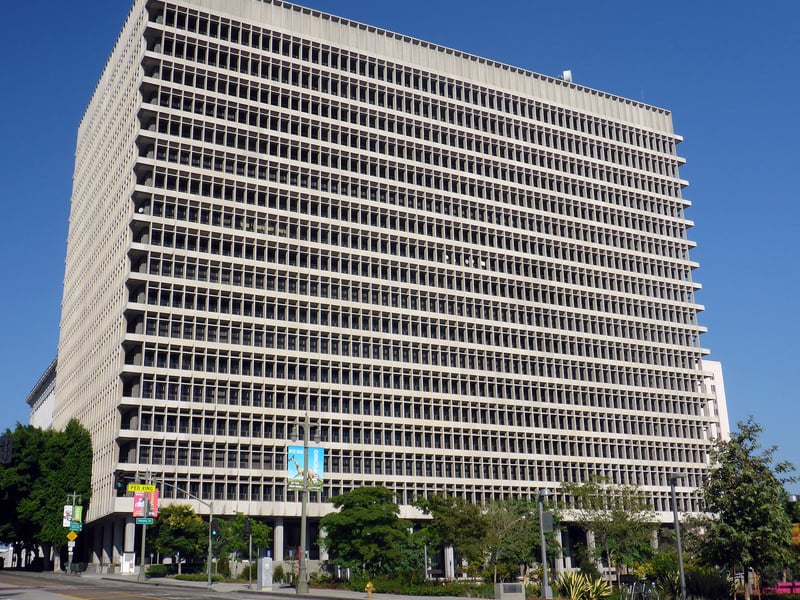
LOS ANGELES (CN) — The California attorney general’s office defended on Wednesday before the California Courts of Appeal a decision to criminally charge a top adviser to the former Los Angeles district attorney for sharing purported confidential information about sheriff’s deputies involved in disciplinary proceedings.
The appellate court, in another atypical step, agreed to take up the case ahead of a trial that had been scheduled to start earlier this year.
California Attorney General Rob Bonta last year accused Diana Teran — an assistant district attorney for ethics and integrity under since voted-out District Attorney George Gascón — of repeatedly using data from confidential and protected peace officer files.
Teran has access to computer data including numerous confidential deputy files in 2018, while working at the Los Angeles County Sheriff’s Department as part of her job as constitutional policing adviser.
After she joined the district attorney’s office in January 2021, Bonta claims she impermissibly using that information to see if those deputies’ names should be included in a database prosecutors use to disclose, if needed, prior misconduct by law enforcement officers to defendants in criminal cases.
However, Teran has argued that the only information she shared at the district attorney’s office were publicly available decisions in civil cases that the deputies brought to challenge disciplinary actions against them.
James Spertus, Teran’s attorney, told the appellate panel at a hearing in downtown LA that there’s no dispute that she was authorized to access the files on sheriff’s department’s computer network while she worked there and that it wouldn’t have occurred to her that she needed permission to share the public writ decisions with an employee that she supervised at the district attorney’s office.
“I don’t think there can be a credible claim that a name linked publicly to an underlying discipline, that is placed in the public record by the deputies themselves, can be the basis for the charges filed in this case,” Spertus argued.
But the appellate panel was particularly concerned about the attorney general’s decision to prosecute Teran under a statute that criminalizes unauthorized computer access and fraud for taking files that are publicly available.
“You’ve changed the computer statute into a non-disclosure statute backed by criminal sanctions that’s going to apply to thousands of employees, hundreds of thousands of employees in the state,” Acting Presiding Justice Lamar Baker observed. “What’s the limiting principle?”
Baker presented a hypothetical of a former Walt Disney employee who has learned the release date of a new “Moana” sequel from an email she received while still at Disney, and who, under the Bonta’s interpretation of the law, could be criminally liable if she shares that date with her new employer at a different movie studio.
Deputy Attorney General Charles Chung acknowledged that if such a criminal charge was brought, a conviction might not survive on appeal, but maintained that it was technically possible under the statute.
“That’s an awfully broad understanding of what this statute was meant to prohibit, and it’s also an understanding it’s going to potentially subject a large number of people to the burden of defending against a criminal prosecution,” Baker said. “But that’s the attorney general’s view?”
Chung argued that the material Teran took while at the sheriff’s department also included non-public work product, such as notes and underlinings on the tentative decisions from the civil cases and that she should have sought permission before sharing the files.
Moreover, he said, access to the deputies’ files within the sheriff’s department is strictly controlled and those security protocols should have made it clear that she needed permission to use the information.
The attorney general’s criminal case passed the first hurdle last year when an initially skeptical judge found that there was probably cause for Teran to stand trial on most of the charges.
According to an affidavit filed in support of an arrest warrant for Teran last year, the attorney general’s office started investigating the district attorney’s office use of the so-called Brady database and the Recurrent Witness Information Tracking System database in 2022 after an employee of attorney general’s office threatened to put a police officer in the Brady database after the officer had arrested him for interfering with a traffic stop investigation of his fiancé.
Prosecutors are required by law to maintain these databases — if one of the officers is called to testify in a criminal trial, prosecutors must inform the defense attorneys about the officer’s misconduct, as part of discovery.
 Follow @edpettersson
Subscribe to our free newsletters
Our weekly newsletter Closing Arguments offers the latest about ongoing trials, major litigation and rulings in courthouses around the U.S. and the world, while the monthly Under the Lights dishes the legal dirt from Hollywood, sports, Big Tech and the arts.