
 Search Articles


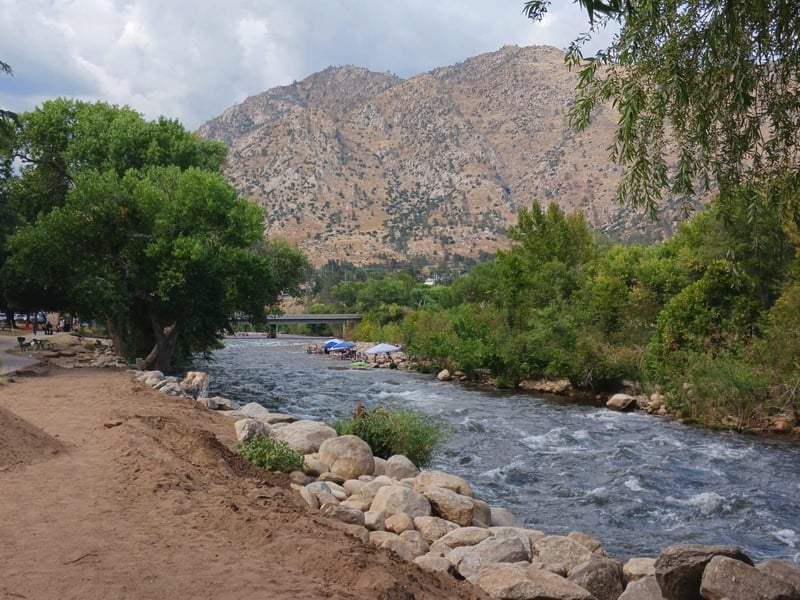
FRESNO, Calif. (CN) — The city of Bakersfield and nearby water districts secured a win on Wednesday in a California appeals court, which reversed a lower court’s order setting water flow rates for the Kern River and remanded the issue.
The water districts opposed a late 2023 preliminary injunction that required the city to maintain a certain amount of water flow to ensure fish downstream were in good condition. It also ordered Bring Back the Kern and other plaintiffs, the defendants, and real parties to work together to determine what water flow rates were necessary.
The water agencies pushed back, questioning whether the lower court properly considered whether the water use was reasonable and if the implementation order dictating water flows violated due process.
Attorneys last month argued before a Fifth District Court of Appeal panel over state Fish and Game Code Section 5937, which states that dam owners must allow enough water to pass through to keep fish in good condition. The appeals panel found that the lower court determined complying with that law was compulsory and didn’t consider possible harms to the city or water agencies.
“… a court must always consider reasonableness whenever it would direct or adjudicate a particular use of water, even when applying statutes that do not expressly incorporate a reasonableness determination,” the three-judge appeals panel wrote. “The court’s failure to do so here was error.”
The panel found that while the Legislature has an essential role in determining how water is used, it can’t dictate an unreasonable or non-beneficial use. Even if a statute requires it, the state Constitution forbids it.
“To be clear, using water to keep fish in good condition will often be a reasonable use of water, depending on the circumstances,” the panel wrote. “Indeed, it may well be a reasonable use of water in the present case; we make no determination on that issue here. The point is that no particular use of water is per se reasonable in all circumstances, and therefore reasonableness must always be evaluated before a court orders any particular water use.”
The panel determined that any judge must weigh the benefits and reasonableness when ruling on competing water uses. In this case, the lower court erred by only applying Section 5937’s provisions.
Remanding the case, the panel wrote that the lower court must examine a handful of factors when deciding how much water is needed to keep the fish in good condition. Those include the effects on fish and other wildlife, recreation, water quality, water supply for area residents, and the state’s economic development.
The parties disagreed over whether the lower court erred in failing to set an objective standard for water flows and instead had them work together to determine a proper rate. Providing guidance in its remand, the panel advised the lower court to create a standard. That would respect the parties’ due-process rights by showing how to comply with a potential future injunction and put a proper burden on anyone seeking injunctive relief.
Pivoting to the due process argument, the panel ruled a clear violation had occurred.
“Despite over a century of contracts, settlements and court decrees governing the rights to the waters of the Kern River, the implementation order established an interim regime whereby Bakersfield would receive the water needed for its ‘municipal needs and demands ’ before the water agencies received any of their contracted water,” the panel wrote.
Contacted Wednesday, attorney Adam Keats — who represents plaintiff groups like Bring Back the Kern, the Center for Biological Diversity, and the Sierra Club — called the ruling a setback but not a fatal one. It’s possible he could secure another preliminary injunction that abides by the appeal panel’s ruling.
A trial on the issue remains set for December.
“The Kern River is going to be flowing at the end of this case,” Keats said.
Attorney Colin Pearce, who represents Bakersfield, said in a statement to Courthouse News and he and his client are pleased with the decision that confirmed fish don’t have priority over people for water.
“Bakersfield, as its City Council has stated before, wants more water in the river,” Pearce said. “We anticipate and look forward to further proceedings before the trial court consistent with the court of appeal decision to determine how much water reasonably needs to remain in the river to benefit fish and the environment, while also making sure that people and other uses of water, such as agriculture, still have enough water.”
Attorneys for the North Kern Water Storage District, one of the real parties, couldn’t be reached for comment as of publication time.
The appeals panel included Associate Justice Jennifer Detjen, an Arnold Schwarzenegger appointee; Associate Justice Mark Snauffer, appointed by Jerry Brown; and Associate Justice Rosendo Peña Jr., appointed by Gray Davis.
Subscribe to our free newsletters
Our weekly newsletter Closing Arguments offers the latest about ongoing trials, major litigation and rulings in courthouses around the U.S. and the world, while the monthly Under the Lights dishes the legal dirt from Hollywood, sports, Big Tech and the arts.