
 Search Articles


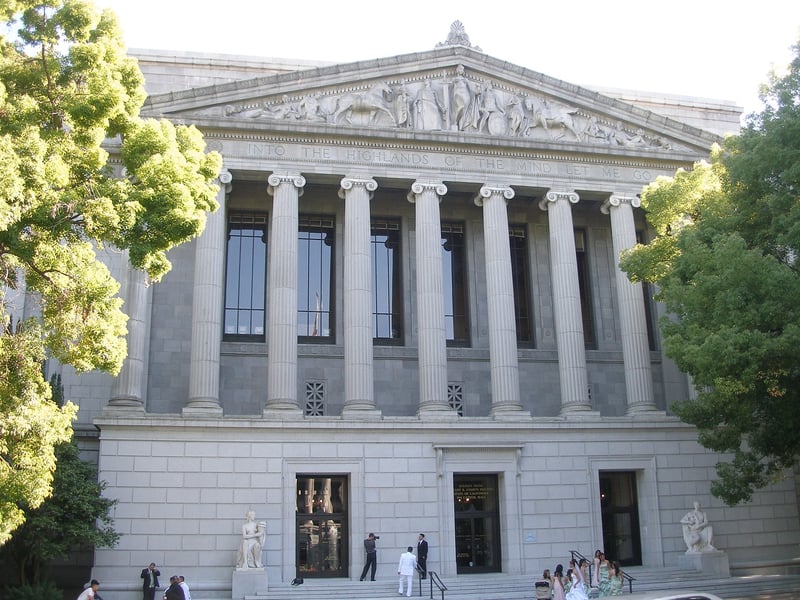
SACRAMENTO, Calif. (CN) — Sometimes, your case makes it to the U.S. Supreme Court. Sometimes, you even win at the Supreme Court. And sometimes, you’ll still end up losing when a lower court rules against you on remand.
A California state appeals court panel on Wednesday reaffirmed its earlier decision against an El Dorado County resident, ruling that a $23,000 county-issued fee he incurred while building a house on his property did not violate his constitutional rights.
In its 52-page decision, a panel of judges rejected George Sheetz’ arguments that the county had violated the Fifth Amendment’s takings clause by requiring property owners to pay a traffic impact mitigation, or “TIM,” fee as a condition of obtaining a building permit for a new home.
“On remand from the Supreme Court, Sheetz makes a number of new arguments that we deem forfeited,” California Appellate Judge Elena J. Duarte said in the decision Wednesday.
The lawsuit dates back to 2016, when Sheetz set out to build an 1,800-square-foot prefabricated house on his property in the center of El Dorado County near Highway 50, where he and his wife planned to raise his grandchild.
But when he applied for a permit, Sheetz found out his development would come at a high cost.
Alongside his permit paperwork, Sheetz received a $23,420 bill from the El Dorado County Traffic Impact Mitigation Fee Program, which the county charges developers to offset local traffic congestion spurred by new developments. Sheetz paid the fee under protest.
In 2017, Sheetz tried to get a refund for his permitting fee by taking the county to court, claiming it was unconstitutional under the takings clause of the Fifth Amendment, which states that private property can’t be taken for public use, without “just compensation.”
Sheetz argued that the fee was essentially an unlawful taking of private property without just compensation, and the county’s decision to impose it as a condition for approving his permit constituted an unconstitutional monetary exaction under the Fifth Amendment.
A trial court dismissed his case, and that ruling was upheld on appeal.
But because the state courts had come to different conclusions about whether the takings clause recognizes a distinction between legislative and administrative conditions on such permits, the Supreme Court granted certiorari in September 2023 to resolve the split.
In 2024, the Supreme Court was persuaded by Sheetz’s arguments that the county had violated two of the court’s prior rulings, Nollan v. California Coastal Commission and Dolan v. City of Tigard , which attempted to balance government and landowner interests by laying out a constitutional test for government permitting.
At the Supreme Court, Sheetz urged the justices to reverse, claiming the county violated Nollan and Dolan with its permit fee, because it shifted the burden to new developers. He also argued that the fee was not proportional, because the county failed to conduct an individualized determination on the effects his development would have on the county’s infrastructure.
The Supreme Court vacated the lower court’s ruling and remanded the case for further consideration.
“Nothing in constitutional text, history, or precedent supports exempting legislatures from ordinary takings rules,” Justice Amy Coney Barrett, a Trump appointee, wrote for the unanimous court.
Yet, after further consideration, a panel for the California Court of Appeals, Third District, came to the same conclusion as before, finding the permit fee holds up under constitutional scrutiny.
The state appeals court found that the county satisfied Nollan ’s requirements that the fee have some connection or “essential nexus” to a legitimate government interest by the county — namely, its interest in reducing traffic caused by new projects.
“As the Supreme Court recognized in Dolan , reducing traffic congestion is a legitimate government interest in the land-use regulation context, including when (as here) the landowner seeks a permit for new development,” Duarte said.
The lower court similarly ruled that the $23,000 fee was proportional to the impacts Sheetz’s home would have on local traffic and that the county used valid methods for imposing the fee.
Attorneys for both sides did not immediately respond to requests for comment.
The panel was rounded out by California Appellate Judges Stacy Boulware Eurie and Laurie M. Earl.
Subscribe to our free newsletters
Our weekly newsletter Closing Arguments offers the latest about ongoing trials, major litigation and rulings in courthouses around the U.S. and the world, while the monthly Under the Lights dishes the legal dirt from Hollywood, sports, Big Tech and the arts.