
 Search Articles


(CN) — A California appellate court said a Southern California city may have to turn over video footage of police drones as part of public records requests, but indicated that reviewing and redacting the requested footage may be too burdensome.
In an unanimous decision Wednesday, a panel of the Fourth Appellate District of California’s Court of Appeals said that a trial judge erred in agreeing with the City of Chula Vista that all the drone footage requested by a journalist and private pilot was off limits “as records of investigations.”
Although much of the footage recorded by police drones in response to 911 calls may be either part of an investigatory file or used to investigate a possible crime without such a file being created, and as such will be exempt from disclosure under the California Public Records Act, the appellate court said there could also be footage from so-called factual inquiries.
“We can imagine such situations, e.g., potentially dangerous wildlife roaming the neighborhood, a stranded motorist, a water leak,” Associate Justice Richard Huffman wrote in the court’s ruling.
“Based on these reasonable scenarios and the dictate that we broadly construe disclosure under the CPRA and narrowly construe exemptions, we conclude, based on the record before us, the trial court’s broad ruling that all drone video footage, as a matter of law, is categorically exempt because the drones are only dispatched in response to 911 calls was error.” he added.
The court noted, however, that it wasn’t clear whether police drone footage that wasn’t part of an investigatory file was included in the request for all footage from March 2021, and as such became part of the lawsuit before it, and that it was providing the analysis as guidance for what footage may and may not be exempt from public records requests.
But even if the requested drone footage is from factual inquiries rather than criminal investigations, the city can’t just turn it over, according to the ruling. It must review and redact the video to protect the privacy of people who may have been captured going about their business.
This could potentiality be so labor intensive that the burden on the city outweighs the requirement for public disclosure.
The panel, however, wasn’t persuaded by the city’s argument that it would take as long as 30 hours to redact one hour of drone footage because, according to the ruling, the city hadn’t reviewed any of it for this purpose. Additionally, the panel observed, only a portion of the 91 hours of footage under the California Public Records Act request may be video of factual inquiries that could be made public.
The Chula Vista city attorney’s office did not immediately respond to a request for comment Wednesday.
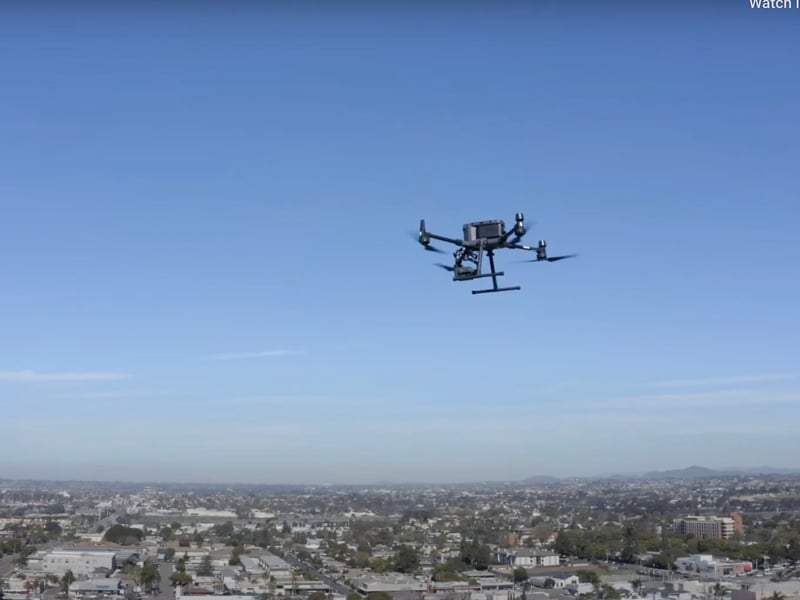
The Chula Vista Police Department was selected by the Federal Aviation Authority to test the use of drones as first responders. Rather than police officers using drones on the scene, as had been done already, the city’s police department dispatches the drones before officers arrive to provide live-streamed video of the scene so the officers can respond more effectively and safely to 911 calls.
According to the appellate court’s ruling, Chula Vista engaged in extensive public outreach to solicit input on the use of drones before it launched the program.
 Follow @edpettersson
Subscribe to our free newsletters
Our weekly newsletter Closing Arguments offers the latest about ongoing trials, major litigation and rulings in courthouses around the U.S. and the world, while the monthly Under the Lights dishes the legal dirt from Hollywood, sports, Big Tech and the arts.