
 Search Articles


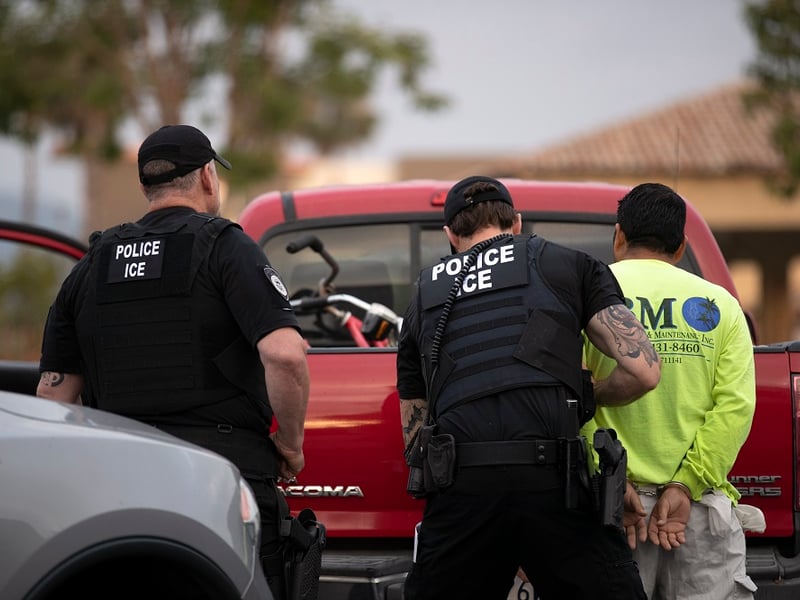
SACRAMENTO, Calif. (CN) — A controversial California bill that would prohibit law enforcement at all levels from wearing masks squeaked past its first vote on Tuesday.
Senate Bill 627 — called the No Secret Police Act — is a direct response to federal Immigration and Customs Enforcement officials taking people into custody while masked and without identification. The bill, written by San Francisco Democratic state Senator Scott Wiener, would prohibit local, state or federal law enforcement officers from masking their face, with some exceptions.
Any law enforcement agency would have to provide notice to other area agencies if they have operations planned that involve masking. Additionally, local and state agencies would have until July 1, 2026, to create a policy prohibiting the use of masks or disguises.
The bill appeared before a California legislative committee for the first time on Tuesday, securing the five votes needed to pass out of the Assembly Public Safety Committee and advance to that body’s Appropriations Committee.
“We’re here today because we have a dictator in the White House,” said Assemblymember Nick Schultz, a Burbank Democrat and committee chair, supporting the bill. “Secret police have no place in the state of California.”
Wiener said the bill wasn’t a slight toward local and state law enforcement, whom he praised, but instead sets a standard across all levels of public safety officers. He argued that ICE agents are taking people from their workplaces and front yards, putting them into unmarked vehicles and removing them.
A handful of Democratic committee members praised the legislation. Assemblymember Matt Haney, a San Francisco Democrat, questioned how local and state officers can know federal agents actually are agents if they wear masks.
Assemblymember Mark Gonzalez, a Los Angeles Democrat, said federal immigration officers were “taking orders from a dictator.” The Legislature needs to act, he argued.
“No one enforcing the law should get to hide from the people they serve,” he added.
Cristine Soto DeBerry, executive director of the Prosecutors Alliance, said federal immigration raids by masked and anonymous agents have shattered public trust. It’s led to people having no method to determine which law enforcement agency they’re dealing with, or if they’re talking to an imposter.
“It undermines confidence in every officer who serves us,” she said.
Opponents pushed back against the inclusion of local and state officers, who don’t participate in immigration enforcement, though they would respond to a scene if someone called 911.
Assemblymember Stepanie Nguyen, an Elk Grove Democrat, said she’s worked to dispel misinformation that local officers participate in immigration action. She argued the bill would make that work harder and opted against voting on the legislation.
Instead of Wiener’s bill, Nguyen pointed to Senate Bill 805, called the No Vigilantes Act, as better legislation. That bill, which also passed out of the committee Tuesday, requires any law enforcement officer in California to display ID with their name or badge number.
Randy Perry, a lobbyist opposing the bill, echoed support for Senate Bill 805. He said Wiener’s bill prohibiting masks would affect all law enforcement, instead of only federal agents, saying the latter was the senator’s focus.
“California law enforcement are not wearing ski masks and grabbing people out of churches, synagogues and their homes,” he said.
“This isn’t a standard,” he added later in the hearing. “This is a new crime.”
Some committee members questioned whether California could enforce one of its laws on federal employees. Wiener said that while it wouldn’t come easy, many state laws already apply to federal workers. His bill would as well.
Wiener also noted that no federal agent appeared at the hearing to speak about it, suggesting that was because of the arrogance of the Trump administration.
The bill has taken a different path than most bills moving through the Legislature.
A deadline to introduce bills had long passed when Wiener introduced Senate Bill 627 last month, as had a deadline for bills to pass out of their chamber of origin. In order to bypass those deadlines, language from an existing bill was removed. The masking bill then took its place.
Subscribe to our free newsletters
Our weekly newsletter Closing Arguments offers the latest about ongoing trials, major litigation and rulings in courthouses around the U.S. and the world, while the monthly Under the Lights dishes the legal dirt from Hollywood, sports, Big Tech and the arts.