
 Search Articles


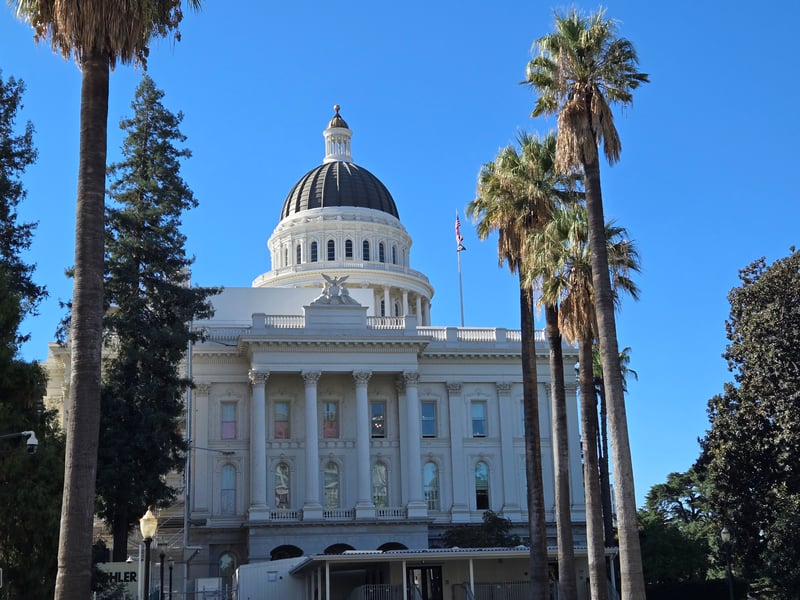
SACRAMENTO, Calif. (CN) — The Golden State’s legislative analyst on Wednesday said California could face a $18 billion deficit as it builds its 2026-27 budget.
State revenue is better than expected, estimated at $11 billion — higher than first thought. However, constitutionally required expenses will take most of those dollars. Additionally, the state is looking at future fiscal year deficits between $30 billion and $35 billion, said Gabriel Petek, the state legislative analyst.
Ultimately, the state’s budget position is weak. Petek called it a sizeable problem in the upcoming fiscal year with bigger problems on the horizon.
“This is happening in an economy that’s not in recession,” the analyst added.
Petek made the reveal at a press conference about his office’s annual fiscal outlook report.
Bright spots exist, like the state’s personal income tax collections. That reflects an exuberance around artificial intelligence and is helping propel the stock market, Petek said.
Billions of dollars have been pumped into AI, and some employees in that field have received compensation packages that are fueling the personal income tax returns, he added.
“How sustainable are these trends?” Petek posed. “We think it’s risky to think these trends will continue unabated.”
Additionally, Petek said people are borrowing money to buy stock and that the stock market is higher than it’s been in 70 years. Those are indicators for a market downturn in one to two years, though he cautioned that his office isn’t predicting a downturn.
While the estimated $11 billion in revenue over initial estimates is a bright spot, Proposition 98 — which requires allocations for education — will take some $7 billion of that. Additionally, similar requirements will send $3.4 billion to the state’s rainy day fund. That’s some $10.3 billion of that extra $11 billion, Petek said.
Add to that $1.3 billion California must find because of additional costs from the federal One Big Beautiful Bill Act, expected to impact Medi-Cal and CalFresh.
Costs across the state are rising, Petek said, coming in the form of retiree benefits and administrative expenses. Doing the math, Petek pointed to a $5 billion difference between $16 billion in more expenses and the $11 billion in higher revenues. Added to the initially anticipated $13 billion deficit, his new estimate came in at $18 billion in deficits for 2026-27.
Looking further out, the picture gets worse. Petek noted this is the fourth consecutive year California has faced a budget deficit. It was staring down a massive deficit in 2022-23, and state officials figured revenues would recover.
They did, but not to levels initially thought, Petek added. Also, the state’s expenses weren’t retooled to align with the changed revenue base. Revenue and expenses are growing at similar rates. That means if California faces a $30 billion deficit one year, it would need $60 billion in annual revenue over forecasts to dig out of the financial hole.
That’s highly unlikely, Petek said.
That led his office to make budget recommendations to the Legislature.
Lawmakers should reduce spending and find more revenue sources, Petek said. They also should move quickly, as the deficit is bigger than first thought, and future-year deficits are growing as well. Also, revenue estimates don’t show what California could face in a recession. Finally, the state government has already used most of its tools to address prior deficits, like shifting costs and dipping into its savings.
“As it stands — with larger forecasted deficits and many fewer tools available to address them — California’s budget is undeniably less prepared for downturns,” Petek said in the fiscal report.
Lawmakers quickly chimed in about the outlook.
Senate President pro Tempore Monique Limón, a Santa Barbara Democrat, said the state’s economy is steady, even though the federal government has imposed tariffs, attacks on workers and what she called shortsighted federal budget moves.
“While the legislative analyst forecasts a budget shortfall, the upcoming January and May forecasts will also inform the Senate’s work in crafting a responsible state budget that protects core programs, including education, childcare, safety net, health care, and public safety,” she added in a statement.
Assembly Speaker Robert Rivas also laid blame at the federal government’s door.
“When Republican policies raise prices and fall short, Democrats will keep fighting for real affordability and lasting prosperity,” he said in a statement.
State Senator Roger Niello, a Fair Oaks Republican and vice chair of his chamber’s Budget Committee, called the report good news and worse news, as revenues had climbed but the state’s spending rose higher.
“The state’s structural deficit continues to grow because of the majority party’s unstoppable spending problems,” Niello said in a statement. “The state must assess the effectiveness and sustainability of the programs that were created during the surplus and make necessary corrections.”
Subscribe to our free newsletters
Our weekly newsletter Closing Arguments offers the latest about ongoing trials, major litigation and rulings in courthouses around the U.S. and the world, while the monthly Under the Lights dishes the legal dirt from Hollywood, sports, Big Tech and the arts.