
 Search Articles


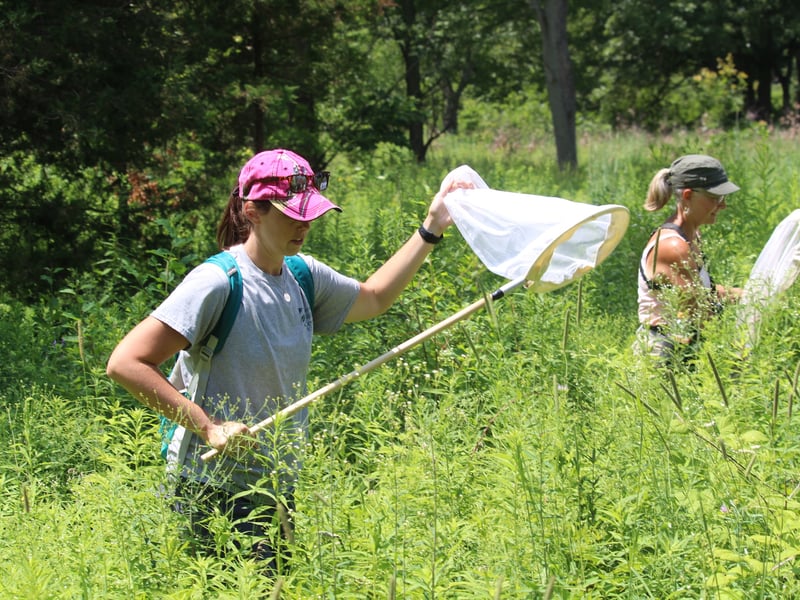
(CN) — New research from Michigan State University is bolstering evidence of an inconvenient truth: The abundance of butterflies in the American Midwest is decreasing.
According to a study published Monday in Proceedings of the National Academy of Sciences, researchers used integrated data from five participating science programs to record more than 4.3 million observations over 90,000 hours. Their conclusion? Butterfly populations in the Midwestern United States have experienced significant declines since 1992, with none of the 136 species identified showing an increase in abundance.
Instead, 59 out of 136 species (43%) declined, with annual trends ranging from -1.2% to -6.9%. In fact, population declines were noted in all functional groups, including common, rare, migratory, resident, specialist and generalist butterfly species. Common species declined more steeply (-1.9% per year) than rare species (-0.9% per year).
In a news release, Ph.D. candidate Wendy Leuenberger, who is in the MSU Zipkin Quantitative Ecology Lab in the department of integrative biology, said she was startled by the results.
“We expected to find that at least some species had done well over the past 32 years,” she said. “You would have such a different experience taking a walk to look at butterflies in 1992 as compared to 2023. While most of the common species like monarchs and cabbage whites are still present, you wouldn’t see nearly as many of them as in 1992. You’re less likely to spot rare species as well. These are all changes that have occurred during my lifetime, which is humbling.”
The study did not seek the causes of the declines, but the team hypothesized that neonicotinoid insecticides, introduced in the 1990s, are a key driver due to their widespread use in agriculture and sublethal effects on non-target species. Climate change and habitat loss may also contribute, the study suggests, but the uniform declines suggest a pervasive stressor like pesticides.
The results support a separate study published in March indicating butterfly populations have fallen nationwide in the 21st century. MSU’s study provides the most comprehensive assessment of Midwestern butterfly declines to date, revealing unprecedented losses across all species and functional groups. The results underscore the urgency of addressing large-scale environmental stressors, particularly pesticide use, to mitigate biodiversity loss.
Besides abundance, which quantified the population declines, the team also observed key ecological metrics, including richness and evenness. Richness tracks species loss while evenness reflects shifts in dominance (or whether common species decline at rates faster than rare species).
They determined species richness declined by -0.3% per year, resulting in a -9.1% median decrease over the study period. Evenness increased, indicating a shift toward more uniform abundance among remaining species.
Some species fared better than others, with univoltine (those that produce one generation per year) and egg-overwintering species declining more severely. Migratory species were slightly more resilient than resident species but still declined in abundance (-1.1% vs. -1.7% per year).
“Traits affect how resilient butterflies are to change,” Leuenberger explained. “For instance, ones that only have a single generation a year don’t do as well as multi-generational butterflies.”
The findings highlight the need for conservation strategies targeting entire communities, not just rare or flagship species, as declines may cascade through ecosystems, affecting pollination, bird populations and other trophic levels.
“Humans rely on insects more than we realize,” Leuenberger said. “We need to figure out how we can protect them before it’s too late.”
The study paints a stark picture of butterfly declines in the Midwest, urging a shift toward ecosystem-wide conservation efforts to address the broader biodiversity crisis.
 Follow @gabetynes
Subscribe to our free newsletters
Our weekly newsletter Closing Arguments offers the latest about ongoing trials, major litigation and rulings in courthouses around the U.S. and the world, while the monthly Under the Lights dishes the legal dirt from Hollywood, sports, Big Tech and the arts.