
 Search Articles


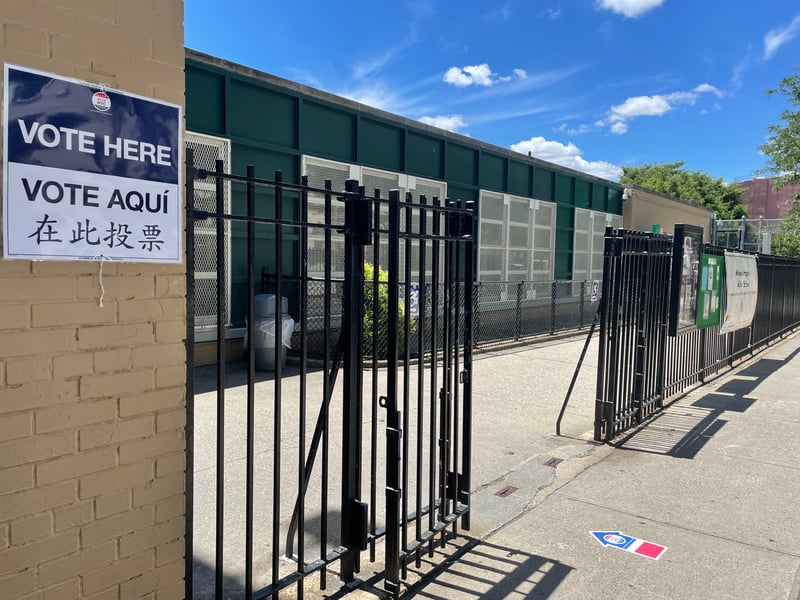
ALBANY, N.Y. (CN) — The New York Court of Appeals on Thursday greenlit a state law that moves certain elections from odd- to even-numbered years in an effort to boost voter turnout.
In a 12-page order, the state’s highest court rejected Republican-led challenges to the election change, which they unsuccessfully claimed violates New York’s constitution and unduly burdens some rural voters.
“We conclude that it does not,” the court unanimously ruled.
Currently, local elections in New York take place in odd-numbered years, while statewide and national ones are reserved for even-numbered years. But in 2023, Governor Kathy Hochul signed the scrutinized change into law, consolidating some local races to even-numbered years starting this fall.
Proponents say the change should give a bump to turnout, decrease voter confusion and allow the state to consolidate resources into fewer Election Days.
But the law’s challengers — which in this case include several Republican New York counties and voters — claimed it tramples on the constitutional right of local officials to regulate their own elections.
The New York Court of Appeals disagreed, finding “that right does not implicitly include a right to set terms of office or timing of elections.”
Additionally, the court rejected the plaintiffs’ claims that the new process would make voting more difficult for certain residents. Suing voters argued that the even-numbered election years would contribute to voter fatigue due to more candidates and issues being on the ballot. They also said they’d now face longer lines to vote on local issues, since they’d now be doing so alongside people voting for president.
“These are not traditional voter suppression claims,” the court ruled, adding, “any alleged injury is minor as compared to the state’s legitimate and substantial interest in increasing voter turnout and reducing confusion.”
The even-year election law, the judges found, “is a neutral law which changes the timing of elections in a manner common to all voters, and imposes no form of restriction, burden or limitation on voting.”
All seven judges on New York’s highest court were in lockstep on Thursday. Associate Judge of the New York Court of Appeals Michael Garcia, a Republican appointed by former Governor Andrew Cuomo, penned the decision that was affirmed by each of his peers.
The contentious law moves only certain local elections around the state to even-numbered years, excluding some city elections and certain races for county positions like clerk, sheriff, district attorneys and local judges.
New York City will not be affected.
The law’s critics initiated a legal challenge in Onondaga County to stop its enforcement shortly after Hochul signed it into law. A state judge sided with them in 2024, finding that the change interferes with the state’s constitution, could confuse voters and may cause local issues to get overshadowed by more highly covered state and national races.
Earlier this year, a mid-level state appellate court overturned that ruling, finding the law constitutional. Thursday’s order affirmed that court’s findings.
The ruling comes roughly five weeks after oral arguments on the matter, where the Court of Appeals judges were palpably skeptical of the plaintiffs’ arguments.
“We are alleging that those voters will face longer lines, they will face more confusion and they will face a harder time getting their fellow citizens interested,” plaintiffs’ attorney Misha Tseytlin argued.
Associate Judge of the Court of Appeals Anthony Cannataro seemed unconvinced at the time, asking: “Your allegation is that in an even-year election, voters who would have otherwise voted in an odd-year election will just not bother to vote because it’s an even-year election?”
Tseytlin acknowledged to the court that he heard “some skepticism from the bench.” He didn’t immediately return a request for comment on Thursday.
 Follow @Uebey
 Follow @uebey.bsky.social
Subscribe to our free newsletters
Our weekly newsletter Closing Arguments offers the latest about ongoing trials, major litigation and rulings in courthouses around the U.S. and the world, while the monthly Under the Lights dishes the legal dirt from Hollywood, sports, Big Tech and the arts.