
 Search Articles


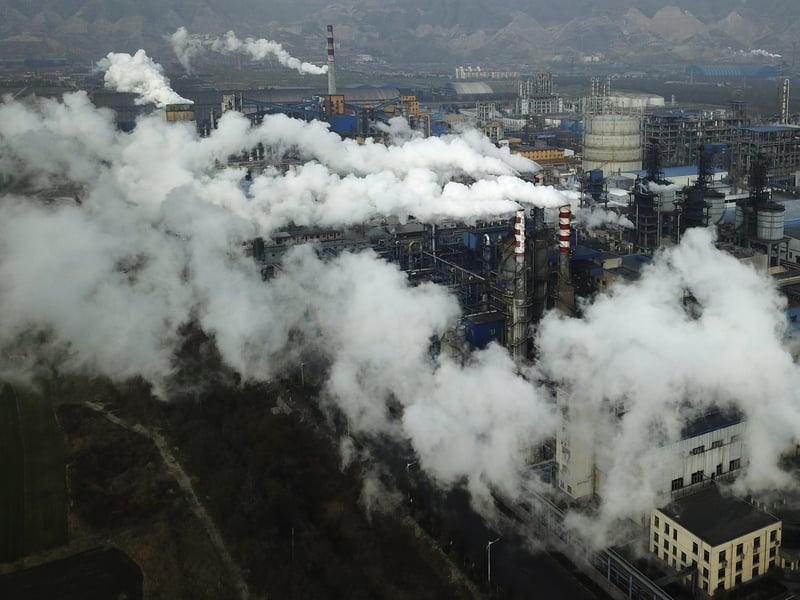
BRUSSELS (CN) — Caught in a devastating squeeze between American export barriers and surging cheap imports, European officials announced Tuesday they’re cutting steel imports by nearly half in their most desperate move yet to save a collapsing industry.
The plan would slash duty-free steel imports to 18.3 million tons a year — down 47% from current levels — while hiking tariffs on excess shipments to 50%. It’s Europe’s response to getting pummeled from both directions: losing access to lucrative U.S. markets while cheap foreign steel continues flooding in from China, Turkey and other competitors.
The dramatic deterioration is captured in Eurostat trade data showing the EU steel sector has swung from an 11 million ton trade surplus to a 10 million ton deficit in just a decade — a staggering 21 million ton reversal that underscores the industry’s crisis.
“A strong, decarbonized steel sector is vital for the European Union’s competitiveness, economic security and strategic autonomy,” European Commission President Ursula von der Leyen said. “Global overcapacity is damaging our industry. We need to act now.”
The crisis intensified when the U.S. reimposed 25% steel and aluminum tariffs in March, ending exemptions for Europe, then doubled them to 50% in June. The escalating tariffs threaten to cost the EU up to 3.7 million tons of steel exports from what was its second-largest market, representing 16% of total EU steel trade.
Despite the trade tensions, “we are not each other’s problem,” Trade Commissioner Maroš Šefčovič said during Tuesday’s announcement at the European Parliament headquarters in Strasbourg, France, along with Executive Vice President Stéphane Séjourné.
However, he noted Washington pressed Europe to act, saying: “What was clear coming across from the U.S. is that, look, we already adopted very robust measures. What you Europeans are going to do?”
A July trade dealcreated a 15% general tariff for most EU goods, but explicitly exempted steel and aluminum, which remain at 50%. Meanwhile, imports from key competitors have surged dramatically: Turkey up 82% since 2019, Chinese imports up 37% and Indian shipments jumping 40%, according to Eurostat data.
China now dominates EU steel imports, accounting for 12.5 billion euros ($14.59 billion) worth of steel articles in 2024 — representing 37% of total EU steel imports, far outpacing other suppliers.
Britain faces particularly severe consequences from the European restrictions. According to U.K. Steel Association data, 75% of British steel exports head to European markets, creating an overwhelming dependence on EU buyers. British steel output has collapsed to 4 million tons per year — levels not seen since the 1930s economic depression — leaving the industry especially vulnerable to any disruption in European trade.
“We won’t apologize for taking decisions for European steel markets to protect our markets and the jobs underlying them,” said Séjourné.
“This is perhaps the biggest crisis the U.K. steel industry has ever faced. Government must go all out to leverage our trading relationship with the European Union to secure U.K. country quotas or potentially face disaster,” one industry official said.
Companies feel the squeeze
European steelmakers are running at just 67% capacity when healthy operations typically hit around 80%. The industry has lost anywhere from 9,000 to 100,000 jobs since 2007 and just posted record losses in 2024.
Major companies are already feeling the pain: German giant ThyssenKrupp announced plans to cut 11,000 jobs in December, while ArcelorMittal has postponed decarbonization investments across Europe, according to the commission. Czech steelmaker Liberty Ostrava filed for bankruptcy in June.
Europe is putting China squarely in the crosshairs. China is “the main responsible for this situation of overcapacities — not the only one, but the main responsible,” senior commission officials told reporters on Tuesday. The problem has gotten worse despite years of talks, with China deciding to “look away” from international efforts to address the issue.
The double hit has intensified as China and other countries have “massively expanded their production capacity … very often funded by illegal subsidies,” according to Šefčovič. European steel production has plummeted from 160 million tons in 2017 to just 126 million tons in 2023, while the EU’s share of global steel production has shrunk to less than 8%.
“Europe also has to stop being naive, own its industry, be competitive, deal with international trade issues,” said Séjourné. “There is no other way to ensure the long-term protection of the steel industry.”
Energy costs have made things worse — they spiked to 80% of production costs during the 2022 energy crisis and remain two to three times higher in Europe than in the U.S., commission officials said, making European producers even less competitive globally.
European officials defended the sharp quota cuts, pointing out that EU steel plants are running well below capacity. That leaves room for domestic production to ramp up, they said. If shortages do pop up, they can quickly adjust the quotas through an emergency procedure.
The numbers tell the story of Europe’s steel crisis. The EU imported 13.5 million tons of steel last year from countries led by Turkey, India, South Korea, Vietnam, China, Japan, the U.K. and Ukraine. Under the new plan, that drops to just 18.3 million tons — the 47% cut officials announced.
The new tariffs will pile on top of anti-dumping penalties already hitting various steel products, with existing duties ranging from single digits to over 80%. Some imports could face multiple rounds of taxes.
Europe’s steel industry has shed about 65 million tons of capacity since 2007 — the only major region to see such dramatic cuts.
The proposal also adds new “melt and pour” tracking requirements that force companies to prove where steel was actually produced, preventing them from dodging the restrictions by shipping through other countries.
Norway, Iceland and Liechtenstein get a pass because of their close economic ties to Europe. Ukraine will get special treatment with its own quota allocation since it’s fighting a war, officials said.
Europe is backing the steel protection plan with serious money. The commission has already approved close to 9 billion euros in state aid for steel decarbonization projects since October 2022, with plans for a 100-billion-euro Industrial Decarbonisation Bank to support the sector’s transition to cleaner production methods.
The plan now heads to the European Parliament and member countries for approval. Officials want it ready to go when current protections expire in June 2026. Officials say they’ll work with affected countries to hash out individual deals once it gets approved.
With global steel overcapacity expected to balloon to 721 million tons by 2027 — five times Europe’s annual demand — officials say the measures represent a last stand for the continent’s industrial sovereignty. “If not, we are going to find ourselves without a steel industry,” warned a senior EU official.
Courthouse News correspondent Yuval Molina is based in Brussels, Belgium.
Subscribe to our free newsletters
Our weekly newsletter Closing Arguments offers the latest about ongoing trials, major litigation and rulings in courthouses around the U.S. and the world, while the monthly Under the Lights dishes the legal dirt from Hollywood, sports, Big Tech and the arts.