
 Search Articles


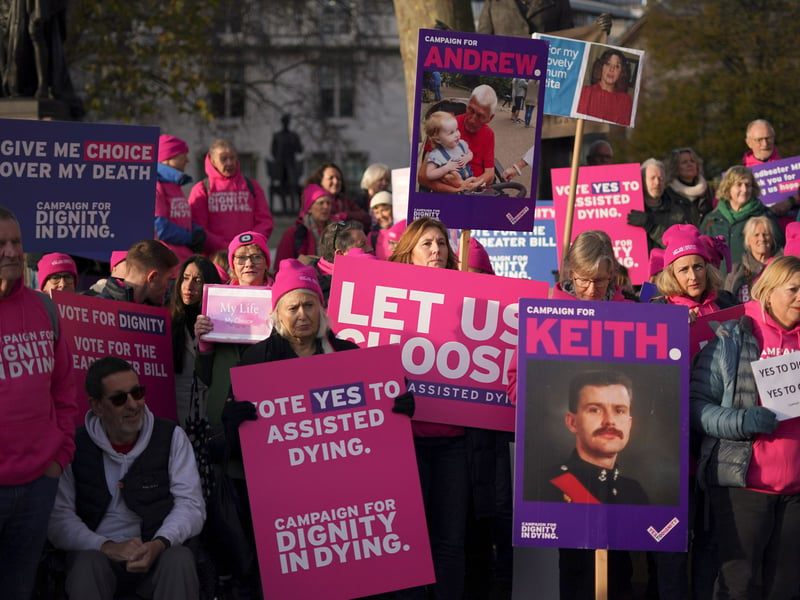
LONDON (AFP) — U.K. lawmakers voted Friday in favor of assisted dying for terminally ill people in England and Wales, advancing the emotive and contentious legislation to the next stage of parliamentary scrutiny.
Ministers of Parliament voted by 330 to 275 in support of legalized euthanasia in the first vote on the issue in the House of Commons for nearly a decade.
The result came following an emotionally charged debate that lasted almost five hours in a packed and hushed chamber, and as competing protesters made their voices heard outside parliament.
The Terminally Ill Adults (End of Life) Bill now progresses to the committee stage where lawmakers can table amendments, a process likely to be vexed.
The legislation would then face further votes in the Commons and House of Lords upper chamber. The process will likely take months and if it is ultimately passed then a change in the law is expected to be several years away.
The House of Commons last debated, and defeated, a euthanasia bill in 2015, but public support for giving terminally ill people the choice to end their lives has since shifted in favor, polls show.
A change in the law would see Britain emulate several other countries in Europe and elsewhere who allow some form of assisted dying.
Labour lawmaker Kim Leadbeater, who is behind the bill, told the debate that changing the law would give terminally ill people “choice, autonomy and dignity at the end of their lives.”
Advocates also argue that it would make some deaths less painful.
But other lawmakers expressed concern that people might feel coerced into opting for euthanasia, while some said they were worried it would discriminate against people with disabilities.
Opponents also worry that the health care system is not ready for such a landmark change and that it could cause a decline in investment for palliative care.
“True dignity consists in being cared for to the end,” Conservative parliamentarian Danny Kruger said, urging colleagues to reject a “state suicide service.”
Outside, dozens of opponents gathered holding signs with “Kill the Bill, not the ill” and “Care not killing,” urging lawmakers to vote against the proposed legislation.
A nearby gathering in favor of the legislation saw people dressed in pink holding placards with slogans such as: “My life, my death, my choice.”
Assisted suicide currently carries a maximum prison sentence of 14 years in England, Wales and Northern Ireland.
‘Shortening death’
In Scotland, which has a separate legal system and devolved powers to set its own health policy, it is not a specific criminal offense. But it can leave a person open to other charges, including murder.
Leadbeater’s bill would allow assisted suicide in England and Wales for adults with an incurable illness who have a life expectancy of fewer than six months and are able to take the substance that causes their death themselves.
Any patient’s wish to die would have to be signed off by a judge and two doctors.
The measures are stricter than assisted dying laws in other European countries and also proposed legislation being contemplated in France.
Consideration is being given to a similar bill in Scotland.
Leadbeater’s initiative is a so-called private members’ bill and is not part of the government’s agenda, although it follows Prime Minister Keir Starmer’s vow, before winning power in July, to allow Parliament to revisit the issue.
Lawmakers had a free vote, meaning predicting the outcome was virtually impossible.
Starmer, who voted in favor of permitting assisted suicide in 2015 with “robust” safeguards, did not reveal his view in the run-up to the vote.
His ministerial team had been instructed to remain neutral but several expressed views, both in support and against.
Two polls last week indicated that a majority of Britons back changing the law.
Faith leaders are among the stringent opponents, with nearly 30 signing a joint letter last weekend arguing they are “deeply concerned” by the plans.
—
By PETER HUTCHISON Agence France-Presse
Subscribe to our free newsletters
Our weekly newsletter Closing Arguments offers the latest about ongoing trials, major litigation and rulings in courthouses around the U.S. and the world, while the monthly Under the Lights dishes the legal dirt from Hollywood, sports, Big Tech and the arts.