
 Search Articles


MANCHESTER, England (CN) — A British inquiry into grooming gangs, organized groups responsible for sexually exploiting children, is in crisis before it starts after four survivors resigned from the advisory panel and called for the safeguarding minister to quit.
The turmoil has deepened political divides in Prime Minister Keir Starmer’s government and revived anger over decades of official failures to stop child sexual exploitation in northern English towns.
The scandal was first exposed in 2003 and drew international attention in January when Elon Musk criticized the prime minister for not calling a national inquiry.
The tech billionaire, who was heading the DOGE initiative at the time, said: “So many people at all levels of power in the U.K. need to be in prison for this.”
The inquiry, announced in June after years of pressure from campaigners, was meant to focus on group-based abuse, referred to as “grooming gangs,” in towns such as Rotherham and Rochdale in Greater Manchester.
Authorities were accused of ignoring abuse for years, partly over fears of being perceived as racist because many perpetrators were British-Pakistani men and most victims were white working-class girls.
The racial dynamic made the issue a lightning rod in British politics, seized on by far-right groups in anti-immigrant protests.
Survivor panel splinters
The advisory panel was created to represent 30 survivors of gang-based sexual exploitation, helping to shape the inquiry’s scope and methods.
But four members of the survivors’ liaison panel quit this month, accusing the government of diluting the inquiry’s focus and publicly dismissing their concerns.
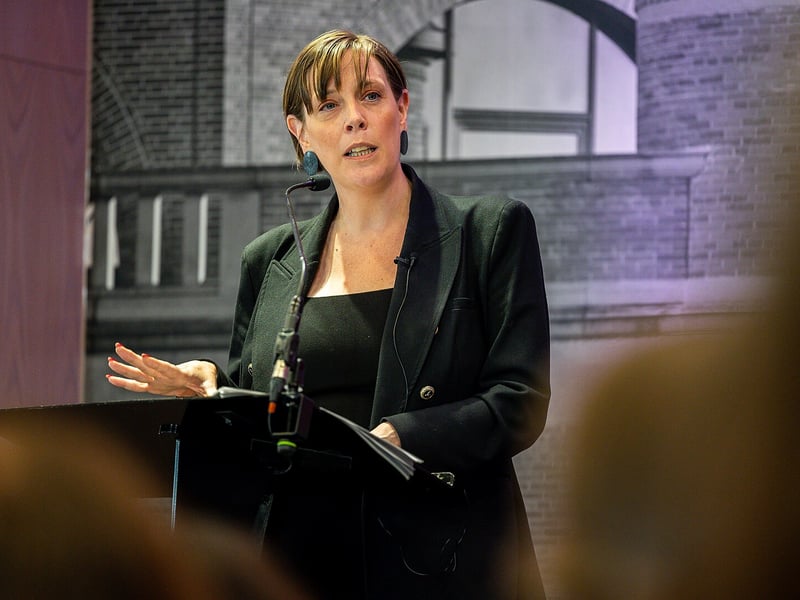
The resignations followed a letter from Safeguarding Minister Jess Phillips insisting that claims of a “watered-down” inquiry were “untrue.”
The survivors wrote to Phillips in a letter that her denial “takes you right back to that feeling of not being believed all over again.” They have called for her to resign.
But five other survivors have written to Starmer and Home Secretary Yvette Cooper demanding Phillips stay in post, saying in a joint letter that she has been “impartial to the process” and her consistency is vital.
Additionally, they want all types of sexual exploitation to be within the inquiry’s scope, including but not exclusively grooming gangs.
The split has exposed the mistrust among survivors, with some saying they do not trust the police or social workers, the very institutions under scrutiny for covering up decades of abuse.
Logistically, the rift has made it nearly impossible to appoint a chair. Two frontrunners, former deputy chief constable Jim Gamble and former head of children’s services Annie Hudson, both withdrew last week.
Gamble said the process had become “toxic,” driven by “political opportunism and point-scoring.” He added that “many of the victims and survivors were being disrespected and misinformed,” by implying that his police background could compromise his ability to be impartial.
Hudson said she no longer wished to be considered after “intense media coverage” of her background.
Without a chair, the inquiry cannot finalize its terms of reference or begin.
Starmer stands by inquiry
Starmer addressed the resignations in Parliament, stating that the inquiry “will never be watered down; its scope will not change; it will examine the ethnicity and religion of the offenders; and we will find the right person to chair the inquiry.”
The prime minister added that if the survivors wished to return to the panel, “the door will always be open.”
The Labour government initially opposed holding a new inquiry, citing an earlier seven-year investigation that ended in 2022 and produced 20 recommendations, 18 of which remain unimplemented.
The previous inquiry, under the former Conservative government, was broader in scope and investigated failures across England and Wales, including police, social workers, local councils and schools.
Lawmakers from across parties have urged the government to speed up the process of the new inquiry.
Labour MP Sarah Champion and Conservative MP Robbie Moore said in a joint letter to the Home Office that delays in appointing a chair “are leading to substantial delays in the inquiry beginning its crucial work.”
“We strongly believe that the inquiry should be tightly focused and avoid the sprawling scope that hindered the work of the previous independent inquiry," the lawmakers said.
Julie Taylor, professor of child protection at the University of Birmingham, said she doubts the inquiry can easily rebuild confidence.
“It would be wrong to put all survivors in one heterogeneous group,” Taylor said. “The survivors here will all be at a different point of their recovery journeys and will need different levels of assurance and support,” adding that not all were victims of grooming gangs but other forms of child sexual abuse and exploitation.
“Building trust will take a lot of time and effort, but I am not sure building consensus on everything will be possible,” she said. “Transparency and honesty are key, and so far they haven’t been.”
On the racial aspect of the criminal gangs, Taylor said that while these truths may be uncomfortable, “we do need to address the racial dynamics and understand why these men took the opportunities they did with such vulnerable white girls.”
This will inevitably stir up anti-immigration politics, Taylor admitted, “but without understanding it,” she added, “we can’t put in any interventions to stop it happening again.”
Courthouse News reporter James Francis Whitehead is based in England.
 Follow @jayfranklinlive
Subscribe to our free newsletters
Our weekly newsletter Closing Arguments offers the latest about ongoing trials, major litigation and rulings in courthouses around the U.S. and the world, while the monthly Under the Lights dishes the legal dirt from Hollywood, sports, Big Tech and the arts.