
 Search Articles


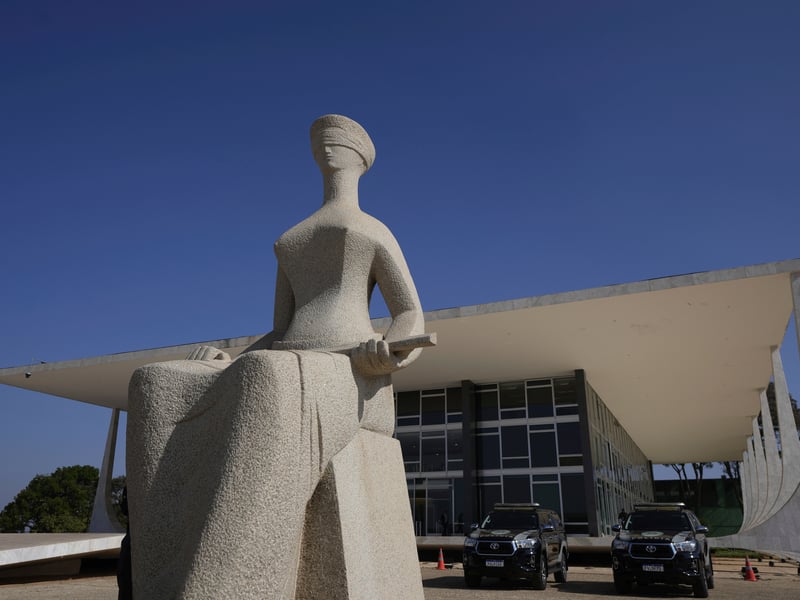
RIO DE JANEIRO (CN) — Brazil’s Supreme Court ruling that expands the civil liability of tech platforms for third-party content is reshaping the interpretation of Article 19 of the 2014 Marco Civil da Internet — the country’s landmark internet bill of rights. The decision underscores the growing rift between the judiciary and Congress in setting digital regulation policy.
Under the precedent set Thursday, platforms can be held liable in a variety of situations even without a court order, depending on the nature of the content. The case was prompted by lawsuits from users who claimed harm when platforms failed to remove offensive material even following direct complaints.
The ruling establishes four different liability regimes: court orders remain necessary for content related to defamation or similar offenses; serious crimes, such as incitement to violence or hate speech, may trigger liability upon simple notification; structural negligence applies in cases of systemic failure; and sponsored or AI-generated content, such as chatbots, automatically generates platform liability.
Platforms are also now required to maintain a legal representative in Brazil, implement self-regulatory mechanisms, publish transparency reports, and remove identical content previously ruled unlawful by Brazilian courts.
“The Supreme Court took something that was simple and direct, and that maybe deserved review by lawmakers, and turned it into something complex and even hard to grasp,” said João Victor Archegas, a researcher at the Rio de Janeiro-based Institute for Technology and Society, or ITS Rio.
In a statement obtained by Folha de S. Paulo, the Brazilian Chamber for Digital Economy — which represents companies like Meta, Google, Amazon, Kwai, Mercado Livre and TikTok — criticized the ruling, warning that it creates legal uncertainty, raises moderation costs, and encourages preventive censorship of legitimate posts. The companies expect a wave of lawsuits and intend to lobby Congress to pass new legislation that could override the court’s interpretation.
The ruling comes amid legislative inaction. In Congress, digital regulation has been a partisan battlefield, particularly around freedom of speech.
Bill 2630/2020, aimed at regulating platforms and combating disinformation, was shelved in the lower house after strong opposition from right-wing and far-right parties such as PL, Novo, and Republicanos, which labeled the proposal a threat to free expression.
Meanwhile, Bill 2338/2023 — which sets general rules for AI governance — passed the Senate and is now under review in a special committee in the lower house. The proposal, inspired by the EU’s risk-based approach, has drawn criticism for potentially stifling innovation through overly strict requirements.
Alexandre Pacheco da Silva, a Law professor at Fundação Getúlio Vargas in São Paulo and the coordinator of the institution’s Center for Teaching and Research on Innovation, noted that Article 19 differs significantly from Section 230 of the U.S. Communications Decency Act. Instead of requiring platforms to act upon notice, Brazil’s law gave courts the sole authority to determine whether content was illegal — shielding platforms from liability until a judicial decision.
This judicial gatekeeping was originally seen as a safeguard against censorship and a way to protect freedom of expression. But according to Silva, the rise of AI and algorithmic amplification has shifted the role of platforms from neutral hosts to active curators of online content.
“What the Supreme Court is saying is that Article 19 does not violate free speech,” Silva said. “Justice Alexandre de Moraes often says: In Brazilian democracy, we have freedom of expression, not freedom to attack.”
Archegas sees the ruling as a turning point in a deteriorating regulatory landscape. Brazil, once a global pioneer with its internet bill of rights, has since lost ground by failing to update its framework and increasingly relying on fragmented court decisions or imported models like the EU’s.
“Brazil needs to recover the regulatory DNA it had during the Marco Civil era,” he said.
Francisco Brito Cruz, a lawyer and director of the São Paulo-based InternetLab, said the outcome would likely have been different had Congress acted sooner.
“No one wanted the Supreme Court to take this on, not even the Supreme Court,” he said. The judiciary, he argued, lacks the tools to enforce complex policies and cannot create a dedicated regulatory body.
“What the court did shows the debate can’t stay frozen,” he added. “Just as congressional inaction pushed the Supreme Court to act, the court’s move will now pressure Congress to respond.”
Congresswoman Adriana Ventura, a member of the Novo party representing São Paulo, has sat on the special committee reviewing Bill 2338/2023 since May. “Rushed regulation can create legal uncertainty and suffocate innovation,” she said.
If Congress approves the bill without thorough technical debate, Ventura warned, it risks enacting a “legal framework already outdated at birth.” She also criticized the current draft for assigning disproportionate liability to developers and users of AI systems. “It treats startups as if they had the same structure as Big Tech companies,” she said.
While Silva sees Bills 2630/2020 and 2338/2023 as addressing separate issues — one focused on content moderation, the other on AI governance — Archegas argues that the two agendas overlap significantly.
“The key point is that AI is already being used to moderate content,” he said. “So regulating AI inevitably touches on freedom of expression. One thing leads to another.”
Ventura agrees that awareness of the overlap is growing, but noted there is still no formal coordination in Congress to unify the debates. “In the special committee, I’ve advocated for sector-specific hearings, in areas like health, education, agriculture, security and finance,” she said. “Those discussions would naturally include platforms, though not as a way to broaden the scope of Bill 2338/2023.”
For Archegas, treating these topics as isolated efforts reflects not a clear thematic separation but a lack of political coordination and long-term regulatory planning. This fragmented approach, he said, erodes public understanding and makes proposals appear disjointed or reactionary.
On the day after the ruling, “censorship” became the 15th most discussed topic on X in Brazil, fueled largely by right-wing influencers and politicians. A related Google search — “Supreme Court decides social media” — ranked among the top 15 in the country, peaking in the early hours of Friday.
Despite the backlash, a national survey by Nexus released in June found that 78% of Brazilians believe platforms should be more accountable for the content they host, and 62% think companies should remove more posts than they currently do.
The AI governance regulation, Bill 2338/2023, is still in the public hearing stage in the lower house, with no report presented and no vote scheduled. Bill 2630/2020, shelved by House Speaker Arthur Lira in 2024 following industry and right-wing backlash, remains dormant with no prospects of revival.
“There are already efforts to pin the same ‘censorship’ label on Bill 2338/2023 as they did on Bill 2630/2020,” Archegas warned. “If that narrative gains traction, this bill could suffer the same fate. But if not, it still has a chance of passing this year.”
While stressing that neither a law nor a court ruling will single-handedly solve Brazil’s internet and societal challenges, Cruz said the country’s priority should be to establish a dedicated regulatory body to oversee digital platforms. Without it, he warned, “judicial remedies will remain the only available tool.”
Subscribe to our free newsletters
Our weekly newsletter Closing Arguments offers the latest about ongoing trials, major litigation and rulings in courthouses around the U.S. and the world, while the monthly Under the Lights dishes the legal dirt from Hollywood, sports, Big Tech and the arts.