
 Search Articles


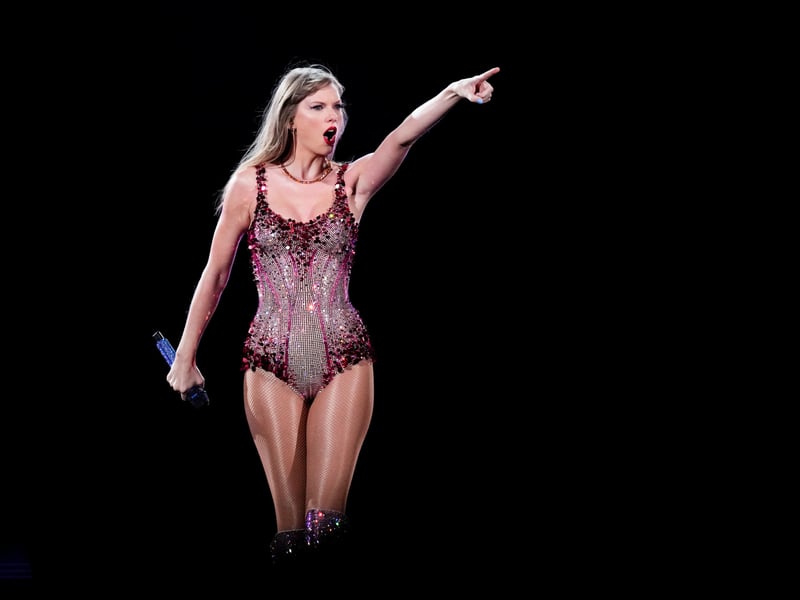
RIO DE JANEIRO (CN) — After nearly 2 million streams and entering Spotify’s Top 50 chart in Brazil before being removed in late December, a Brazilian version of Taylor Swift’s “The Fate of Ophelia” created using artificial intelligence — titled “A Sina de Ofélia” in Portuguese — continues to circulate freely on social media and outside official streaming services.
The track uses synthetic voices modeled after Luísa Sonza and Dilsinho, two of Brazil’s top pop music artists, amid legal uncertainty over copyright, personality rights and potential unfair competition in AI-generated content.
In September 2025, Spotify adopted rules to curb the misuse of AI on its platform, including banning unauthorized imitation of artists and removing content deemed fraudulent or misleading. At the time, the company said it had systems in place to identify music spam and voice cloning, which resulted in the removal of “A Sina de Ofélia” from the service.
On YouTube, however, dozens of videos continue to reproduce the track, some with more than 1 million views, including AI-generated music videos. On TikTok, Luísa Sonza posted two videos reacting to the song, which together have drawn almost 18 million views.
While “A Sina de Ofélia” went viral on an unusual scale, similar AI-generated versions of well-known songs and voices are widespread across Brazilian social media. On TikTok, the page Track B — which describes itself in its bio as “the page that created A Sina de Ofélia” — has about 28,400 followers and more than 1.2 million likes on such videos.
Juliana Sene Ikeda, a partner at São Paulo-based Campos Thomaz Advogados, said the absence of specific legislation on AI — and the lack of consolidated case law even outside Brazil — means courts rely on existing rules, such as the country’s copyright law.
According to Ikeda, that framework leaves several gray areas, including the definition of authorship in AI-generated works, the boundary between legitimate inspiration and improper appropriation of artistic identity, the degree of responsibility borne by platforms and the use of protected works in training AI systems.
“Under current Brazilian law, copyright protection requires human intellectual creation, so it is not settled who should be considered the author of an AI-generated work,” Ikeda said. “To limit their liability for AI-created content, platforms often assign intellectual property rights in those works to users, but individuals or companies involved in the economic exploitation or dissemination of the work may still be held accountable.”
Júlia Veloso, a copyright lawyer and researcher at the Institute for Technology and Society of Rio de Janeiro, said there have so far been no major court cases in Brazil involving the use of artists’ voices or claims of plagiarism in music created by AI.
“The main case involving artificial intelligence, copyright and music decided so far is a lawsuit brought by the Spitz Aventura amusement park, in Santa Catarina, against the Central Office for the Collection and Distribution of Royalties, in which the park argued that no public performance fees were owed for AI-generated music,” Veloso said.
Last August, the Santa Catarina state court ruled against the park, finding that AI-generated music is not automatically exempt from copyright-related obligations, and that the lack of an identifiable human author does not, on its own, preclude public performance fees.
Rodolfo Lacerda, from the São Paulo-based music management company Música em Rede, said the spread of AI-generated music using recognizable voices and styles creates an imbalance in the music industry. AI systems can generate music at massive scale and in very short timeframes, at a pace human artists cannot match, a volume that tends to take up space in catalogs and can be combined with practices such as artificial streaming farms.
“You have a bunch of AI artists competing with other artists, and the money inside Spotify is the same,” he said.
Lacerda said another issue is the use of AI-generated music by large retail chains as background soundtracks in order to avoid paying public performance royalties.
He added that AI can also function as a tool within the creative process, much like other resources already used in music production. But while it can support creative work, it can also be misused.
He said cases like “A Sina de Ofélia” show how such content can circulate, generate engagement and produce revenue even without a human artist attached. While he considers this type of music to be ephemeral, Lacerda said the phenomenon reinforces the need for regulation.
“While AI makes music production easier, it skews the playing field. You can’t just leave things completely unchecked, as if music were a commodity,” he said.
Paula Celano, who specializes in intellectual property and entertainment law at São Paulo-based BBL Advogados, said the legal complexity of AI lies in determining whether it should be treated merely as a creative tool or whether it acts as a source of creation that meaningfully distances itself from human control.
According to Celano, that distinction is central to assigning liability in cases involving AI-generated music, particularly when there is reproduction of voices, styles or identifiable elements associated with artists, and it affects disputes over both copyright and personality rights.
“The courts will always focus on identifying who benefited from the work, who had control over the outcome and the degree of similarity between the generated works,” Celano said.
Even without direct reproduction, according to Celano, such content may violate copyright, personality rights and unfair competition rules, depending on the level of similarity, the risk of public confusion and the existence of economic exploitation.
She said that in the absence of specific rules, Brazilian courts tend to apply established laws — including copyright law and unfair competition legislation — analyzing each case individually to determine whether an infringement occurred and who should be held liable.
YouTube did not respond to a request for comment.
TikTok said in a statement that anyone who believes their copyright or trademark rights have been violated can submit a report using the tools available on the app.
Courthouse News reporter Marília Marasciulo is based in Brazil.
Subscribe to our free newsletters
Our weekly newsletter Closing Arguments offers the latest about ongoing trials, major litigation and rulings in courthouses around the U.S. and the world, while the monthly Under the Lights dishes the legal dirt from Hollywood, sports, Big Tech and the arts.