
 Search Articles


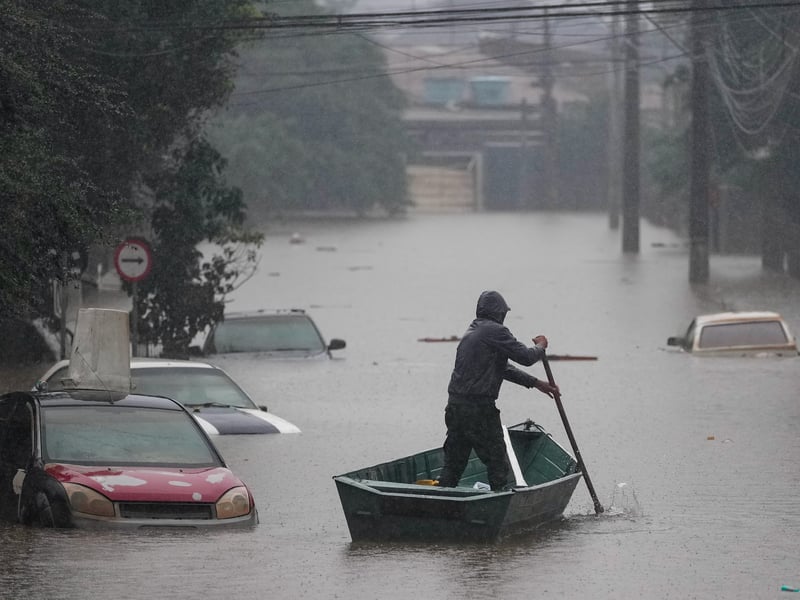
RIO DE JANEIRO (CN) — The Court of Justice of Rio Grande do Sul, Brazil’s southernmost state, has begun ruling on more than 12,000 lawsuits filed by residents and small business owners affected by last year’s devastating floods.
The first ruling, issued on July 22, ordered the state to compensate a family in Canoas, a city just outside the state’s capital of Porto Alegre. The three family members are to receive $1,000, plus interest.
The number of decisions is expected to grow in the coming weeks as cases are reviewed by a special division created by the court to expedite proceedings. Referrals to the task force are optional and left to the discretion of each judge.
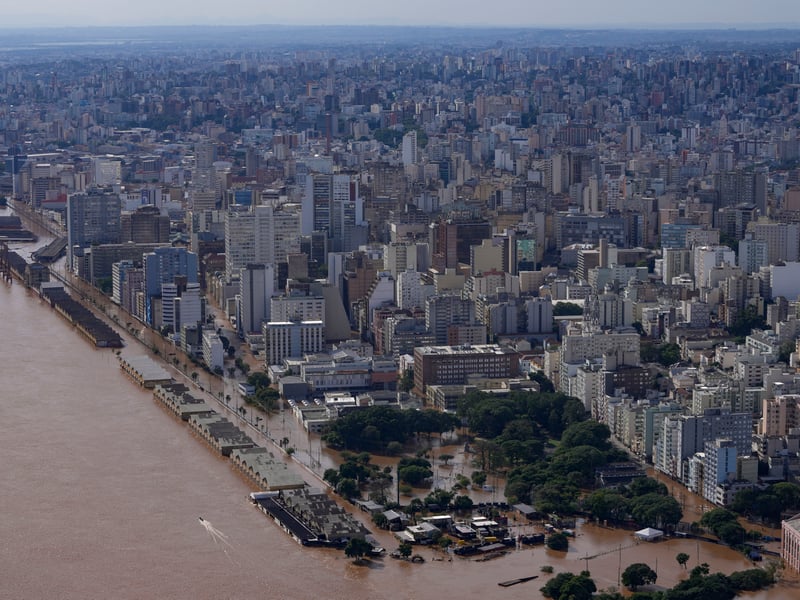
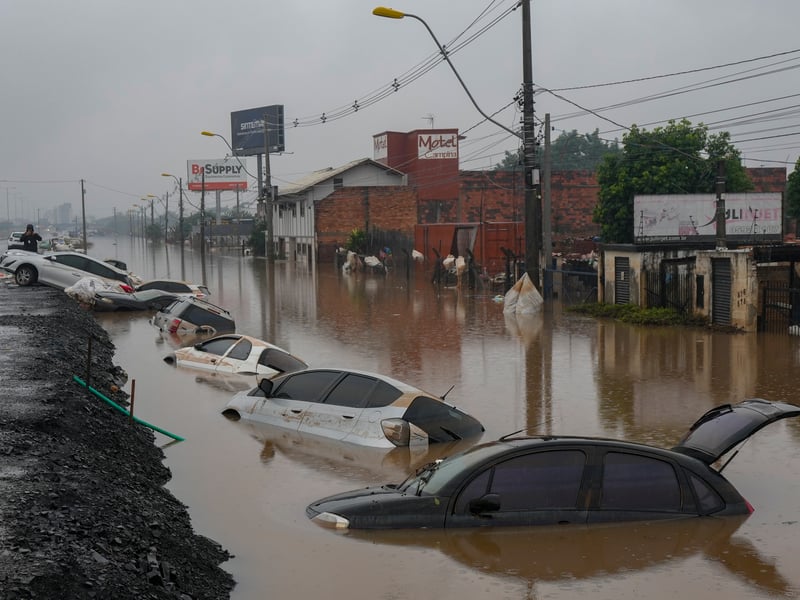
The floods in May 2024 were the worst natural disaster in the state’s history, affecting more than 2.4 million people in 478 of the state’s 497 municipalities and causing an estimated $18 billion in damage, according to the Inter-American Development Bank.
Brazil’s National Council of Justice reportsthat 27,615 flood-related cases are pending nationwide. About 70% are in state courts, 28.5% in federal courts and 0.8% in labor courts. Nearly half of the cases seek compensation for emotional distress, typically ranging from $2,000 to $10,000.
Plaintiffs argue that the losses could have been prevented or minimized if the government had taken proper preventive action.
Judge Mauro Peil Martins, head of the flood task force, said the central legal issue is whether the floods constitute a “force majeure” — an act of God that could exempt the state from liability under Brazilian civil law.
“State and local governments claim the floods were unusually severe and that no infrastructure would have been sufficient to stop them,” Martins said.
But this argument must be assessed case by case, he added. “In Pelotas, for instance, there were early warnings and maps showing the water advancing. But other cases are different. In Canoas, the local government told the public there was no risk. Then a levee broke, and the area was flooded within a day,” Martins said.
In the July 22 ruling, Judge Marina Fernandes de Carvalho of the Special Civil Court for Public Finance said that authorities were aware of the flood risk in Canoas. “There were levees and containment systems in place that, unfortunately, proved insufficient or poorly maintained.”
Martins said the judiciary faces a delicate balancing act: ensuring timely and fair rulings that grant compensation where the state is at fault while dismissing claims where liability is unproven.
He warned that the state could be cast as a kind of universal insurer — liable for all disaster-related losses regardless of fault. “That could lead to enormous compensation totals that may be practically impossible to pay,” he said.
Despite that risk, Marcia Andrea Bühring, a professor of constitutional and environmental law at the Pontifical Catholic University of Rio Grande do Sul, said the challenge for the court is to avoid granting the state total immunity under the guise of force majeure — especially as extreme weather events become more predictable.
She said judges will need to grapple with technical and evidentiary hurdles, such as proving government negligence in maintaining levees or in urban planning, and establish objective criteria for assessing damages.
“At some point, the rulings will have to strike a balance between legal certainty and climate security,” Bühring said. “These decisions will help build a body of environmental and climate case law suited to a new reality of risk and social vulnerability. Citizens can’t be left to suffer indefinitely because the state fails to implement public policy.”
Bühring noted the role of class actions in shaping public policy and securing broader remedies while helping to reduce the strain on the courts. One key example, she said, is a lawsuit filed on March 31 by the state public prosecutor’s office against the city of Porto Alegre over failure to maintain its flood protection system.
The civil lawsuit seeks $10 million in collective damages for emotional distress, along with additional compensation for residents and business owners in the hardest-hit neighborhoods.
It argues that most of the damage could have been prevented if the flood protection system — under exclusive city control since 1990 — had been properly maintained. The judge overseeing the case has temporarily suspended individual lawsuits against the city while the class action proceeds.
Bühring said that individual and collective lawsuits play complementary roles in climate litigation. “Class actions are more efficient for large-scale and environmental claims, but they carry the risk of less individualized assessment of damages,” she said.
Iboti Barcelos, a partner at Porto Alegre-based Iboti Advogados Associados, said his firm is handling about 2,500 of the flood cases against the state. “At a minimum, these families should be restored to their previous condition,” he said.
One of the main challenges, Barcelos noted, is proving material losses, as many families don’t have receipts for the destroyed items. His firm uses market research on typical household contents by home size, as well as legal analytics and case precedents, to support claims.
He argued that the disaster could have been mitigated if the city’s pump systems had been operational and said the force majeure defense often invoked by the government is undermined by its lack of even basic preventive measures.
“The judiciary will need to approach this with sensitivity and deliver proper rulings,” he said. “Monetary compensation won’t erase the suffering, but it can restore some dignity and help families rebuild their homes.”
Ana Paula Atz, a professor of consumer and environmental law at the Federal University of Rio Grande do Sul and the master’s program at the University of Caxias do Sul, said the judiciary must now determine how to respond to a large-scale climate disaster that affected over 2 million people — many of whom lost their homes, jobs or businesses.
The question, she said, is whether courts will standardize compensation or require each plaintiff to prove their individual losses. “This is the first time the judiciary is handling mass litigation related to climate. These rulings will shape case law for future extreme weather events like the one we experienced in Rio Grande do Sul,” she said.
Atz also pointed to Brazil’s robust legal framework, including a 2012 law outlining the roles of federal, state and municipal governments in disaster response, with local and state authorities responsible for concrete measures like risk mapping, inspections and early warning systems.
Failure to meet these obligations, she said, can amount to structural negligence — and the coming rulings will help define the legal consequences of that omission.
Martins said there is still no estimate for how many rulings will be issued in the upcoming weeks. The proceedings are slower than usual to prevent fraud, such as duplicate claims from members of the same household or suits filed by people who didn’t actually live in the flooded areas.
He underscored the broader significance of the upcoming decisions. “If the biggest flood in 100 years is blamed on the state, then smaller events will likely follow the same logic,” Martins said. That precedent, he added, could have lasting implications for public administration as climate-related disasters become more frequent.
Subscribe to our free newsletters
Our weekly newsletter Closing Arguments offers the latest about ongoing trials, major litigation and rulings in courthouses around the U.S. and the world, while the monthly Under the Lights dishes the legal dirt from Hollywood, sports, Big Tech and the arts.