
 Search Articles


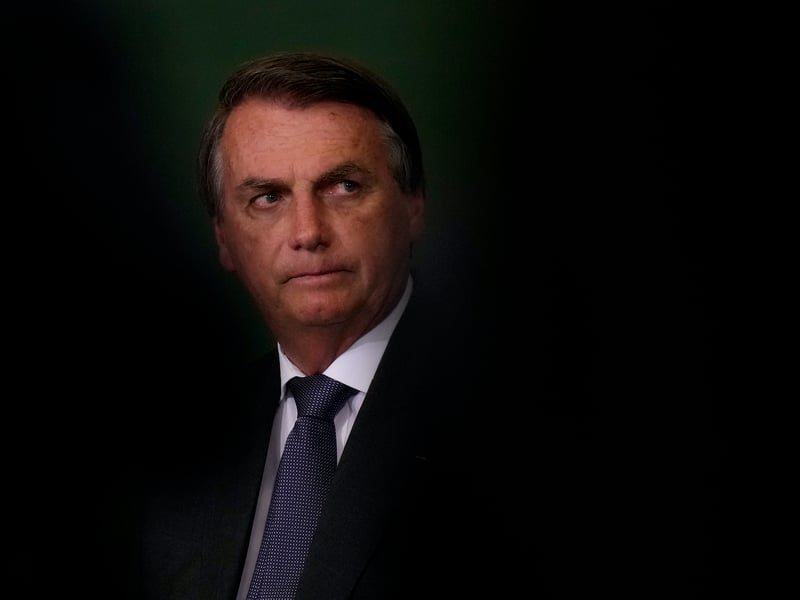
RIO DE JANEIRO (CN) — Brazil’s Supreme Court on Tuesday began the criminal trial of former President Jair Bolsonaro and seven allies charged with attempted coup and violent abolition of the democratic rule of law in connection with the Jan. 8, 2023, attack on Brazil’s three branches of government in Brasília.
This is the first time in Brazil’s history that high-ranking officials accused of attempting to overthrow a democratically elected government are being tried by the nation’s highest court. Along with Bolsonaro, the defendants include former military ministers, the former head of Brazil’s intelligence agency, the former justice minister and a former aide-de-camp to the presidency.
The Attorney General’s Office accuses them of attempted coup, violent abolition of the democratic rule of law, armed criminal organization, qualified damage and degradation of protected heritage. Bolsonaro also faces an accusation of leading the criminal organization.
For political science professor Mayra Goulart from the Universidade Federal do Rio de Janeiro, the trial sends a strong message not only for holding a former president accountable but also for prosecuting the military leadership involved.
She noted that such military incursions into politics have historically been a recurring problem in Latin America. “This trial sends a clear signal that may help discourage coup attempts by political and military leaders, not just in Brazil, but across the region,” she said.
At the trial’s opening, Justice Alexandre de Moraes, the case’s rapporteur, reaffirmed the judiciary’s role in the face of democratic attacks, saying that “the nation, and this Supreme Court, can only regret that once again in the Republic’s history there was an attempt to overthrow the state, attacking institutions and democracy itself, aiming at installing a state of exception and a true dictatorship.”
De Moraes referenced alleged plans to kidnap or kill authorities — himself included, along with President Luiz Inácio Lula da Silva and Vice President Geraldo Alckmin — and said that “impunity, omission, and cowardice are not options for pacification.” He added that “if evidence exists, beyond a reasonable doubt, the criminal actions will prevail and defendants will be convicted.”
He also indirectly addressed international pressure, citing U.S. sanctions placed on him and 50% tariffs on the majority of Brazilian exports, which were linked to the Supreme Court case.
Without naming the U.S., de Moraes stated, “National sovereignty cannot, must not and never will be desecrated, negotiated or extorted.” He also emphasized the judiciary’s transparency, saying, “No court in the world gives as much publicity and transparency to its trials as this Supreme Court.”
In his remarks, Attorney General Paulo Gonet emphasized that the conclusions of the Attorney General’s Office’s final arguments — which seek the defendants’ conviction — remain intact.
He told the court that the Jan. 8 events were the culmination of an earlier plot during Bolsonaro’s presidency that included attacks on the electoral system, false legal opinions, military mobilization and incitement against election results. Gonet said the endeavor failed due to external circumstances, not lack of intent.
The defense denies wrongdoing, arguing there were no executed acts — only preparatory ones — and that Bolsonaro did not participate in the Jan. 8 invasion, nor can he be held responsible for group crimes. Defense attorneys also deny any connection between Bolsonaro and alleged kidnapping plots or the so-called “draft coup decree.”
A key piece of evidence is the plea agreement by Lt. Col. Mauro Cid, former aide to Bolsonaro. His testimony tied the former president and military advisers to plans to delegitimize election results, pressure military commanders and produce false legal opinions justifying intervention.
Critics in the defense challenge the plea’s validity, noting it was approved before Cid fulfilled all obligations. Defense attorneys also point to inconsistencies in his testimony and say he lacked full access to case files, which could undermine its credibility.
While the criminal charges specify legal definitions, legal scholars say the trial’s institutional implications go beyond the technicalities of criminal law.
Lenio Streck, a legal theory professor, said courts must consider political and institutional contexts without sacrificing due process.
“The rules of the game must always be followed,” he said. “But we must take special care with those who want to destroy the rules themselves. Without rules, there’s no game. And here, the game is democracy.”
Pamela Villar, a criminal defense attorney and partner at São Paulo-based law firm Salomi Advocacia Criminal, acknowledged the existence of legal controversies — including the concentration of responsibilities in the hands of de Moraes. He was himself one of the alleged targets of the conspiracy, led the investigation, authorized precautionary measures, and now oversees the case’s proceedings as its reporting justice.
“Many have questioned whether Alexandre de Moraes can remain impartial, but to date, there has been no proof of compromised impartiality,” she said.
She also noted criticism of the decision to assign the case to the Supreme Court’s First Panel — a five-member chamber of justices — rather than the full 11-member bench. The move is allowed by internal rules but considered unusual for a case of such institutional relevance.
Another point that drew criticism, especially among Bolsonaro’s allies, was the accumulation of restrictive measures imposed on the former president throughout the investigation — including asset freezes, passport seizure, a ban on contact with other defendants and, ultimately, house arrest. His defense argues the orders are based on “political presumptions,” not concrete facts.
Villar argued the court’s actions were appropriate in light of Bolsonaro’s repeated disregard for judicial orders, his international political backing and the U.S. response, which included both sanctions against de Moraes and economic retaliation.
Rodrigo Sartoti, an attorney specializing in constitutional law, noted the trial also tests, for the first time, the practical application of Law No. 14,197 of 2021. The legislation repealed Brazil’s military-era National Security Law and incorporated new crimes into the penal code aimed at protecting democratic institutions, such as attempted coup and violent abolition of the democratic rule of law.
Because these provisions are new, there’s no established precedent, making this case a potential legal landmark. “We are now living an essential chapter in consolidating democracy in Brazil,” he said. “It sends a clear signal to those flirting with coup attempts. It’s a model for how democracies should defend themselves.”
The trial is expected to last through Sept. 12, with eight sessions scheduled for oral arguments and votes. Based on de Moraes’ and Gonet’s opening statements, Sartoti said he believes the proceedings will be smooth and uphold defendants’ due process rights. He also considers a conviction likely, adding that the only real uncertainty is the length of the sentence.
If convicted, the former president faces a sentence ranging from 12 to 43 years in prison. A maximum sentence would require him to serve at least seven years in a closed regime before becoming eligible for progression to a semi-open system.
A conviction by a panel of justices would also extend his ineligibility to hold public office by eight years after completing the sentence.
Bolsonaro is already barred from running for office until 2030 for abuse of political power and misuse of public media during the 2022 election. He is currently under house arrest for violating Supreme Court-imposed restrictions, including misuse of social media and prohibited contact with other defendants.
Courthouse News reporter Marília Marasciulo is based in Brazil.
Subscribe to our free newsletters
Our weekly newsletter Closing Arguments offers the latest about ongoing trials, major litigation and rulings in courthouses around the U.S. and the world, while the monthly Under the Lights dishes the legal dirt from Hollywood, sports, Big Tech and the arts.