
 Search Articles


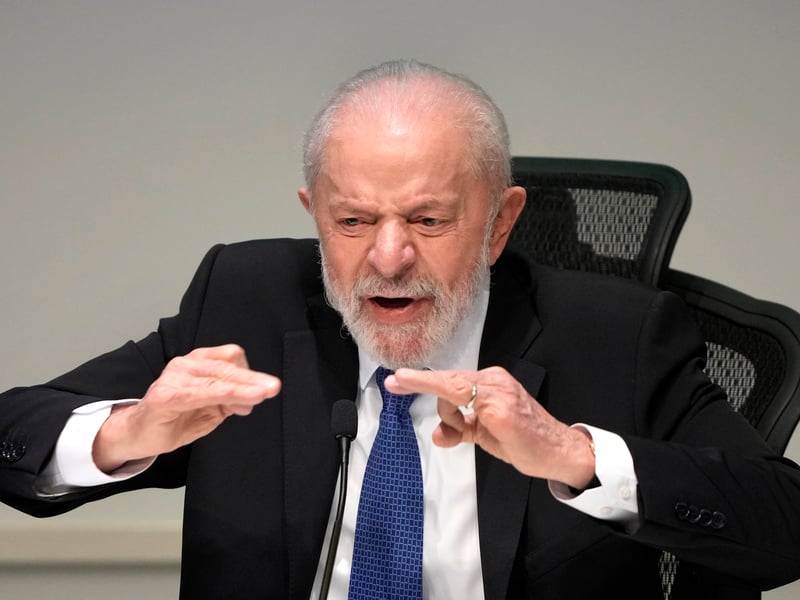
RIO DE JANEIRO (CN) — Brazil on Wednesday filed a complaint against the United States at the World Trade Organization, challenging the 50% tariffs imposed by Washington on a wide range of Brazilian goods, including meat, coffee and agricultural machinery. The tariffs took effect the same day.
“By imposing these measures, the U.S. flagrantly violates key commitments made at the WTO, such as the most-favored-nation principle and the tariff ceilings negotiated within that organization,” Brazil’s Foreign Ministry said in a statement.
The request for consultations delivered to the U.S. mission in Geneva marks the first formal step in a WTO dispute. The two countries now have up to 60 days to try to reach a settlement through dialogue.
If talks fail, Brazil can request the formation of a panel to hear the case. But even if the panel rules in Brazil’s favor, the process is unlikely to lead to a final ruling anytime soon.
The WTO Appellate Body has been paralyzed since 2019, when the U.S. began systematically blocking new appointments, rendering the body unable to confirm or reverse lower rulings.
Carlos Gustavo Poggio, a political scientist and professor at Berea College in Kentucky who specializes in U.S. foreign policy and Latin America, described Brazil’s move as “largely symbolic.”
“Nowadays, taking a case to the WTO is mostly about narrative battles, since the most the WTO can do is authorize Brazil to retaliate,” he said. “That said, Brazil needs to use every tool it has.”
From a legal standpoint, Brazil appears to have a strong case, according to Morvan Meirelles Costa Junior, a tax law expert and partner at São Paulo-based Meirelles Costa Advogados. In addition to violating core WTO principles like non-discrimination among members, the 50% tariffs likely exceed the tariff ceilings the U.S. committed to under the General Agreement on Tariffs and Trade, he said.
“Political justifications such as the role of Brazil’s Supreme Court in domestic matters or the difficulties faced by U.S. tech companies are not valid grounds under WTO rules for imposing trade barriers,” Meirelles said.
But the paralysis of WTO appeals proceedings is a serious practical hurdle, he added, noting “It reinforces the idea that this kind of WTO action now serves more as political signaling — a way to show where the country stands ideologically.”
Although U.S. President Donald Trump has said he is open to dialogue, in public remarks Tuesday, Brazilian President Luiz Inácio Lula da Silva said he would not initiate talks with Trump over the tariffs.
Despite the new tariffs, Lula said the impact on Brazil’s economy would be limited and the country would seek alternative markets.
The filing come after weeks of tension between Brazil and the U.S. Trump has linked the his tariffs to rulings by Brazil’s Supreme Court and the criminal case against former Brazilian President and Trump ally Jair Bolsonaro.
Brazilian authorities faced a lobbying offensive from Brazilian Congressman Eduardo Bolsonaro, the son of Jair Bolsonaro, who has been in the U.S. pushing for sanctions against de Moraes and conditioning any truce on amnesty for his father.
The White House also accuses Justice Alexandre de Moraes of persecuting political opponents and imposing censorship on U.S. companies. In July, the U.S. government announced the application of the Magnitsky Act to de Moraes.
Subscribe to our free newsletters
Our weekly newsletter Closing Arguments offers the latest about ongoing trials, major litigation and rulings in courthouses around the U.S. and the world, while the monthly Under the Lights dishes the legal dirt from Hollywood, sports, Big Tech and the arts.