
 Search Articles


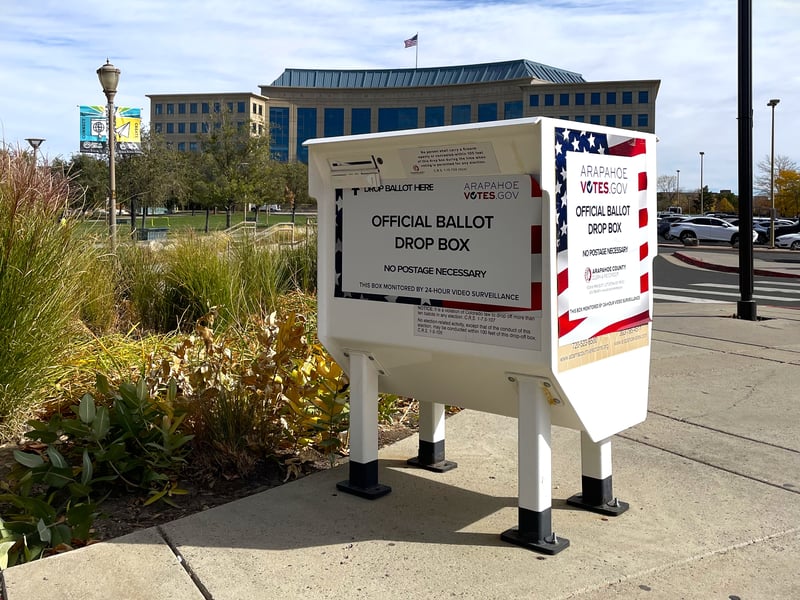
(CN) — A March executive order from President Donald Trump could create “chaos and confusion” surrounding the U.S. election process, a federal judge ruled Friday in blocking parts of the order decried by Democratic states as “blatantly unconstitutional.”
U.S. District Judge Denise Casper granted a preliminary injunction in favor of 19 states who argued that the order exceeds the powers of the president and would disenfranchise lawful voters around the country.
The coalition of states sued the Trump administration in April over its scrutinized executive order to overhaul federal elections by requiring voters to prove they are U.S. citizens and barring states from counting ballots received after Election Day.
But Casper found Friday that these new provisions “threaten to chill voter registration and participation,” which is “the antithesis” of congressional goals in passing expansions to voting rights. And it is Congress, the Barack Obama appointee noted, that has power over federal elections pursuant to the Constitution — not the executive.
The Massachusetts judge also concluded that Trump’s order “appears likely to disproportionately disenfranchise Black and poorer Americans,” citing reports that roughly half of Americans lack a passport and that passport ownership increases dramatically with income.
Under Trump’s order, voters would be required to present a passport or similar federally identifying document in order to cast ballots in federal elections.
“The states’ expectation is that as a result of the documentary proof of citizenship requirement, fewer of their eligible citizens will become registered to vote,” Casper ruled in a 44-page order. “This is unquestionably a harm to the states.”
Of Trump’s ordered ballot receipt deadline of Election Day, Casper found that the states credibly complained that they would be forced to drastically move cash and manpower to meet that requirement.
“Each of these changes would, in turn, divert the states’ resources from other key projects such as voter registration list maintenance and preparing for upcoming elections,” Casper ruled.
She pointed to declarations from several complaining states; Illinois argued Cook County — which contains Chicago — would need to hire at least 100 additional staff members. Nevada and Vermont each claimed that robust public education campaigns would be necessary to ensure that citizens are aware of the rule changes.
In their lawsuit, the states claim that they’d be forced to implement these major changes at a “breakneck pace,” forcing them to divert election staff from “vital election priorities.”
And the Trump administration has threatened to pull federal funding from states who don’t comply with the deadline, which Casper determined is “likely an unconstitutional condition.”
“The text of the Election Day statutes require only that all votes are cast by Election Day, not that they are received by that date,” Casper added.
Ultimately, the judge found that the states “credibly attested that the challenged requirements could create chaos and confusion that could result in voters losing trust in the election process.”
The 19 states behind this lawsuit include California, Nevada, Massachusetts, Arizona, Colorado, Connecticut, Delaware, Hawaii, Illinois, Maine, Maryland, Michigan, Minnesota, New Jersey, New Mexico, New York, Rhode Island, Vermont and Wisconsin — all states with Democratic attorneys general.
“The president has no power to do any of this,” the states say in their April 3 complaint. “Neither the Constitution nor Congress has authorized the president to impose documentary proof of citizenship requirements or to modify state mail-ballot procedures.”
It’s one of several legal challenges around the country taking aim at Trump’s controversial executive order, which the president signed after years of stoking doubt about the integrity of U.S. elections and falsely claiming that he lost his 2020 presidential bid due to widespread voter fraud.
Casper is the second federal judge to block parts of the order. In April, a federal judge in Washington, D.C., barred the administration from requiring heightened proof of U.S. citizenship to vote.
But Casper’s ruling is broader in scope. Not only does it block the new proof-of-citizenship requirements, but it also keeps states from having to comply with the Election Day ballot receipt deadline.
 Follow @Uebey
 Follow @uebey.bsky.social
Subscribe to our free newsletters
Our weekly newsletter Closing Arguments offers the latest about ongoing trials, major litigation and rulings in courthouses around the U.S. and the world, while the monthly Under the Lights dishes the legal dirt from Hollywood, sports, Big Tech and the arts.