
 Search Articles


SACRAMENTO, Calif. (CN) — A broken bathroom handle costs about $50 to fix.
But a lawsuit over that broken handle could lead to a legal settlement of $15,000.
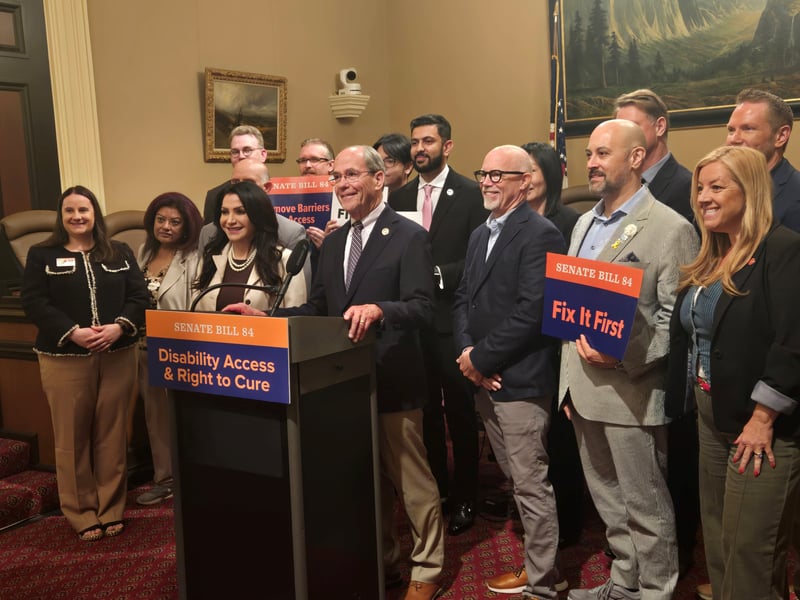
California lawmakers said Wednesday that lawsuits over broken fixtures and misplaced mirrors have become an industry for a handful of attorneys. They hope to correct the problem through Senate Bill 84, which would give small businesses a four-month window to fix an issue before a suit is filed.
“You can sue for anything that can be fixed for $50,” said Ankit Panchal, regional director of the Asian American Hotel Owners Association.
The federal Americans with Disabilities Act prohibits discrimination due to disability. The California Unruh Civil Rights Act has higher standards and allows the recovery of $4,000 per violation and punitive damages.
That can bankrupt a small business, a coalition of Republican and Democratic senators said at a Capitol press conference.
“The predatory law firms have accelerated their abuse all over the state,” said Senator Roger Niello, a Fair Oaks Republican and coauthor of the bill.
According to Niello, California had more disability lawsuits filed than all other states combined in 2021. His office said that five law firms are responsible for about 92% of those suits.
Senators from both sides of the aisle have joined Niello as coauthors.
State Senator Rosilicie Ochoa Bogh, a Yucaipa Republican, said some businesses are targeted by predatory lawsuits over construction issues. She argued the law should allow businesses to fix issues related to accessibility, not enrich attorneys.
Instead, some lawyers push for settlements over the merit of their arguments.
“That’s not justice,” Ochoa Bogh said. “That’s intimidation.”
Democrats stood by Niello’s side, signing onto his bill and urging its passage.
State Senator Aisha Wahab, a Silicon Valley Democrat, said she had discussions about the bipartisan effort last fall, working on the best way to correct the problem.
Wahab wants to ensure those with disabilities have proper access while helping small business owners.
“I do hope to see that move all the way to the governor’s desk,” she added.
The bill isn’t meant for larger businesses, Sacramento Democratic state Senator Angelique Ashby noted. Instead, it would affect businesses with 50 or fewer employees. Those businesses would have four months to fix a violation after receiving a letter detailing those violations.
“That’s all this bill asks for — can I fix it?” Ashby said. “This is about giving people a chance to fix the problem.”
State Senator Susan Rubio, a Baldwin Park Democrat, said the law needs to ensure people with disabilities have the access they need and that attorneys don’t game the system. Those attorneys gain settlements from struggling businesses while people with disabilities see no true improvement.
“This bill is about restoring fairness and integrity to the system,” she added.
Panchal said he knows of businesses that budget $50,000 to $100,000 a year to fight such lawsuits. He’s had to settle suits for thousands of dollars.
Niello said he wanted to highlight Senate Bill 84 because of a looming July 18 deadline for bills to pass out of policy committees. It again appears to face a hurdle it couldn’t pass last year.
His bill currently awaits a hearing in the Assembly Judiciary Committee. Similar legislation died last session without getting a hearing in that committee.
Niello said that committee suggested amendments to his current bill, which essentially would have kept current law intact. He thinks that because he didn’t accept the amendments, no hearing was set.
Assemblymember Ash Kalra, a San Jose Democrat, is the chair of the Assembly Judiciary Committee.
“I am deeply disappointed that the author and coauthors are unwilling to come to the table with me and our Assembly Judiciary Committee members on a more balanced right-to-cure bill for ADA violations," Kalra said in a statement to Courthouse News. “SB 84 and past versions have had continued opposition from disability and civil rights organizations year after year with no efforts to address any of their concerns.”
Kalra pointed to Assembly Bill 649, a bill with similar aims. His committee has worked with disability advocates and business groups on that legislation. It would protect small businesses from liability under federal and state law.
He added that Niello has rejected overtures to work with the committee on amendments to Senate Bill 84.
Businesses that qualify under the Small Business Right to Cure Program wouldn’t face liability for minimum statutory damages for a construction-related accessibility claim. That liability exemption would last for six years after approval of a report and apply to businesses with 25 or fewer employees.
Subscribe to our free newsletters
Our weekly newsletter Closing Arguments offers the latest about ongoing trials, major litigation and rulings in courthouses around the U.S. and the world, while the monthly Under the Lights dishes the legal dirt from Hollywood, sports, Big Tech and the arts.