
 Search Articles


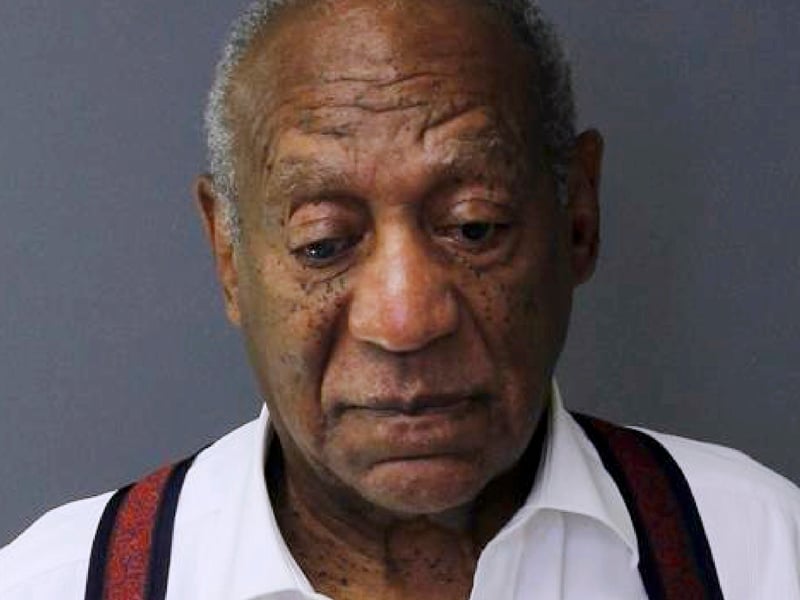
(CN) — A federal judge in Las Vegas allowed 10 women to proceed with their sexual assault lawsuit against Bill Cosby Jr. in the wake of a state law last year that lifted the statute of limitations for civil claims by survivors of sexual violence.
U.S. District Judge Gloria Navarro on Monday rejected Cosby’s argument that the law, Senate Bill 129, violates Nevada’s prohibition on laws that only apply to a select group of people — in this case, victims of sexual assault.
Although the judge agreed that victims of “other heinous crimes” and “interpersonal violence" may suffer from similar trauma as sexual assault survivors, she disagreed that the perpetrators of such other crimes stand in precisely the same relation to the victims of sexual assault.
“Indeed, the Nevada Legislature sought to address the ‘uniquely intimate’ crime of sexual assault, when they created SB 129,” Navarro wrote. “Although victims of other crimes classified by defendant may suffer similar trauma and be reluctant to report, defendant has not shown how these other crimes are of the ‘uniquely intimate’ nature such that their victims stand on precisely the same ground as sexual assault victims.”
As cited by the plaintiffs in their court filings, an expert witness told a Nevada Senate committee last year that, given the uniquely intimate nature of rape and sexual assault, it can take many years, if not most of one’s life, for a victim to gain the strength and the courage to come forward and report the abuse.
Likewise, the judge was unpersuaded that the state law violates the due process clauses of the Nevada and U.S. Constitution because, she said, Cosby has no vested property right in the statute of limitations and, therefore, the notion of due process doesn’t apply to his purported deprivation of that right.
Nor did the law run afoul of constitutional hurdles against legislation that makes certain conduct punishable retroactively, as Cosby had argued, according Navarro.
“SB 129 was not enacted to punish perpetrators of sexual assault, but instead to compensate survivors and foster healing,” the judge said.
Following the report and recommendations of a magistrate judge, Navarro dismissed the sexual assault claim brought by each of the 10 women. Although all the women accuse Cosby of drugging and raping them, sexual assault isn’t a civil tort claim under Nevada law. The women also brought claims for battery, assault, emotional distress and false imprisonment.
The judge deferred a decision on whether the claim by one of the women, who accuses Cosby of forcing her to masturbate him, was revived by SB 129, and said she will ask the Nevada Supreme Court to weigh in on that question.
An attorney for Cosby did not immediately respond to a request for comment on the ruling.
The now 87-year-old former comedian has been accused by dozens of women of drugging and molesting them, and he spent almost three years in prison after he was found guilty of assaulting college sports administrator Andrea Constand.
His 2018 conviction was foiled, however, over an old press release from the time he was first accused in 2005. The press release said Cosby would not be prosecuted because the evidence at the time made a conviction unattainable, but it also said the decision could be reconsidered “should the need arise.”
Cosby went on to settle a civil suit from Constand that year. He was deposed at time under the impression that his testimony would never be used against him. He did not invoke his Fifth Amendment right to counsel or to stay silent, and he admitted that he drugged Constand and had access to quaaludes to be used on young women he wanted to have sex with.
Once the depositions were made public at the dawn of the #MeToo era, the investigation of him was reopened and charges were reconsidered.
 Follow @edpettersson
Subscribe to our free newsletters
Our weekly newsletter Closing Arguments offers the latest about ongoing trials, major litigation and rulings in courthouses around the U.S. and the world, while the monthly Under the Lights dishes the legal dirt from Hollywood, sports, Big Tech and the arts.