
 Search Articles


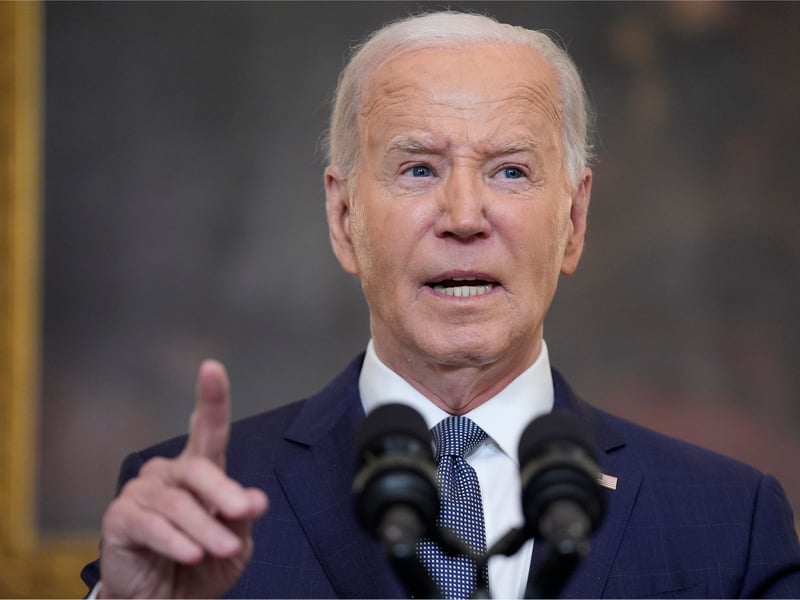
WASHINGTON (CN) — The Biden administration on Wednesday announced three more nominees for U.S. district courts as it aims to surpass the Trump administration’s judicial confirmations record before the presidential election.
With this most recent round of nominees, the administration has announced 257 federal judicial appointments, the White House said in a press release. Congress confirmed 205 of those nominees as of earlier this month.
Tapped to join the federal bench Wednesday was Elizabeth Coombe, nominated to the Northern District of New York, where since 2018 she has been the first assistant U.S. attorney. Before joining the New York U.S. attorney’s office in 2003, she was an assistant U.S. attorney for the District of Columbia and a trial attorney for the Justice Department’s commercial litigation branch.
Coombe clerked for Judge Diana Murphy in the District of Minnesota. She is a graduate of the University of Michigan Law School and Hamilton College.
Nominated to the District of New Mexico was Sarah Davenport, an assistant U.S. attorney in the same district since 2009. Davenport was also a special assistant U.S. attorney in New Mexico and a law clerk at the U.S. attorney’s office in Albuquerque. She received her law degree from the University of New Mexico School of Law and a bachelor’s degree from New Mexico State University.
The third Biden nominee announced Wednesday was Sharad Desai for a vacancy in the District of Arizona. Desai is vice president and general counsel for Honeywell International’s integrated supply chain and information technology divisions, a position he has held since last year. He has been at Honeywell since 2015, though, working in various senior legal counsel roles.
Before joining Honeywell, Desai was an attorney with a Phoenix-based law firm and clerked for Arizona Supreme Court Justice Rebecca Berch. He is a graduate of New York University School of Law and the University of Arizona.
The Biden administration is pushing hard to surpass the number of judicial confirmations achieved by former President Trump during his term, which sits at around 234 including U.S. district and federal appellate nominees as well as Supreme Court justices. The White House and congressional Democrats have expressed optimism that they can clear Trump’s record.
But time is running out ahead of the November election, which draws a hard deadline after President Joe Biden announced in July that he would not be seeking reelection. Congress is on its August recess, and the Senate, tasked with approving judicial nominees, won’t return until Sept. 9.
Several nominees have also proven thorny for some Senate Democrats, especially those facing tough reelection battles in November.
Third Circuit nominee Adeel Mangi has been in a holding pattern on the Senate floor for months amid aggressive attacks from Republicans who have tied him to a controversial university research program and a reform-minded prison advocacy group. Though experts and Democrats point out the allegations are spurious, both Democratic senators from Nevada have said they would not vote for Mangi, throwing his confirmation into question.
Similarly, the Senate Judiciary Committee earlier this summer held up Southern District of New York nominee Sarah Netburn after Georgia Senator Jon Ossoff cast the first Democratic vote against a Biden nominee during his presidency. Ossoff, who said he was concerned about an inmate transfer recommendation Netburn made as a magistrate judge, has yet to signal whether he’s changed his mind about the nominee. The Judiciary Committee left for August recess without holding another vote on Netburn’s nomination.
Meanwhile, West Virginia Senator Joe Manchin has said that he will not vote for any federal nominee who does not capture at least one Republican vote — all but guaranteeing he will vote against many judicial nominees who have cleared committee in recent months on party lines.
 Follow @BenjaminSWeiss
Subscribe to our free newsletters
Our weekly newsletter Closing Arguments offers the latest about ongoing trials, major litigation and rulings in courthouses around the U.S. and the world, while the monthly Under the Lights dishes the legal dirt from Hollywood, sports, Big Tech and the arts.