
 Search Articles


WASHINGTON (CN) — The U.S. is forging ahead with a plan to provide billions of dollars in loans to Ukraine that will be paid back using seized Russian assets, the White House announced Wednesday.
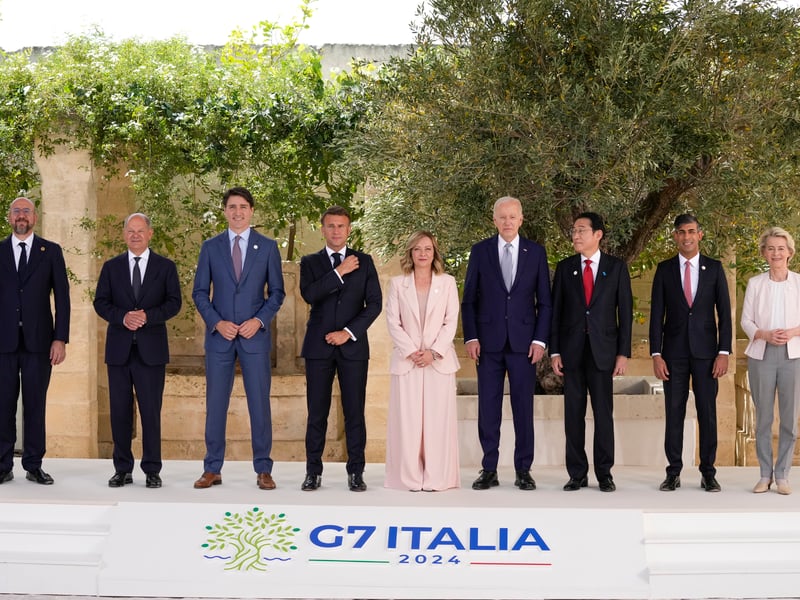
The move is Washington’s contribution to a roughly $50 billion package of loans the G7 nations agreed to over the summer. The U.S. will provide around $20 billion of that funding; the rest will come from other G7 members such as the United Kingdom, France and Germany.
But while congressional appropriations have covered the cost of other aid packages from the U.S. to Kyiv, this $20 billion loan will be paid back with interest earned on Russian sovereign assets seized after Moscow invaded Ukraine in 2022.
Hundreds of billions of dollars in Russian money have been frozen for years in European and American banks, stemming from sanctions slapped on Russia after the invasion.
In a statement Wednesday, President Joe Biden said that the decision by G7 countries to freeze Russian assets at the beginning of the conflict paved the way for this round of loans, which he touted as an effort to relieve pressure on American taxpayers.
“In other words, Ukraine can receive the assistance it needs now, without burdening taxpayers,” Biden said.
He said using funds siphoned from Russian assets to defend and rebuild Ukraine sends a message that Moscow is responsible for the damage it has caused during the two-year war.
“This is another reminder to Vladimir Putin that the world has rallied behind Ukraine — and the United States and our G7 partners will continue to stand with them every step of the way,” Biden said.
During a news conference Wednesday, White House spokesperson John Kirby said the loans were an example of how Russian aggression has “unified and strengthened the resolve” of Ukraine and its allies to defend “shared values.”
Though Washington is poised to send its proposed $20 billion to Kyiv, it will need congressional approval to allow those funds to be used for military purposes. That may prove to be a tall order, especially in the Republican-controlled House, where some lawmakers have been intensely critical of U.S. financial support for Ukraine.
House Republicans have repeatedly complained that Washington is more focused on sending aid abroad than focusing on domestic issues such as border security.
The issue on some occasions became a wedge within the GOP. House Speaker Mike Johnson in April had to rely on Democratic support to pass a sweeping Ukraine aid bill, a move which angered some of his more conservative colleagues and sparked a fresh round of calls to remove the top House Republican. Congress ultimately passed the legislation, and Biden signed it into law.
Lawmakers in September also allowed roughly $6 billion in Ukraine aid to expire after they passed a three-month stopgap budget resolution without language extending the program past the end of the month.
The White House’s move to greenlight more Ukraine funding Wednesday comes just weeks before the presidential election, in which spending on foreign aid is a contentious topic.
Ukrainian President Volodymyr Zelenskyy in September toured an ammunition factory in Pennsylvania producing artillery shells for the war effort. Some lawmakers, mainly Republicans, framed the Zelenskyy visit as a veiled promotion for Vice President Kamala Harris’ campaign.
Former President Donald Trump, who will square off against Harris in November, has been skeptical of efforts to continue Ukraine aid. If elected, it’s unclear whether he will cut off the flow of funding to Kyiv.
Meanwhile, the U.S. last month approved another $375 million in military aid for Ukraine in a package that included bombs, long-range rocket launchers, armored vehicles and other equipment. With that latest round of funding, Washington has sent more than $56 billion to Kyiv since the beginning of its war with Russia.
 Follow @BenjaminSWeiss
Subscribe to our free newsletters
Our weekly newsletter Closing Arguments offers the latest about ongoing trials, major litigation and rulings in courthouses around the U.S. and the world, while the monthly Under the Lights dishes the legal dirt from Hollywood, sports, Big Tech and the arts.