
 Search Articles


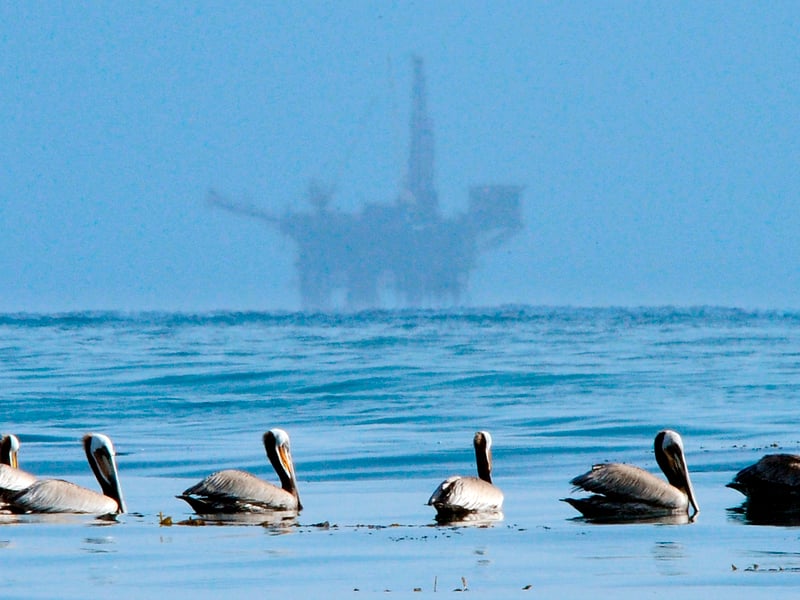
WASHINGTON (CN) — President Joe Biden on Monday ordered a permanent ban of new oil and gas drilling in large sections of U.S. coastal waters in the Atlantic and Pacific oceans, as well as other federal waters.
The move comes just days before President-elect Donald Trump will take office on Jan. 20, hampering Trump’s ability to follow through on his campaign promise to reverse virtually every law and regulation aimed at curbing carbon dioxide emissions to make it easier for corporations to produce and burn more coal, oil and gas.
Biden said he would protect 625 million acres of ocean — including the entire U.S. east coast, the eastern Gulf of Mexico, the Pacific off the coasts of Washington, Oregon and California, and portions of the Northern Bering Sea in Alaska — from future oil and natural gas leasing.
“My decision reflects what coastal communities, businesses and beachgoers have known for a long time: That drilling off these coasts could cause irreversible damage to places we hold dear and is unnecessary to meet our nation’s energy needs,” Biden said in a statement announcing the move. “It is not worth the risks. As the climate crisis continues to threaten communities across the country and we are transitioning to a clean energy economy, now is the time to protect these coasts for our children and their grandchildren.”
Conservation activists expressed concern Monday that, while Biden’s move was a step in the right direction, it was too little too late.
Brett Hartl, government affairs director at the Center for Biological Diversity, said in an interview with Courthouse News that the move failed to address the majority of offshore oil and gas drilling in the western and central Gulf of Mexico.
Hartl said Biden should have moved earlier, rather than wait for his final weeks in office.
“This strategy to save your legacy items until you’re a lame duck is very fallible,” Hartl said, adding that while courts once upheld challenges to such oil and gas withdrawals, the courts have since changed.
Trump, speaking with conservative radio host Hugh Hewitt Monday morning, called Biden’s move “ridiculous” and promised to “unban it immediately.”
Biden’s order invokes a provision of the 1954 Outer Continental Shelf Lands Act, which allows him to withdraw federal waters from future oil and gas leasing. The provision gives presidents wide leeway to bar such drilling, but not any ability to revoke such a ban.
Biden said he would issue two memorandums with no expiration dates that would cover three ocean and coastal regions.
The first region includes 334 million acres of the Atlantic Outer Continental Shelf, which spans from Canada to the southern tip of Florida and the eastern Gulf of Mexico. Part of the section expands on a 2006 Congressional withdrawal in the Gulf of Mexico Energy Security Act, which would have expired in 2032.
The second region would protect nearly 250 million acres off the west coasts of California, Oregon and Washington. The final region would protect 44 million acres of the Northern Bering Sea.
Hartl noted that Biden’s announcement does not include a map of the withdrawals and appears to leave out what he deemed critical sections of coastal waters, such as the central and western portions of the Gulf of Mexico.
President Barack Obama previously used the same provision that Biden used Monday to ban offshore drilling in parts of the Arctic Ocean and dozens of canyons in the Atlantic Ocean in 2015. When Trump tried to revoke the ban during his first term in 2019, Chief U.S. District Court Judge Sharon Gleason for the District of Alaska rejected his effort.
The Obama appointee ruled that the ban could not be undone without an act of Congress, a particularly difficult move with the extremely narrow majority Republicans hold in the House.
The vast majority of offshore oil and natural gas rigs are in the Gulf of Mexico, where environmentalists have pushed for greater emission controls and more efforts to protect endangered species threatened by pollution and disasters like oil spills.
According to a 2022 analysis by the Bureau of Ocean Management, the federal government expects oil production in the Gulf of Mexico to grow through 2027, with natural gas production mostly remaining flat through the early 2030s.
The Biden administration tried to cut back lease sales for oil drilling in the Gulf of Mexico in August 2023 when the Bureau of Ocean Management reduced the available area for leases from 73 million acres to 67 million acres.
The plan, however, was shot down by the Fifth Circuit Court of Appeals in November, after which oil companies offered $382 million for the right to drill for more oil and gas.
Correction: A previous version of this article incorrectly indicated that President Biden’s ban left out coastal waters near Santa Barbara. That portion of the coast is already under protection from expanded offshore drilling thanks to the Chumash National Marine Sanctuary.
 Follow @Ryan_Knappy
Subscribe to our free newsletters
Our weekly newsletter Closing Arguments offers the latest about ongoing trials, major litigation and rulings in courthouses around the U.S. and the world, while the monthly Under the Lights dishes the legal dirt from Hollywood, sports, Big Tech and the arts.