
 Search Articles


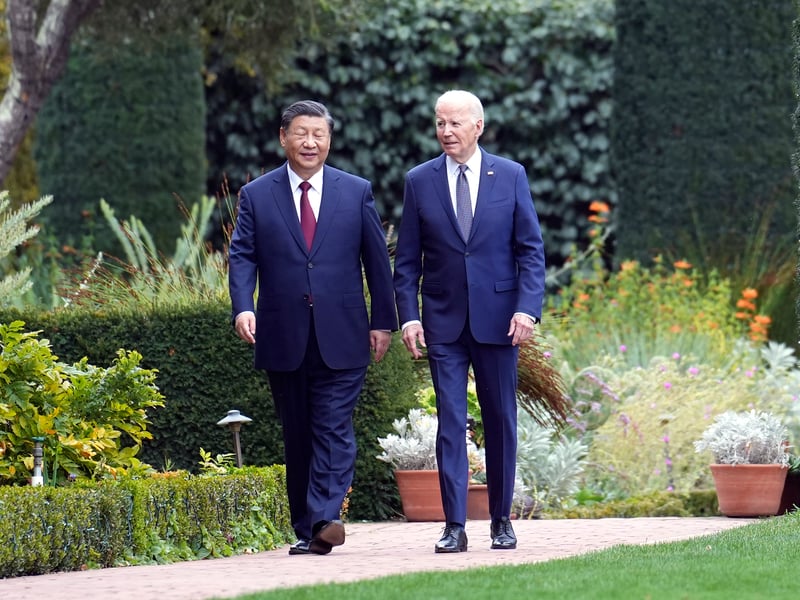
WOODSIDE, Calif. (CN) — After meeting with Chinese President Xi Jinping just outside of San Francisco, California, Wednesday, President Joe Biden said some progress was made, pointing to agreements the leaders forged over stopping the flow of fentanyl into the U.S. and reopening military-to-military contact.
Biden, however, did not back down from calling his counterpart a “dictator” and said that while the countries are competitors that does not necessitate conflict.
“We’ve made some important progress, I believe,” Biden said, after the discussions with Xi that came as the Asia-Pacific Economic Cooperative conference was held this week in the Bay Area.
Biden said the flow of fentanyl from China to America has changed over the past few years. The opioid, once arriving as a finished product, now is coming in component form. Law enforcement agencies from both countries will now coordinate with each other on dealing with the substance going forward, he said.
Biden thanked an October congressional delegation, led by New York Democratic Senator Chuck Schumer, for setting the stage. After that trip, Schumer said China needed to be more aggressive in stopping fentanyl from reaching American shores.
“Some of these pills are being inserted into other drugs, like cocaine,” Biden said. “People are dying.”
Also on Biden’s list of discussion topics was restoring military-to-military contact between the two nations.
“That’s been cut off,” he added. “That’s been worrisome. That’s how accidents happen.”
Important to Biden was an agreement that, at any time, either man can call the other and be reached immediately.
The U.S. president also highlighted his conversations with Xi about artificial intelligence. The U.S. will continue to compete with China over AI, but not take any actions that lead the countries into conflict, Biden said.
Last month, he issued an executive order on AI, saying that privacy standards will be made while innovation is promoted for the quickly evolving technology. The order came about a month after a similar order from California Governor Gavin Newsom regarding how his state will approach the creation of ethical, transparent and trustworthy AI.
Biden also touched on global conflicts, including Russia’s war in Ukraine and the conflict in Israel and Gaza. The president further expressed concern over any coercive acts in the South China Sea.
“I welcome the positive step we’ve taken today,” Biden said. “We’re talking to our competitors. Just talking, being blunt with one another, so there’s no misunderstanding.”
Fielding media questions, Biden said he’s worried about China potentially interfering with upcoming elections in Taiwan, but doesn’t expect any issues. He reiterated that his administration maintains a One China policy, which he doesn’t intend to change.
Pivoting to questions about the conflict in Gaza, Biden said that if Hamas did have a headquarters underneath a hospital, that would be a “war crime.” Hamas, Biden added, has said it intends to attack Israel again.
“They want to slaughter Israelis,” he added. “I ask a rhetorical question: I wonder what would we do, if that were the case?”
The president also said he’s involved in working on the ongoing hostage negotiations in the region.
Just hours before he spoke, it was reported that Hamas agreed to releasing 50 women and children out of some 240 hostages. In exchange, Israel would call for a pause to the fighting for a few days, increase humanitarian aid and release an unknown number of women and children in Israeli prisons.
“I am mildly hopeful,” Biden said.
Ultimately, the two sides must reach a point where talks can occur, Biden said, adding he’s conveyed that message to Israeli Prime Minister Benjamin Netanyahu.
“I think the only answer here is a two-state solution that’s real,” Biden said.
Subscribe to our free newsletters
Our weekly newsletter Closing Arguments offers the latest about ongoing trials, major litigation and rulings in courthouses around the U.S. and the world, while the monthly Under the Lights dishes the legal dirt from Hollywood, sports, Big Tech and the arts.