
 Search Articles


WASHINGTON (CN) — The Supreme Court on Wednesday said the Biden administration could continue communicating with social media companies, allowing the government to share information with platforms about content it believes is harmful.
In a 6-3 ruling, the court said five social media users and two states did not have standing to block the White House from these actions.
“The plaintiffs, without any concrete link between their injuries and the defendants’ conduct, ask us to conduct a review of the yearslong communications between dozens of federal officials, across different agencies, with different social media platforms, about different topics,” Justice Amy Coney Barrett wrote for the majority. “This court’s standing doctrine prevents us from ‘exercis[ing such] general legal oversight’ of the other branches of government.”
The Donald Trump appointee’s opinion was joined by Chief Justice John Roberts and Justices Sonia Sotomayor, Elena Kagan, Brett Kavanaugh and Ketanji Brown Jackson.
Justice Samuel Alito said the court was unjustifiably refusing to address a serious threat to the First Amendment.
“For months, high-ranking government officials placed unrelenting pressure on Facebook to suppress Americans’ free speech,” the George W. Bush appointee wrote in a dissent joined by Justices Clarence Thomas and Neil Gorsuch.
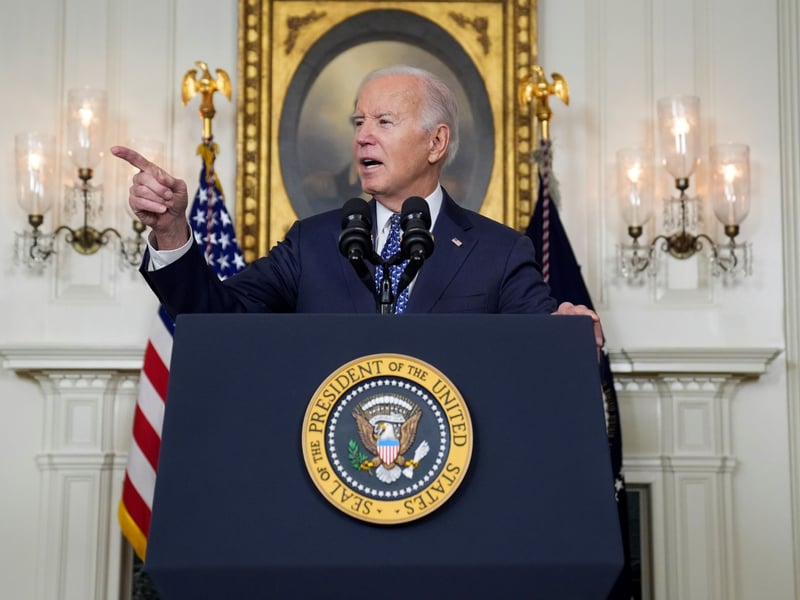
President Joe Biden campaigned against health misinformation during the Covid-19 pandemic, going so far as calling the falsehoods an urgent public health crisis.
His administration asked technology companies to monitor online disinformation and take steps against super-spreaders. This involved flagging harmful posts for platforms and sharing information about dangerous content.
Missouri, Louisiana and several social media users characterized this advocacy as a pressure campaign aimed at censoring critics of the government’s viewpoints. Louisiana Attorney General Elizabeth Murrill said the Biden administration was conspiring with social media companies to deprive Americans of their rights and that the Biden administration was responsible for any action taken by the platforms.
The Biden administration said its influence was drawn from thepower of the bully pulpit. Brian Fletcher, the principal deputy solicitor general at the Justice Department, compared its communications with social media companies to encouraging Americans to enlist in the armed forces. Fletcher said encouraging enlistment doesn’t force people to serve in the military.
The government warned that losing the ability to inform and persuade would not only harm the president’s agenda but could also threaten national security. For example, the FBI sometimes notifies platforms of terrorist activity.
To qualify for standing, Barrett said the states and users must show that one platform would restrict the speech of at least one plaintiff in response to the actions of at least one government entity.
“On this record, that is a tall order,” Barrett wrote.
Barrett said the states’ and users’ injunction request was based on the assumption that the White House would share information with social platforms and then those companies would in turn censor posts. These injuries were one step removed and anticipatory, Barrett said, violating bedrock jurisdictional limits that restrain the court from acting.
The posture of the case, Barrett said, made the states’ and users’ position more difficult. The states and users based their claims on previous times the platforms removed their posts. Barrett said these past injuries would be “the whole ball game” if they were asking for relief in the form of damages.
But the Republican-led states and social media users asked the court for interlocutory relief — a ruling that would prevent the government from taking future actions. Barrett said to prevail, the past injuries would have to be predictive of future harm.
“The plaintiffs rely on allegations of past government censorship as evidence that future censorship is likely,” Barrett wrote. “But they fail, by and large, to link their past social media restrictions to the defendants’ communications with the platforms.”
Barrett said the lower courts adopted an overly broad reasoning to connect user censorship to the government. She said this theory was undermined by independent actions by the platforms, such as Facebook’s expansion of Covid-19 misinformation policies before the White House began communicating with the platform.
“To be sure, the record reflects that the government defendants played a role in at least some of the platforms’ moderation choices,” Barrett wrote. “But the Fifth Circuit, by attributing every platform decision at least in part to the defendants, glossed over complexities in the evidence.”
Louisiana’s injuries were predominately based on Facebook flagging and deboosting a state representative’s post about vaccines. Barrett said the court did not need to decide if the representative’s injury also harmed Louisiana because the state failed to connect the platform’s action with government communications.
Barrett found similar errors in the social media users’ claims. She said the platforms began removing posts from the four doctors who questioned Covid-19 policies before the Biden administration interfered.
The states and users needed to show that the government’s censorship of their posts would likely continue, but Barrett said they provided no proof of an ongoing pressure campaign so it was speculative that their posts would continue to be censored because of the government’s actions.
“A court could prevent these government defendants from interfering with the platforms’ independent application of their policies,” Barrett wrote. “But without evidence of continued pressure from the defendants, it appears that the platforms remain free to enforce, or not to enforce, those policies — even those tainted by initial governmental coercion.”
Alito characterized the case as one of the most important free speech cases to reach the court in years, referring to the states and users as “victims” who only wanted to speak out on a question of public importance.
Citing the court’s recent ruling on New York’s censorship of the National Rifle Association, Alito said the court had signaled that ham-handed censorship was unconstitutional but subtle speech coercion is okay.
“Officials who read today’s decision together with Vullo will get the message,” Alito wrote. “If a coercive campaign is carried out with enough sophistication, it may get by. That is not a message this court should send.”
Alito said social media platforms are more susceptible to government influence because they rely on federal protections that shield them from liability for users’ posts.
The Center for American Progress viewed the court’s ruling as a win for national security, claiming it would allow the government to keep Americans safe from foreign threats and disinformation. Devon Ombres, senior director for courts and legal policy at the center, said social media companies want the government to share critical information to combat foreign interference in U.S. elections.
“This collaboration is critical to dealing with national security threats on social media platforms so the government can protect the public from unchecked malicious online activities,” Ombres said in a statement following the ruling. “The Biden administration no longer has any excuse to hold back from its efforts to protect Americans online ahead of the upcoming elections.”
 Follow @KelseyReichmann
 Follow @kelseyreichmann.bsky.social
Subscribe to our free newsletters
Our weekly newsletter Closing Arguments offers the latest about ongoing trials, major litigation and rulings in courthouses around the U.S. and the world, while the monthly Under the Lights dishes the legal dirt from Hollywood, sports, Big Tech and the arts.