
 Search Articles


(CN) — A lawsuit against an energy company over a massive toxic fire at lithium-ion battery storage site in the Monterey Bay town of Moss Landing, California, will continue, after a federal judge denied a motion to dismiss.
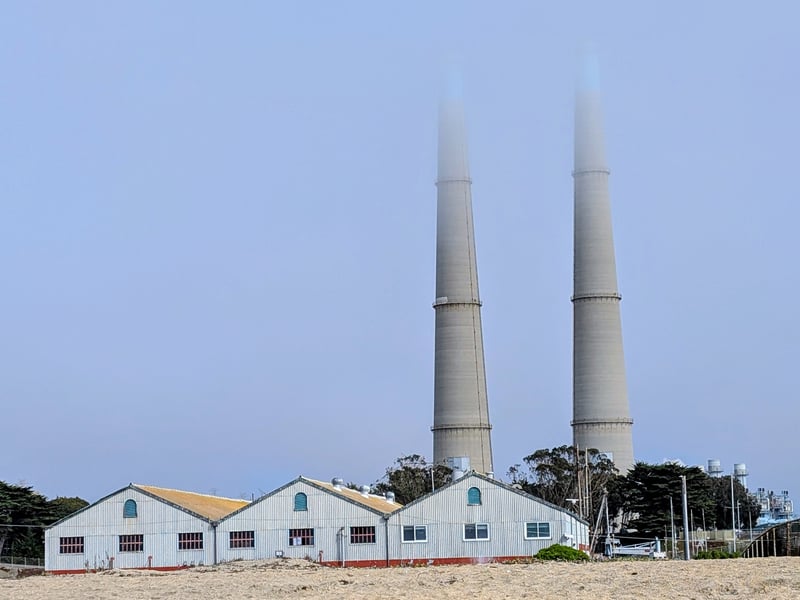
It’s been nearly a year since the Moss Landing Power Plant, one of the largest lithium battery storage facilities in the world, erupted in flames. The conflagration, roughly 80 miles south of San Francisco, released a huge plume of toxic smoke into the air and left increased levels of nickel, cobalt, and manganese in the soil and water.
Kim and Luis Solano owned a number of businesses in the area, including the Haute Enchilada Cafe and a number of rental properties which are listed on Airbnb. The Solanos filed a negligence and public nuisance suit this past February, claiming design decisions made by Texas-based Vistra made the batteries “susceptible to thermal runaway events" — violent chain reactions which cause battery cell after battery cell to reach a critical temperature and erupt.
The Solanos claim the fire devastated the area, decimating the tourist industry and forcing them to close their restaurant.
Vistra argued the negligence claim is barred by the economic loss doctrine, which states that to sue for negligence “the compensable injury must be physical harm to persons or property, not mere economic loss.” But on Wednesday, U.S. District Judge Eumi Lee, a Barack Obama appointee, found the “Solanos plausibly allege physical harm to their persons and their property.”
In their complaint, the Solanos claim they “have suffered and continue to suffer from . . . sore throats, sinus irritation, breathing problems, headaches, tiredness, burning in the lungs, nausea, irritation of the skin, rashes" ever since the toxic fire broke out.
“The contaminants emitted by defendants from the Vistra Fire and thermal runaway event physically intruded onto land and properties owned by plaintiffs. Those heavy metals and noxious gases and other dangerous substances physically damaged and injured plaintiffs’ land and properties,” they say in their complaint.
Lee also found the public nuisance claim was sufficient to be heard by a jury.
“Beyond falling soot and ash during the incident, plaintiffs allege that their land has been contaminated by nickel, cobalt, manganese, lithium, and toxic gases and chemicals,” Lee wrote. “Thus, whether the land contamination alleged by plaintiffs constitutes a substantial and unreasonable interference is a question of fact that should not be decided at the pleading stage.”
Lee did, however, agree to dismiss the plaintiffs’ request for punitive damages since they “failed to plead that an officer, director, or managing agent of defendants committed an act of oppression, fraud, or malice.” Their request for medical monitoring was also dismissed, though the plaintiffs will be able to file an amended to complaint.
 Follow @hillelaron
Subscribe to our free newsletters
Our weekly newsletter Closing Arguments offers the latest about ongoing trials, major litigation and rulings in courthouses around the U.S. and the world, while the monthly Under the Lights dishes the legal dirt from Hollywood, sports, Big Tech and the arts.