
 Search Articles


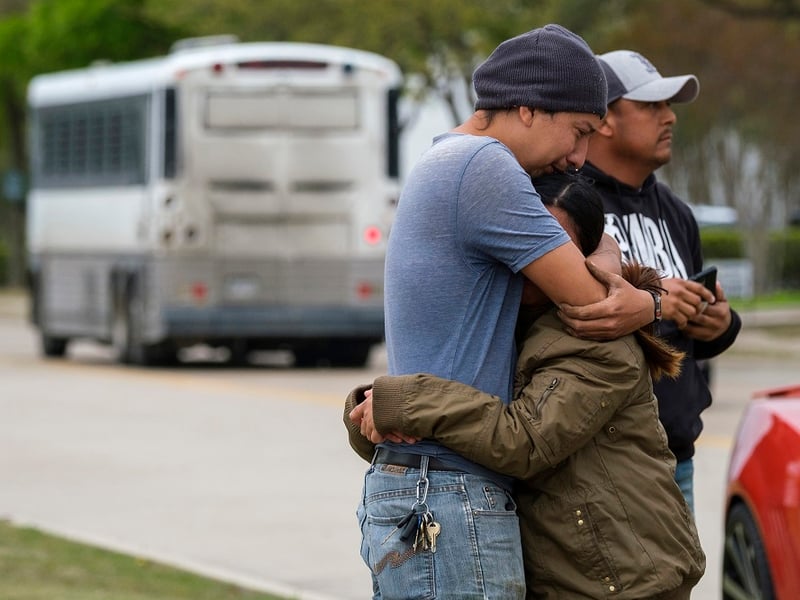
I was a paralegal with a law office in Oakdale, rescuing refugees from the enormous immigration prison there, during Reagan’s wars against Central America. It was the first immigration prison run by the U.S. Bureau of Prisons.
I’d met my wife three years before, in a different immigration prison. A government death squad had raped and tortured her in El Salvador for the heinous crime of talking with a college student in a public park. They killed him. She had to find her way home naked.
In the Texas border prison where we met, they strip-searched her every time she sought legal help. One look at her fierce, defiant face was enough for me to know she was dead meat if she was deported to El Salvador. I’d been doing this work for three years.
We ran through the statutory legal hoops, but my boss — my supervising attorney — knew, and so did I, that she had no more chance of mercy on the Texas border than she’d have with the Salvadoran Treasury Police.
The leading nonprofit legal group on the border, Proyecto Libertad — for whom I’d also worked — had represented more than 6,000 incarcerated refugees — yes, refugees; not “migrants” — before Reagan’s Justice Department granted political asylum to one Salvadoran torture victim, after six years of litigation. And that was only after we’d called a professor of international law to testify in his case.
The professor told the judge that deporting a refugee to a country at war was a war crime, under the Geneva Conventions principle of non refoulement.
The judge asked, then, if he ordered our client deported, would he be committing a war crime?
Our expert witness said, “Yes.”
The judge blinked, then said nothing for quite a while.
He sat on that case for years. He did not issue a ruling until the United States’ war crimes in Central America — and its crimes under our own laws — were exposed in November 1986, in what became known as the Iran-Contra scandal.
OK, I have wandered afield here, to catch you up, not on my own life, but on what passes for immigration policy or even immigration “law” today. When it happened to me and my family, I thought it couldn’t get worse than that. But of course, it did.
What happened to us is happening all over the country today, every day.
I wasn’t scared when the cops came to our door just before dark, but my family was terrified. I knew that the cops, and whoever had ordered them to do it, were digging their own hole.
But my wife and kids had no such concept.
After her gang rape, a government death squad murdered her older brother and dumped him in her front yard, in pieces. Her kids saw the rest of the family pick up the pieces.
The Oakdale cops were nice, though. When they arrested me in the kitchen of our rental house and I asked why, they said they didn’t know. They did show me the arrest warrant, which, sure enough, gave them authority to arrest me, but didn’t say why.
I asked the two cops if they could drop off my wife and kids at the law office, which was on the way to the jail. Of course they knew the law office. The immigration prison had juiced the Oakdale economy, what with construction jobs; hotel, apartment and house rentals; groceries; food services; our law office: the onslaught of jobs that an infusion of workers always gives to a small town.
(We found out later that I was arrested because I took a photo of the prison, from a parking lot outside the fence, for a news story. The prosecutor said on Monday that he had “dropped the charges,” though I never had been charged with anything.)
Anyway, at the law office, night fallen, I asked the staff if they could take care of my wife and kids because I was going to jail. They laughed — typical Kahn — then they saw the two cops, and my wife and the kids.
To the little kids, 2 and 4, it was a fun new game. But it was no fun for Alex, 8.
What I remember most from that night is sitting handcuffed next to Alex in the back seat of a cop car with no handles inside the doors, as we cruised toward jail.
“Don’t worry, Alex,” I said. “It’s not like in El Salvador.”
And he said, “Yes it is.”
Subscribe to our free newsletters
Our weekly newsletter Closing Arguments offers the latest about ongoing trials, major litigation and rulings in courthouses around the U.S. and the world, while the monthly Under the Lights dishes the legal dirt from Hollywood, sports, Big Tech and the arts.