
 Search Articles


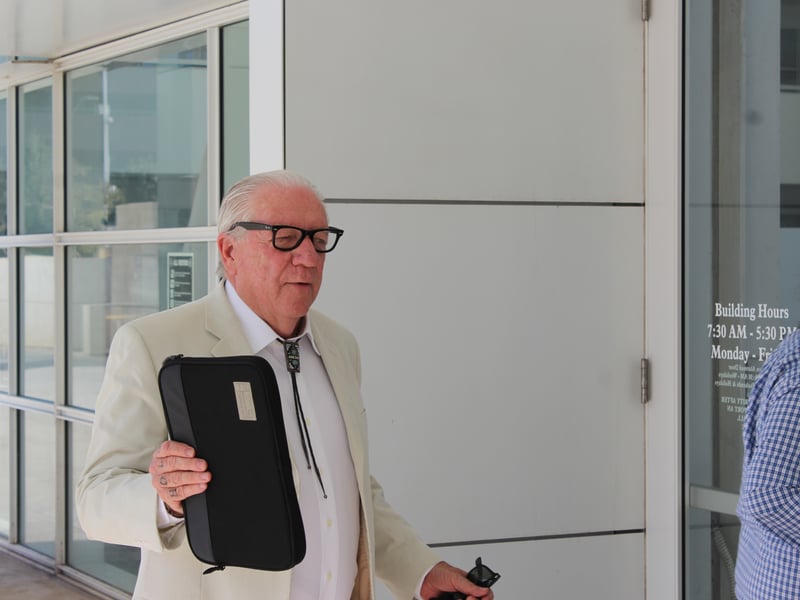
PHOENIX (CN) — A Ninth Circuit panel granted former newspaperman and Backpage.com owner Michael Lacey bail pending appeal of a five-year prison sentence he received in August for laundering money earned from classified ads selling prostitution on his website.
A federal judge denied Lacey and two former Backpage executives release pending their appeals upon their sentencing, but a three-judge panel on the Ninth Circuit reversed the denial only for Lacey Thursday afternoon, reasoning that he poses no flight risk, and that his appeal raises a “substantial question of law” that could result in the reversal of the single count of conviction.
That question of law asks whether Lacey’s actions constituted concealment money laundering if he filed tax forms alerting the IRS to where the money was going.
Lacey’s money laundering conviction involved a $16.5 million payment to a bank in Hungary, which prosecutors say was an attempt to conceal ill-gotten Backpage gains. But Lacey argues he never tried to conceal the money, and instead went through the necessary steps to report the movement to the IRS. Lacey says the Report of Foreign Bank and Financial Accounts, known as an FBAR, he filed after making the payment absolves him of any concealment accusations.
Lacey moved the money to Hungary in 2017 at the advice of two attorneys and filed an FBAR on the account each year, he said in his motion for bond. The money in question was derived from loan payments made by Carl Ferrer, who bought Backpage from Lacey in 2015, to a shell corporation owned by Lacey. Lacey says the government failed to connect the earnings to any specific prostitution ad, none of which the jury found him guilty of facilitating.
He says no concealment took place.
“Can a taxpayer who discloses to the federal government that he has transferred funds internationally and also reveals the attributes of those funds to the federal government, by filing all required disclosures and tax returns, be found to have ‘concealed’ those same funds from the federal government?” Lacey asked in his motion.
Prosecutors argued at trial that the transaction, made through a shell corporation that loaned Ferrer the money he’d pay back to Lacey, was intended to conceal not the money itself but rather its illegal source. They pointed to emails in which Lacey expressed desire to prevent the federal government from accessing the funds.
“Lacey’s transfer to Hungary was the last transfer in a series of unusual transactions that had the effect of distancing the funds from Backpage proceeds,” U.S. District Judge Diane Humetewa wrote in a recent order.
The Ninth Circuit panel agreed with Lacey that his appeal, at minimum, brings a valid legal question and granted him bond for the time being.
Lacey, who self-surrendered to the Federal Bureau of Prisons on Sept. 11, will return to federal court in Phoenix on Dec. 2, when U.S. District Judge Diane Humetewa will impose release conditions including a $1 million bond.
Lacey faced 86 counts of conspiracy, money laundering and facilitating prostitution, and was acquitted of one money laundering count. The jury reached no verdict on 50 prostitution and 32 other money laundering counts.
Humetewa later acquitted Lacey of 32 of the 50 prostitution counts he faced because the ads connected to those counts ran after Lacey sold the company to Ferrer. The remaining counts will be taken up in a third trial, tentatively set after post-conviction appeals are completed — all of which could take years.
Scott Spear, former executive vice president of Backpage, was convicted in November on two counts of conspiracy, 17 prostitution counts and 21 money laundering counts. Humetewa acquitted him in April of 11 of the money laundering counts.
John Brunst, former chief financial officer, was convicted of conspiracy to facilitate prostitution — but acquitted on each prostitution charge — and 31 counts of money laundering. Humetewa acquitted him of 16 of the money laundering counts.
The Ninth Circuit rejected their bids for bail pending appeal because they presented no new or substantial questions.
U.S. Circuit Judges Sidney Thomas, appointed by Bill Clinton, Jay Bybee, appointed by George Bush, and Daniel Collins, appointed by Donald Trump made up the panel that signed off on Lacey’s release.
Backpage was created as a rival to Craigslist in 2004 to sell classified ads to support Lacey’s newspaper empire. While the website sold a variety of ads, most of its revenue was made from its adult escort section, through which thousands of women and girls were sold as prostitutes, often underage and often against their will.
Through nearly three months of trial, defense attorneys insisted that Backpage did all it could to stop prostitution and sex trafficking on its site, but the government argued that the executives did just enough to avoid prosecution and claim plausible deniability to any illegal conduct.
 Follow @JournalistJoeAZ
Subscribe to our free newsletters
Our weekly newsletter Closing Arguments offers the latest about ongoing trials, major litigation and rulings in courthouses around the U.S. and the world, while the monthly Under the Lights dishes the legal dirt from Hollywood, sports, Big Tech and the arts.